Zhongke Tiansuan Raises 100M for Space Supercomputer
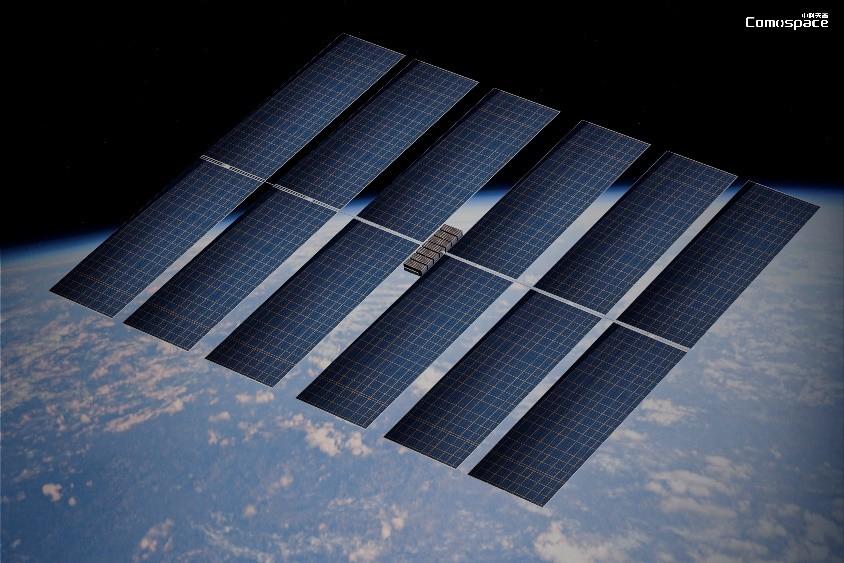
💡10k-GPU space supercluster by 2030 unlocks green, unlimited AI compute power
⚡ 30-Second TL;DR
What Changed
Secured 100M+ RMB from Shanghai Future Fund, CSC, Shenzhen Capital, and others
Why It Matters
This funding accelerates space-based AI compute, addressing terrestrial power and cooling limits for massive AI training. It positions China in the global space supercomputing race, enabling green, low-latency orbital AI infrastructure.
What To Do Next
Evaluate domestic GPUs like those in Tiansuan for hybrid space-ground AI inference pipelines.
Key Points
- •Secured 100M+ RMB from Shanghai Future Fund, CSC, Shenzhen Capital, and others
- •Tiansuan Plan: 10+ nodes, 10k+ domestic GPUs, 10 EOPS compute, 100MW solar power
- •Prototype multi-GPU space node for in-orbit test launch this year
- •New lab with Yanhuo Tech for space compute-energy integration
🧠 Deep Insight
Background and context from public sources — not the original article. 6 sources cited.
🔑 Enhanced Key Takeaways
- •Zhongke Tiansuan, founded in 2024, has achieved over 1,000 days of on-orbit operation with its Aurora 1000 space computer aboard a Jilin-1 satellite[2][3].
- •The company's next-generation Aurora 5000 space computer, featuring a domestically developed high-performance GPU, is scheduled for in-orbit trials in 2026[2][3].
- •Zhongke Tiansuan has implemented redundant designs, error correction protocols, and fluid-loop cooling to mitigate radiation-induced failures and manage heat from high-flux chips in space[2].
🛠️ Technical Deep Dive
- •Aurora 1000 space computer has accumulated over 1,000 days of on-orbit operation on Jilin-1 satellite, demonstrating reliability in space environment[2][3].
- •Aurora 5000 incorporates a home-grown high-performance GPU for enhanced computing capabilities, targeting in-orbit trials in 2026[2][3].
- •Radiation hardening achieved via redundant designs, error correction, and recovery protocols to prevent computational errors and system crashes in industrial-grade chips[2].
- •Thermal management uses experimental fluid-loop cooling systems to dissipate heat from high heat-flux chips in orbital conditions[2].
🔮 Future ImplicationsAI analysis grounded in cited sources
⏳ Timeline
📎 Sources (6)
Factual claims are grounded in the sources below. Forward-looking analysis is AI-generated interpretation.
- eu.36kr.com — 3567928505433217
- english.news.cn — C
- carboncredits.com — China Joins Google Amazon and Xai in the Race to Build AI Supercomputers in Space
- asiafinancial.com — China Planning to Put AI Data Centres in Space Over Next 5 Years
- scmp.com — Race AI Centres Space Why US Goes All After China Makes First Move
- space.com — China Joins Race to Develop Space Based Data Centers with 5 Year Plan
Weekly AI Recap
Read this week's curated digest of top AI events →
👉Related Updates
AI-curated news aggregator. All content rights belong to original publishers.
Original source: 36氪 ↗
This is a summary, not the original. Read the source, or get the weekly briefing.
Weekly AI briefing
One email a week. Unsubscribe anytime.