Zhipu vs MiniMax: Market Valuation Divergence
💡Understand the market dynamics and valuation logic behind China's leading AI model providers.
⚡ 30-Second TL;DR
What Changed
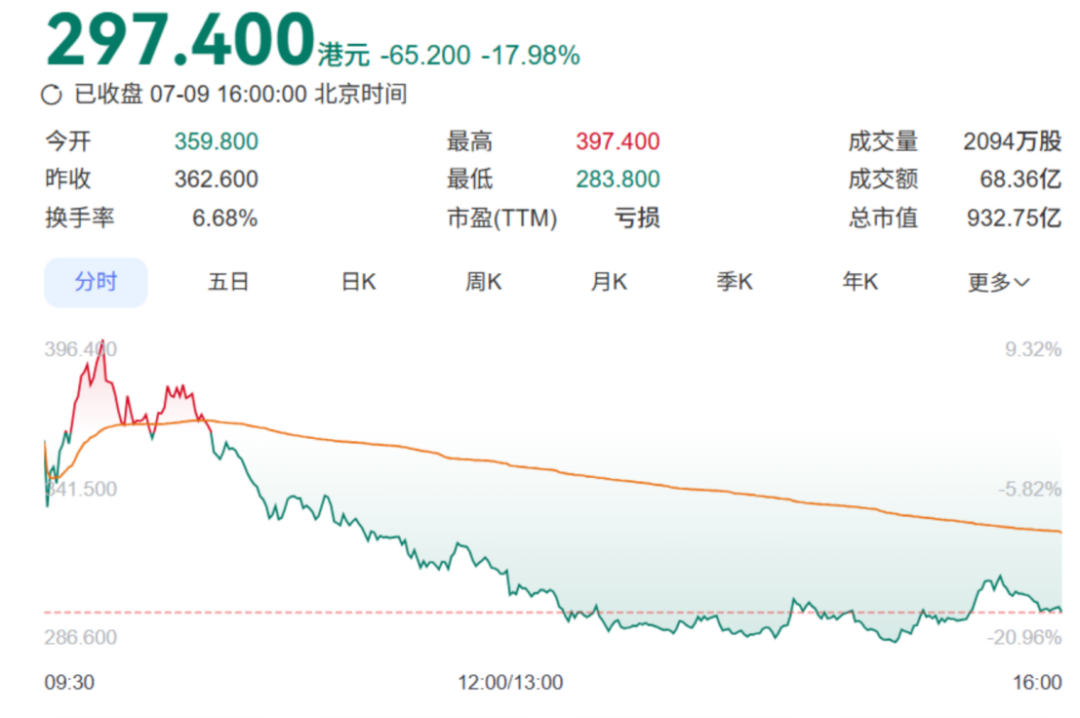
Zhipu AI achieved a 13% valuation increase in recent market cycles.
Why It Matters
Highlights the shifting investor sentiment toward Chinese LLM startups and the importance of commercialization speed.
What To Do Next
Monitor the commercial adoption rates of Zhipu's GLM series versus MiniMax's models to gauge long-term viability.
Key Points
- •Zhipu AI achieved a 13% valuation increase in recent market cycles.
- •MiniMax faces challenges in maintaining market premium compared to competitors.
- •Analysis of AI scarcity premium in the Hong Kong/Chinese capital markets.
🧠 Deep Insight
AI-generated analysis for this event — not the original article.
🔑 Enhanced Key Takeaways
- •Zhipu AI has successfully leveraged its academic roots from Tsinghua University to secure strategic partnerships with major state-owned enterprises and government-backed research initiatives, providing a stable revenue moat.
- •MiniMax has pivoted its strategy toward global expansion, specifically targeting the consumer-facing 'character AI' and social entertainment sectors, which has led to higher volatility in its valuation compared to enterprise-focused peers.
- •The valuation divergence is partly attributed to Zhipu's 'GLM' (General Language Model) ecosystem, which has achieved higher adoption rates among domestic developers due to its open-source-friendly licensing model.
- •Capital market sentiment in Hong Kong and mainland China has shifted toward 'AI infrastructure' plays, favoring companies like Zhipu that demonstrate tangible B2B integration over those primarily focused on B2C application layers.
- •MiniMax's recent funding rounds have faced increased scrutiny regarding user retention metrics in its flagship 'Talkie' application, impacting its ability to command the same scarcity premium as Zhipu.
📊 Competitor Analysis▸ Show
| Feature | Zhipu AI (GLM-4) | MiniMax (abab 6.5) | Moonshot AI (Kimi) |
|---|---|---|---|
| Primary Focus | Enterprise/B2B/API | Consumer/Social/Global | Long-context/Consumer |
| Model Architecture | Mixture-of-Experts (MoE) | Mixture-of-Experts (MoE) | Dense/Long-context optimized |
| Pricing Model | Tiered API/Private Deployment | Usage-based/Subscription | Usage-based |
| Key Benchmark | Strong reasoning/Coding | Creative writing/Roleplay | Long-context retrieval |
🛠️ Technical Deep Dive
- Zhipu AI utilizes a proprietary Mixture-of-Experts (MoE) architecture in its GLM-4 series, designed to optimize inference costs while maintaining high performance on complex reasoning tasks.
- MiniMax employs a multi-modal approach in its abab 6.5 series, integrating native audio and visual processing capabilities directly into the model's latent space rather than relying on separate encoder-decoder pipelines.
- Both companies have heavily invested in custom hardware optimization layers to reduce latency for real-time voice interaction, a critical feature for their respective product roadmaps.
🔮 Future ImplicationsAI analysis grounded in cited sources
⏳ Timeline
Weekly AI Recap
Read this week's curated digest of top AI events →
👉Related Updates



AI-curated news aggregator. All content rights belong to original publishers.
Original source: 钛媒体 ↗
This is a summary, not the original. Read the source, or get the weekly briefing.
The weekly digest
One email a week. Unsubscribe anytime.