Yuanrong Enters Physical AI at GTC
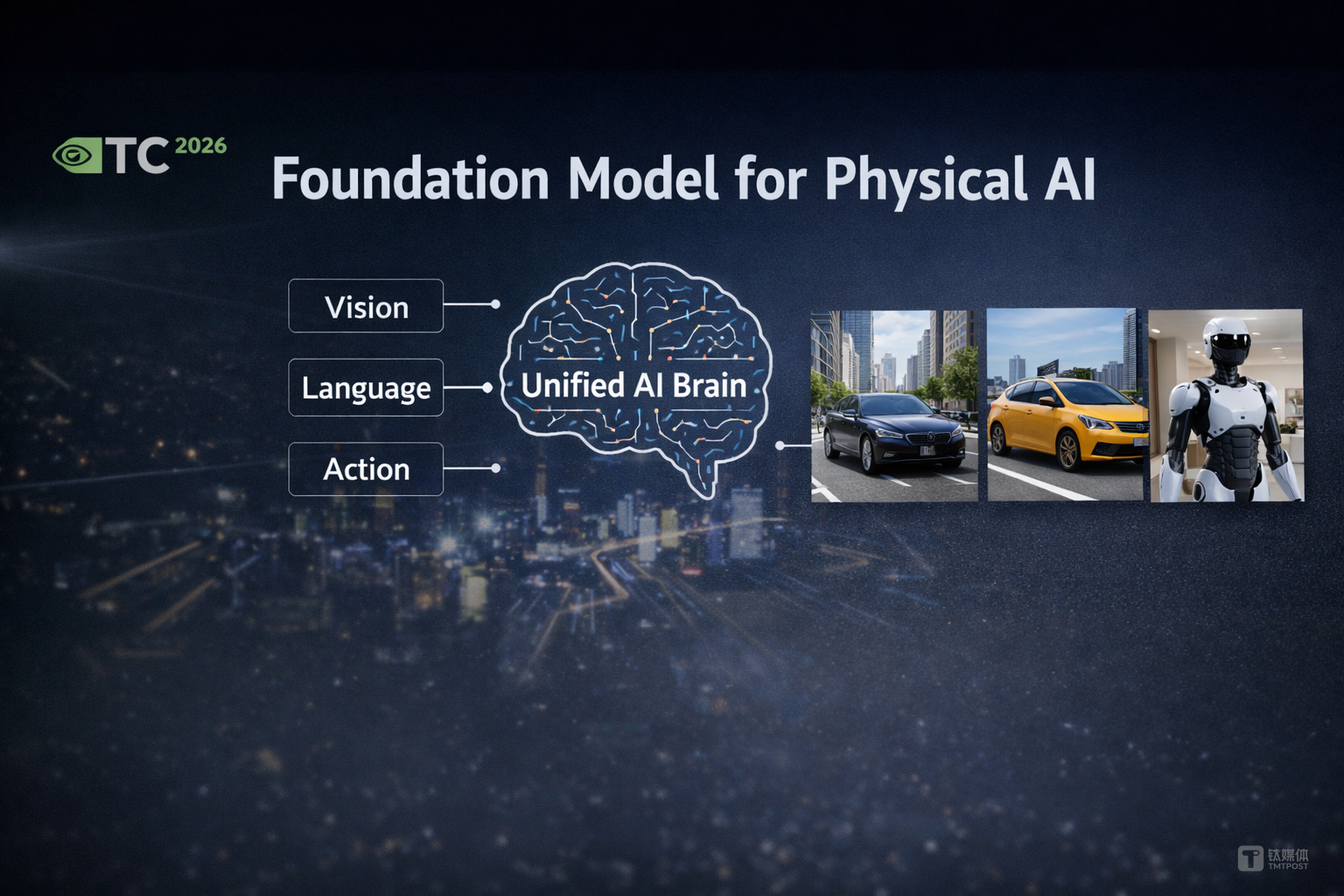
💡New foundation model for physical AI in driving—embodied AI breakthrough
⚡ 30-Second TL;DR
What Changed
Presented Foundation Model at Nvidia GTC.
Why It Matters
Advances physical AI for ADAS, challenging incumbents with scalable foundation models. Relevant for embodied AI research.
What To Do Next
Watch Yuanrong Qixing's GTC session video for foundation model details.
Key Points
- •Presented Foundation Model at Nvidia GTC.
- •Aims to rebuild assisted driving architecture.
- •Enters competitive physical AI domain.
🧠 Deep Insight
Background and context from public sources — not the original article. 10 sources cited.
🔑 Enhanced Key Takeaways
- •Yuanrong Qixing launched DeepRoute IO 2.0 platform with self-developed VLA model, integrating visual perception, natural language understanding, and action decision-making for enhanced reasoning in intelligent driving.[1]
- •VLA model demonstrates four core functions: spatial semantic understanding, custom-shaped obstacle recognition, text-based guide sign understanding, and vehicle voice control with memory, to be rolled out progressively.[1]
- •VLA enables long-term causal reasoning and chain-of-thought capability, predicting road changes over several seconds compared to 7 seconds for VLM models, improving complex scenario handling.[1][2]
🛠️ Technical Deep Dive
- •VLA (Vision-Language-Action) model applies large language model reasoning to intelligent driving, enhancing spatial semantic understanding and decision-making in complex road conditions.[1]
- •Key advantage: chain-of-thought capability for long-term causal reasoning and serial analysis of discrete information, enabling human-like decisions unlike traditional end-to-end models limited to seconds-long inferences.[1]
- •Core functions include spatial semantic understanding, custom-shaped obstacle recognition, text-based guide sign understanding, and voice control with memory for personalized interaction.[1]
🔮 Future ImplicationsAI analysis grounded in cited sources
⏳ Timeline
📎 Sources (10)
Factual claims are grounded in the sources below. Forward-looking analysis is AI-generated interpretation.
- youtube.com — Watch
- news.aibase.com — 15027
- drivex-workshop.github.io — Iv2026
- en.eeworld.com.cn — Eic693694
- news.futunn.com — A Key Step for the Implementation of L3 Autonomous Driving
- drivex-workshop.github.io — Cvpr2026
- bincial.com — 121124
- etcjournal.com — Status of Self Driving Cars March 2026 Tightly Geofenced
- arXiv — 2506
- en.eeworld.com.cn — Eic705407
Weekly AI Recap
Read this week's curated digest of top AI events →
👉Related Updates

AI-curated news aggregator. All content rights belong to original publishers.
Original source: 钛媒体 ↗
This is a summary, not the original. Read the source, or get the weekly briefing.
Weekly AI briefing
One email a week. Unsubscribe anytime.