📲Digital Trends•Stalecollected in 54m
YouTube Auto-Dubbing Lacks Off Switch
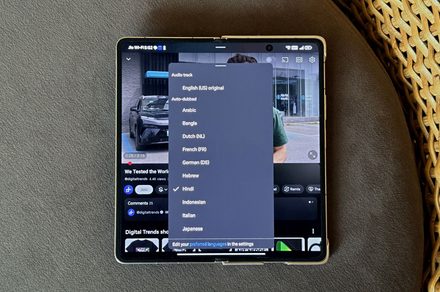
💡YouTube's AI dubbing has no off switch—critical UX lesson for AI video tools
⚡ 30-Second TL;DR
What Changed
Auto-dubs videos into foreign languages without request
Why It Matters
This UX flaw may frustrate creators and viewers, reducing engagement on international content. It highlights risks of deploying AI features without user controls, potentially leading to backlash.
What To Do Next
Test YouTube auto-dubbing on your videos to benchmark AI voice cloning quality for multilingual apps.
Who should care:Creators & Designers
Key Points
- •Auto-dubs videos into foreign languages without request
- •No global disable option available
- •Example: Marques Brownlee videos in Japanese
- •Forces dubbing on all viewers
🧠 Deep Insight
AI-generated analysis for this event.
🔑 Enhanced Key Takeaways
- •YouTube utilizes Aloud, an AI-powered dubbing service developed within Google's Area 120 incubator, to generate these multi-language audio tracks.
- •The feature is designed to preserve the creator's original voice tone and cadence using voice cloning technology, rather than relying on generic text-to-speech synthesis.
- •Creators must opt-in to the Aloud program to have their videos dubbed, but the current controversy stems from YouTube's aggressive automated rollout to viewers without a granular user-side preference setting.
🛠️ Technical Deep Dive
- •Aloud utilizes a multi-stage pipeline: Automatic Speech Recognition (ASR) for transcription, Neural Machine Translation (NMT) for text translation, and Text-to-Speech (TTS) for voice synthesis.
- •The system employs voice cloning models trained on the creator's original audio samples to maintain vocal identity in the target language.
- •The architecture is integrated into the YouTube video player's audio track selection menu, allowing for dynamic switching between the original audio and the AI-generated dubbed track.
🔮 Future ImplicationsAI analysis grounded in cited sources
YouTube will introduce a user-level setting to disable auto-dubbing by Q4 2026.
The significant negative user feedback regarding the lack of an 'off switch' will force a UI update to maintain platform accessibility and user satisfaction.
Creator adoption of Aloud will plateau due to concerns over voice cloning misuse.
As automated dubbing becomes more pervasive, creators will demand stricter control over how their voice models are deployed and in which languages they appear.
⏳ Timeline
2022-03
Google's Area 120 announces Aloud, an AI-based dubbing tool for YouTube creators.
2023-06
YouTube begins testing Aloud with a select group of creators to expand video reach globally.
2024-02
YouTube announces broader integration of Aloud, allowing more creators to add multi-language audio tracks.
2026-04
Widespread user reports emerge regarding forced auto-dubbing without clear opt-out mechanisms.
📰
Weekly AI Recap
Read this week's curated digest of top AI events →
👉Related Updates

AI-curated news aggregator. All content rights belong to original publishers.
Original source: Digital Trends ↗