YMTC Enters Global NAND Top Three
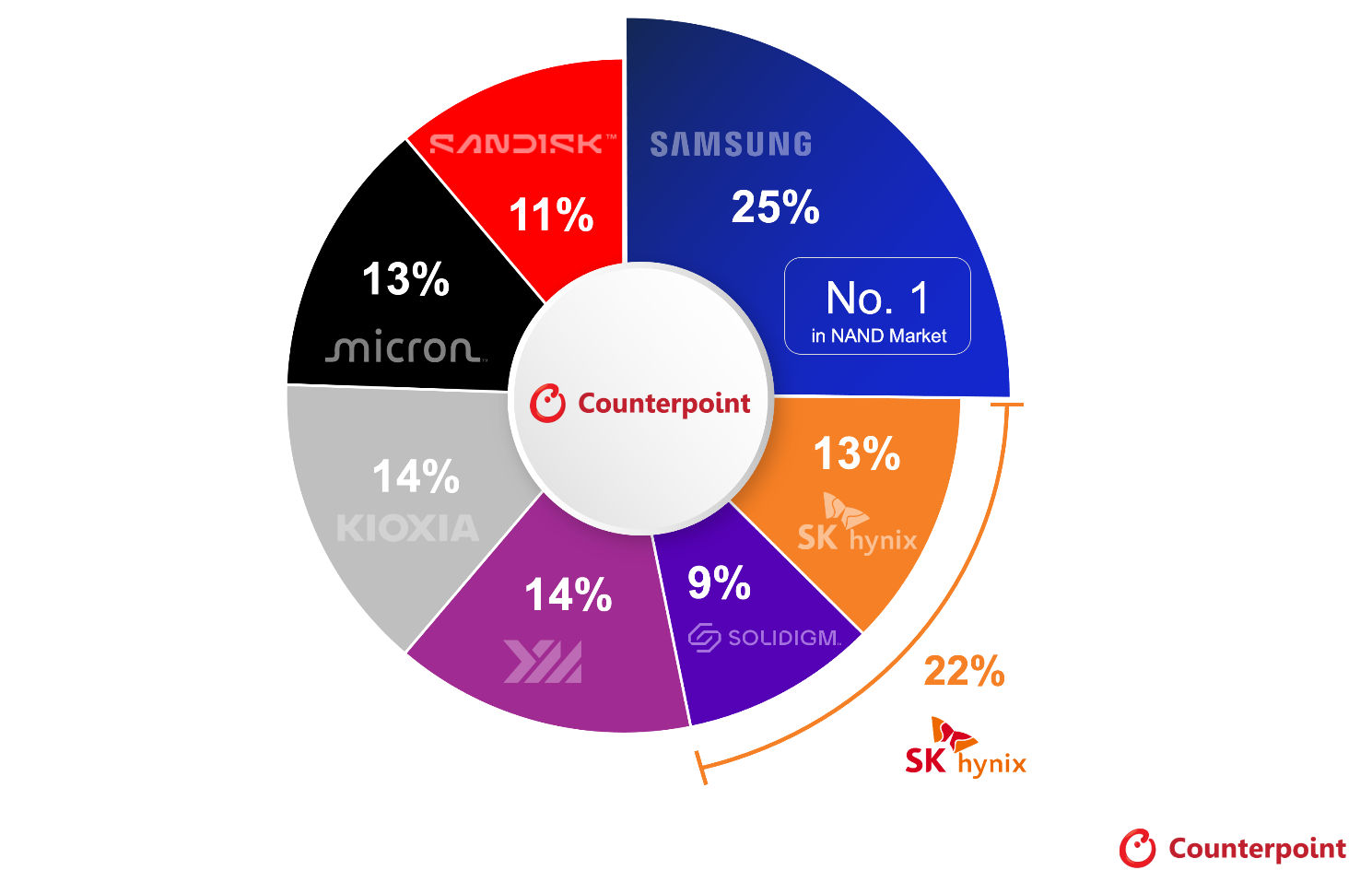
💡NAND supplier rankings affect the cost, resilience, and sourcing options of AI storage infrastructure.
⚡ 30-Second TL;DR
What Changed
The ranking is based on total NAND shipment capacity.
Why It Matters
Greater YMTC scale could improve supply diversity for AI infrastructure, especially systems requiring large volumes of flash storage for datasets, checkpoints, and inference caches. It may also intensify competition among established NAND suppliers.
What To Do Next
Review Counterpoint Research’s Q2 2026 NAND data and qualify at least one additional NAND supplier for AI dataset, checkpoint, and inference-cache storage.
Key Points
- •The ranking is based on total NAND shipment capacity.
- •YMTC surpassed Kioxia by a narrow margin in Q2 2026.
- •This is YMTC’s first appearance among the world’s three largest NAND suppliers.
- •The data comes from Counterpoint Research’s latest quarterly report.
🧠 Deep Insight
AI-generated analysis for this event.
🔑 Enhanced Key Takeaways
- •YMTC's growth has been significantly bolstered by the rapid adoption of its Xtacking 4.0 architecture, which has improved bit density and I/O speeds compared to previous generations.
- •The company has successfully increased its domestic market share in China, leveraging government-backed initiatives to replace foreign NAND suppliers in enterprise and data center applications.
- •Despite ongoing U.S. export controls and trade restrictions, YMTC has managed to optimize its supply chain and manufacturing yields to maintain cost competitiveness against established incumbents.
- •YMTC's Q2 2026 performance was driven by a surge in demand for high-capacity 3D NAND solutions used in AI-driven edge computing devices and high-performance consumer SSDs.
- •Industry analysts note that YMTC's rise has forced a pricing realignment among major competitors like Samsung, SK Hynix, and Micron, who are now facing increased margin pressure in the mid-range NAND segment.
📊 Competitor Analysis▸ Show
| Feature/Metric | YMTC (Xtacking 4.0) | Samsung (V-NAND) | Kioxia (BiCS FLASH) | Micron (Replacement Gate) |
|---|---|---|---|---|
| Architecture | Xtacking (Hybrid Bonding) | V-NAND (CTF) | BiCS (Floating Gate/CTF) | Replacement Gate |
| Layer Count | 232+ Layers | 300+ Layers | 218+ Layers | 232+ Layers |
| Market Position | Rapidly Expanding | Market Leader | Declining/Stable | Competitive |
🛠️ Technical Deep Dive
- Xtacking 4.0 Architecture: Utilizes advanced hybrid bonding technology to connect the CMOS peripheral circuitry and the NAND array wafer, enabling higher I/O speeds and smaller die sizes.
- Bit Density: Achieved industry-competitive bit density through vertical scaling, allowing for higher capacity per wafer compared to 2024-era nodes.
- I/O Performance: Supports interface speeds exceeding 3.2 Gbps, targeting high-performance NVMe SSD applications.
- Manufacturing Process: Employs a multi-deck stacking process to achieve high layer counts while maintaining structural integrity and yield rates.
🔮 Future ImplicationsAI analysis grounded in cited sources
⏳ Timeline
Weekly AI Recap
Read this week's curated digest of top AI events →
👉Related Updates



AI-curated news aggregator. All content rights belong to original publishers.
Original source: cnBeta (Full RSS) ↗