XPeng VLA Brings AI Into 4D Spacetime
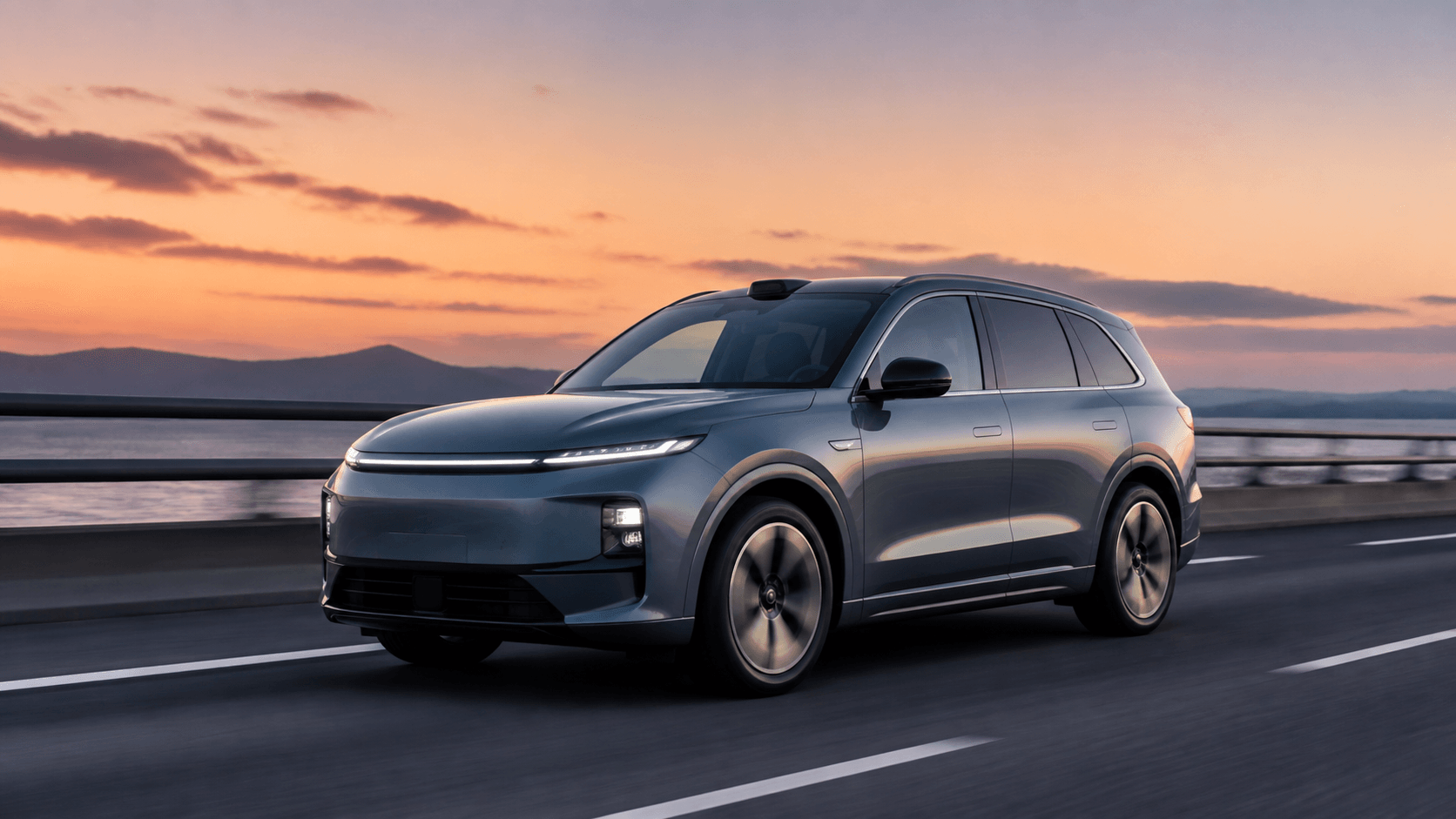
💡XPeng’s 4D VLA upgrade shows how temporal reasoning could move advanced autonomy into production cars.
⚡ 30-Second TL;DR
What Changed
The upgraded VLA adds temporal understanding to its existing 3D spatial perception.
Why It Matters
If validated in production, temporal scene understanding could improve autonomous driving responses to moving objects and evolving traffic situations. The move may also narrow the capability gap between consumer vehicles and Robotaxi platforms.
What To Do Next
Test XPeng’s 4D VLA claims against your autonomous-driving stack in simulation using cut-ins, crossing pedestrians, and other time-evolving scenarios.
Key Points
- •The upgraded VLA adds temporal understanding to its existing 3D spatial perception.
- •XPeng is targeting dynamic 4D spacetime reasoning for physical driving environments.
- •The company aims to deliver Robotaxi-grade L4 behavior in production cars.
🧠 Deep Insight
Background and context from public sources — not the original article. 8 sources cited.
🔑 Enhanced Key Takeaways
- •The system utilizes 'X-World,' a generative world model that enables online reinforcement learning and synthetic data generation to train the VLA 2.0 architecture.
- •XPeng achieved a 3.5x increase in on-device parameter count compared to the previous generation, enhancing the model's reasoning capabilities in untrained, complex road environments.
- •The architecture introduces 'MasterAgent,' a centralized vehicle brain that fuses VLA and VLM functionalities to manage high-level decision-making previously reserved for Robotaxi systems.
- •To ensure deployment on mass-market hardware, XPeng implemented learning-based token compression and distillation, resulting in a 'Turing VLA 2.0 Lite' variant.
- •The system supports temporal sequences of up to 30 seconds, allowing the vehicle to predict traffic scene evolution up to 6 seconds into the future.
📊 Competitor Analysis▸ Show
| Feature | XPeng VLA 2.0 | Tesla FSD (v13+) | Waymo Driver |
|---|---|---|---|
| Core Architecture | VLA (Vision-Language-Action) | End-to-End Neural Net | Modular/Hybrid AI |
| Spacetime Focus | 4D Spacetime Foundation | 3D Occupancy Networks | 3D Mapping + Prediction |
| Deployment | Mass-market production | Mass-market production | Robotaxi-only |
| Hardware Strategy | Distilled Lite versions | Unified FSD Computer | Custom Sensor Suite |
🛠️ Technical Deep Dive
- Architecture: Vision-Language-Action (VLA) foundation model integrated with a centralized MasterAgent brain.
- Temporal Processing: Supports 30-second temporal sequences with 6-second future scene prediction capability.
- Optimization: Employs learning-based token compression and model distillation to enable deployment on lower-compute edge platforms.
- Simulation: Powered by X-World, a multi-view generative world model used for online reinforcement learning and data synthesis.
- Scaling: 3.5x increase in on-device parameter count over the first-generation VLA.
🔮 Future ImplicationsAI analysis grounded in cited sources
⏳ Timeline
📎 Sources (8)
Factual claims are grounded in the sources below. Forward-looking analysis is AI-generated interpretation.
Weekly AI Recap
Read this week's curated digest of top AI events →
👉Related Updates



AI-curated news aggregator. All content rights belong to original publishers.
Original source: Pandaily ↗
This is a summary, not the original. Read the source, or get the weekly briefing.
Weekly AI briefing
One email a week. Unsubscribe anytime.