XPeng Skips L3 for L4 Autonomy in 1-3 Years
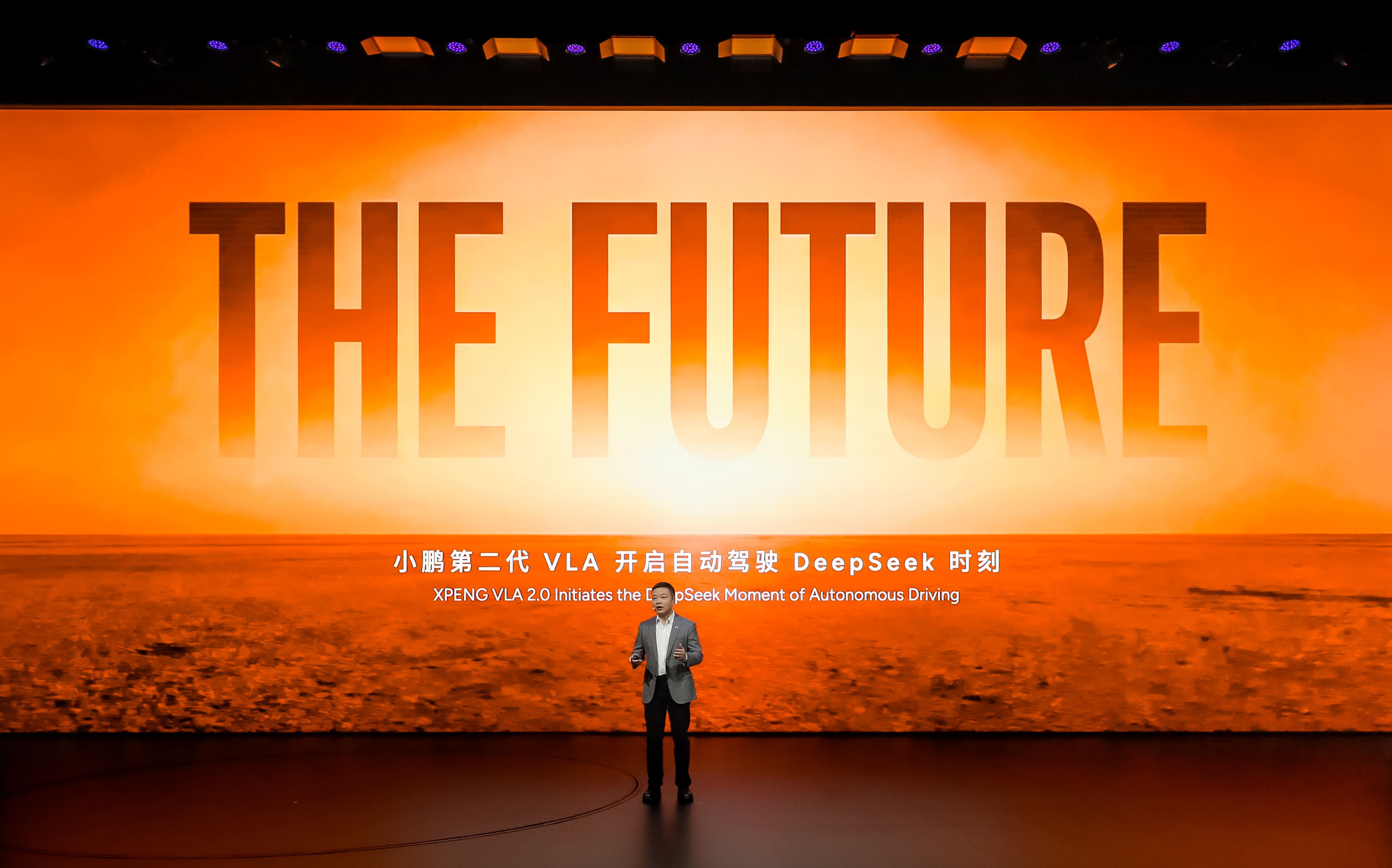
💡XPeng claims 5x lead, L4 in 1-3yrs via AI agents—key for auto AI builders.
⚡ 30-Second TL;DR
What Changed
Second-gen VLA deploys to all Ultra/Ultra SE models this month
Why It Matters
XPeng's aggressive AI strategy could accelerate global L4 adoption, pressuring competitors like Tesla to match fusion of cabin-driving AI. Signals shift to AGI-like approaches in autos, boosting investor confidence in Chinese EV AI.
What To Do Next
Benchmark XPeng VLA 2.0 world model sims against your embodied AI stack for fusion insights.
Key Points
- •Second-gen VLA deploys to all Ultra/Ultra SE models this month
- •Merges cockpit and ADAS into unified AI agent with world models
- •Skips L3 due to hardware/software/regulatory challenges
- •Base model essential for L4; rapid daily iterations ongoing
- •Predicts 1-3 years to full L4, 3-5 years to super agents
🧠 Deep Insight
Background and context from public sources — not the original article. 8 sources cited.
🔑 Enhanced Key Takeaways
- •XPeng's second-gen VLA utilizes 30,000 GPU hours for training, four self-developed Turing AI chips providing 3,000 TOPS compute power, and a 72-billion parameter model trained on 100 million video clips equivalent to 65,000 years of human driving experience.[1][3][4]
- •Three Robotaxi models planned for 2026 launch, equipped with VLA 2.0, no reliance on LiDAR or HD maps, dual redundancy in six systems, and capability for mass production without factory modifications.[3][4]
- •XPeng merged its autonomous driving and smart cockpit centers into a General AI Center led by Liu Xianming, focusing on foundation models, infrastructure, and cross-domain applications for vehicles and robots.[7]
🛠️ Technical Deep Dive
- •Four Turing AI chips per vehicle deliver 3,000 TOPS computing power, enabling pure vision-based L4 autonomy without LiDAR or high-definition maps.[3][4]
- •VLA 2.0 foundation model has 72 billion parameters, trained with over 2 billion yuan in costs using nearly 100 million global video clips covering extreme long-tail scenarios.[1]
- •System supports advanced capabilities like Narrow Road NGP, improving takeover mileage by 13x on complex roads, gesture recognition, in-place starting, pull-over parking, and speed bump handling.[1][4]
- •Deployed in Ultra/Ultra SE models and upcoming Robotaxi/Robo vehicles with dual redundancy across six systems for safety.[3][4]
🔮 Future ImplicationsAI analysis grounded in cited sources
⏳ Timeline
📎 Sources (8)
Factual claims are grounded in the sources below. Forward-looking analysis is AI-generated interpretation.
- eu.36kr.com — 3630772116718599
- xpeng.com — 019bc56e17389bc16cb78a028c710035
- thedriven.io — China Ev Maker Xpeng to Launch 3 Different Robotaxi Models in 2026
- xpeng.com — 019a56f54fe99a2a0a8d8a0282e402b7
- youtube.com — Watch
- youtube.com — Watch
- technode.com — Xpeng Reportedly Merges Autonomous Driving and Smart Cockpit Units Into New General AI Center
- prnewswire.com — Xpeng Charts New Course in 2026 Flagship Launch Sales Momentum and AI Breakthrough Propel Global Technology Ambitions 302658303
Weekly AI Recap
Read this week's curated digest of top AI events →
👉Related Updates

AI-curated news aggregator. All content rights belong to original publishers.
Original source: 36氪 ↗
This is a summary, not the original. Read the source, or get the weekly briefing.
Weekly AI briefing
One email a week. Unsubscribe anytime.