Xpeng Robot Hits $6.3B Valuation
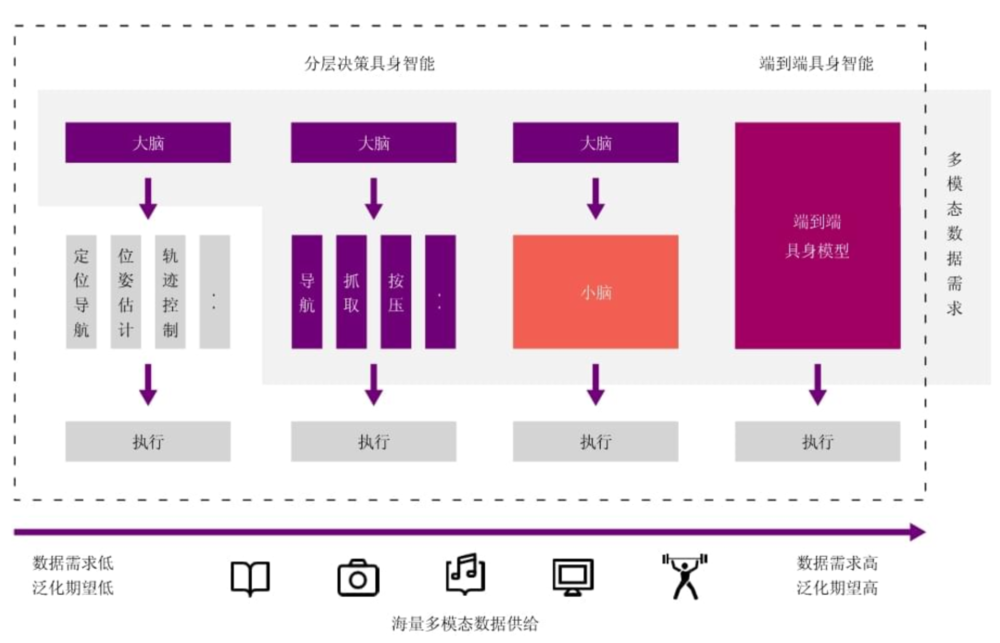
💡A record humanoid-robot funding round meets a less glamorous reality: repeated reorganizations and uncertain technical c
⚡ 30-Second TL;DR
What Changed
Pengxing raised more than $900 million at a post-money valuation above 63 billion yuan, setting a new embodied-AI private funding benchmark.
Why It Matters
The financing validates strong investor appetite for embodied AI and for automobile manufacturers entering robotics. However, the gap between a top-tier valuation and an unstable technical organization shows that capital, autonomous-driving assets, and demonstrations do not automatically translate into reliable humanoid-robot production.
What To Do Next
Before building on an embodied-AI platform, benchmark its perception-to-control stack on repeatable tasks and audit whether the core engineering team has remained stable through the latest reorganization.
Key Points
- •Pengxing raised more than $900 million at a post-money valuation above 63 billion yuan, setting a new embodied-AI private funding benchmark.
- •IDG Capital led the round, with Tencent and Alibaba joining as strategic investors; Xpeng contributed $200 million and executives contributed $100 million.
- •The investment thesis centers on reuse of Xpeng's 12 years of autonomous-driving experience, Turing AI chips, physical-world foundation models, and AI infrastructure.
- •The robotics team has undergone three major reorganizations since 2020, with founder Zhao Tongyang, business head Mi Liangchuan, and other core personnel leaving.
- •Xpeng CEO He Xiaopeng took direct responsibility for the robotics business after reported demonstration problems and renewed organizational restructuring.
🧠 Deep Insight
Background and context from public sources — not the original article. 12 sources cited.
🔑 Enhanced Key Takeaways
- •The robotics unit, often referred to as Dogotix, will remain consolidated within Xpeng's financial statements despite its new status as a standalone entity with majority control retained by the parent company.
- •The IRON robot is scheduled for mass production by the end of 2026, with an initial manufacturing target of 1,000 units per month.
- •The robotics division's valuation represents approximately 53% of Xpeng's total market capitalization as of August 2026, highlighting its critical role in the company's equity narrative.
- •Initial commercial deployment of the IRON robot is restricted to internal Xpeng showrooms and industrial campuses to serve as a live testing environment before external retail and service sector delivery in 2027.
- •The funding round included participation from Gaorong Ventures, complementing the lead investment from IDG Capital and strategic backing from Tencent and Alibaba.
📊 Competitor Analysis▸ Show
| Feature | Xpeng IRON | Tesla Optimus Gen 2 | Figure AI 02 |
|---|---|---|---|
| Degrees of Freedom | 76 | ~21-28 | ~20-30 |
| Computing Power | 2,250 TOPS | Proprietary FSD Chip | NVIDIA Orin/Custom |
| Primary Focus | Retail/Service | Industrial/Manufacturing | Industrial/Logistics |
🛠️ Technical Deep Dive
- The IRON robot utilizes a high-dexterity design featuring 76 total degrees of freedom, with 21 degrees of freedom dedicated to each hand.
- The onboard compute architecture is driven by three proprietary Turing AI chips, delivering a combined performance of 2,250 TOPS.
- The system architecture is built upon Xpeng's physical-world foundation models, which leverage data and training methodologies derived from 12 years of autonomous vehicle development.
🔮 Future ImplicationsAI analysis grounded in cited sources
⏳ Timeline
📎 Sources (12)
Factual claims are grounded in the sources below. Forward-looking analysis is AI-generated interpretation.
Weekly AI Recap
Read this week's curated digest of top AI events →
👉Related Updates

AI-curated news aggregator. All content rights belong to original publishers.
Original source: 虎嗅 ↗
This is a summary, not the original. Read the source, or get the weekly briefing.
Weekly AI briefing
One email a week. Unsubscribe anytime.