Xpeng CEO takes direct control of robotics unit
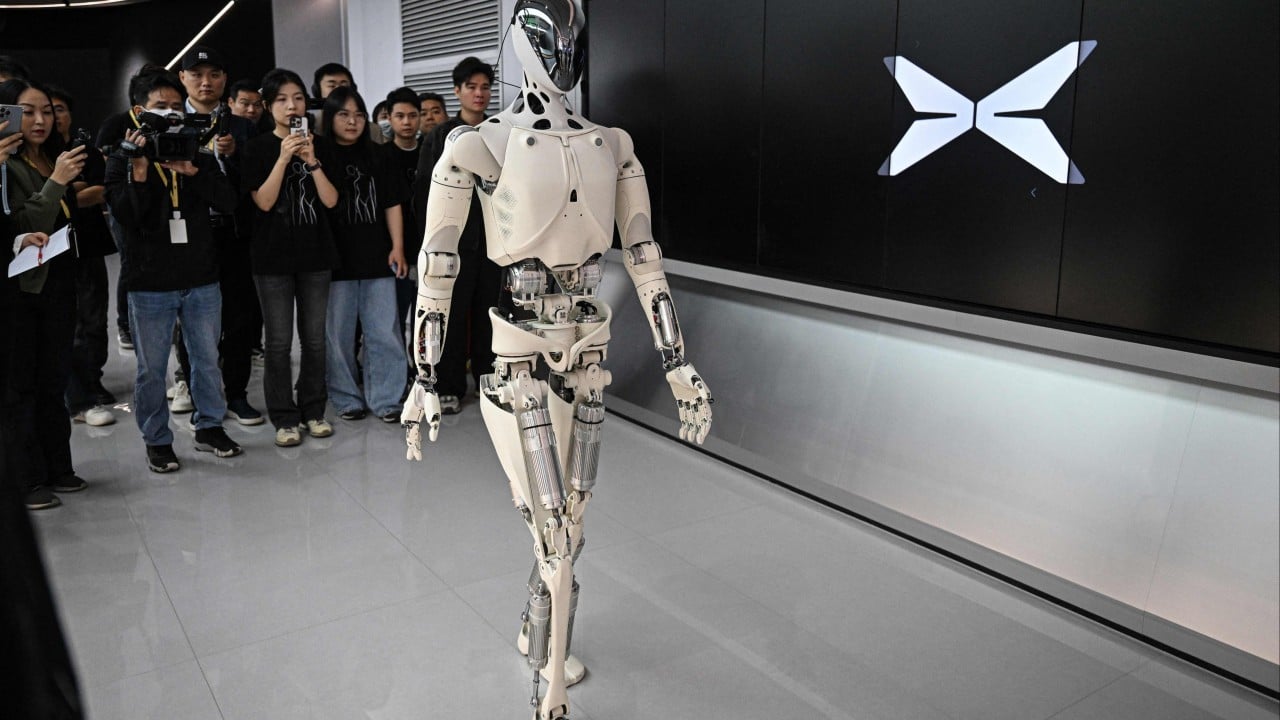
💡Xpeng's pivot to 'physical AI' highlights a major trend of EV giants entering the humanoid robotics market.
⚡ 30-Second TL;DR
What Changed
He Xiaopeng assumes direct leadership of the robotics department
Why It Matters
This move signals a major consolidation of resources toward embodied AI, potentially accelerating the commercialization of humanoid robotics in the automotive sector.
What To Do Next
Monitor Xpeng's upcoming developer documentation or SDK releases for their humanoid platforms to understand their approach to embodied AI control.
Key Points
- •He Xiaopeng assumes direct leadership of the robotics department
- •Company is pivoting toward 'physical AI' integration
- •Humanoid robots are approaching mass production phase
🧠 Deep Insight
Background and context from public sources — not the original article. 31 sources cited.
🔑 Enhanced Key Takeaways
- •Xpeng's humanoid robot, named IRON (initially referred to as ET1), is targeted for mass production by Q4 2026, with initial deployment planned as shopping assistants in Xpeng's own retail stores starting in Q1 2027.
- •The company has committed a substantial long-term investment, with discussions of up to ¥100 billion (approximately $13.8 billion USD), to advance its humanoid robotics into commercially useful applications.
- •Xpeng officially rebranded as 'Xpeng Group' in Q1 2026, signifying a strategic transformation into a 'physical AI' technology company that encompasses autonomous driving, flying cars, humanoid robots, and AI chips.
- •Xpeng emphasizes a full-stack in-house development approach for its robots, including chips, operating systems, robotic joints, and dexterous hands, positioning itself as the only Chinese company with such comprehensive self-reliance in this sector.
- •The IRON robot runs on Xpeng's VLA (Vision-Language-Action) 2.0 foundation model, which also powers the company's self-driving system and robotaxi fleet, aiming for a single AI brain across multiple physical platforms.
📊 Competitor Analysis▸ Show
Humanoid Robot Competitor Comparison
| Feature/Company | Xpeng IRON | Tesla Optimus | Boston Dynamics Atlas | Xiaomi CyberOne | Agility Robotics Digit |
|---|---|---|---|---|---|
| Height | ~1.73 m | N/A (prototype shown) | 1.9 m | 1.77 m | 1.75 m |
| Weight | ~70 kg | N/A (prototype shown) | 90 kg | 52 kg | 65 kg (V4: 37 kg) |
| Degrees of Freedom (DoF) | ~60 joints, ~200 total DoF; 22 DoF hands | N/A (Gen 3 hands: 22 DoF) | 56 DoF | 21 DoF | 3 DoF arms |
| Payload Capacity | N/A | N/A | N/A | 1.5 kg (one hand) | 16 kg (V4: 18 kg) |
| Vision System | "Eagle-Eye" 720° vision | AI system to understand and map surroundings | N/A (integrates Google DeepMind foundation models) | Mi-Sense depth vision module | LiDAR, depth-cameras, IMU |
| AI/Control System | Tianji AIOS, VLA 2.0, 3 Turing AI chips (2250 TOPS) | FSD-derived AI | AI foundation models (Google DeepMind partnership) | Mi-Sense AI system, AI-driven interaction algorithms | Agility Arc cloud platform |
| Primary Application | Factory, store greeter/guide, reception | Factory work, home tasks | Industrial tasks (automotive sector, material handling) | Industrial applications, human-robot interaction, emotional support | Logistics, warehouse automation |
| Mass Production Target | Q4 2026 | Summer 2026 (V3 full body) | Began production Jan 2026 | N/A (constantly adding capabilities) | N/A (scaling industrial deployments) |
| Estimated Price | ~$150,000 (early purchase estimate) | Under $30,000 (high volume target) | N/A (deployments committed for 2026) | N/A (not available for purchase) | N/A |
| Key Differentiator | Bionic "bone-muscle-skin" structure, full-stack in-house development | Repurposing automotive AI/manufacturing for robots | Decades of humanoid R&D, industrial focus, Hyundai/Google DeepMind partnerships | Emotion recognition, bipedal control algorithms | Designed for logistics, can self-right from falls |
🛠️ Technical Deep Dive
- Model Name: Xpeng IRON (also referred to as ET1 initially).
- Physical Characteristics: Approximately 1.73 meters tall and ~70 kg in weight. It features a bionic "bone-muscle-skin" structure, including a flexible spine and soft outer skin for safer human-robot interaction.
- Joints and Dexterity: Equipped with ~60 joints and ~200 total degrees of freedom, with dexterous hands offering 22 degrees of freedom.
- Vision and Perception: Utilizes an "Eagle-Eye" 720° vision system for spatial awareness.
- AI and Compute: Powered by Xpeng's VLA (Vision-Language-Action) 2.0 model and three in-house developed Turing AI chips, delivering 2250 TOPS of computing power. The VLA 2.0 model learns primarily from human driving behaviors and is designed to be a foundational model for the physical world, integrated across Xpeng's vehicles, robotaxis, and humanoid robots.
- Software: Runs on Xpeng's Tianji AIOS software, which handles perception, control, and voice interaction. It is designed as a continuously improving platform with remote updates and cloud connectivity.
- Display: Features a 3D curved display on its head.
- Manufacturing: The first unit was built to "automotive-grade standards."
🔮 Future ImplicationsAI analysis grounded in cited sources
⏳ Timeline
📎 Sources (31)
Factual claims are grounded in the sources below. Forward-looking analysis is AI-generated interpretation.
- humanoid.guide
- eletric-vehicles.com
- robotsbeat.com
- news18a.com
- cryptobriefing.com
- news18a.com
- eweek.com
- gasgoo.com
- botinfo.ai
- news18a.com
- xpeng.com
- howtogeek.com
- youtube.com
- robotsinternational.com
- qviro.com
- humanoid.guide
- humanoid-robots.io
- botsanddrones.co
- optimusk.blog
- humanoid.guide
- qviro.com
- builtin.com
- bostondynamics.com
- automate.org
- youtube.com
- tesery.com
- teslaacessories.com
- agilityrobotics.com
- bostondynamics.com
- mi.com
- chinaevhome.com
Weekly AI Recap
Read this week's curated digest of top AI events →
👉Related Updates

AI-curated news aggregator. All content rights belong to original publishers.
Original source: SCMP Technology ↗
This is a summary, not the original. Read the source, or get the weekly briefing.
The weekly digest
One email a week. Unsubscribe anytime.