XPeng Bets Big on Humanoids
💡XPeng is pairing a widening auto loss with a $6.3B humanoid valuation—demand, margins, and timing remain unproven.
⚡ 30-Second TL;DR
What Changed
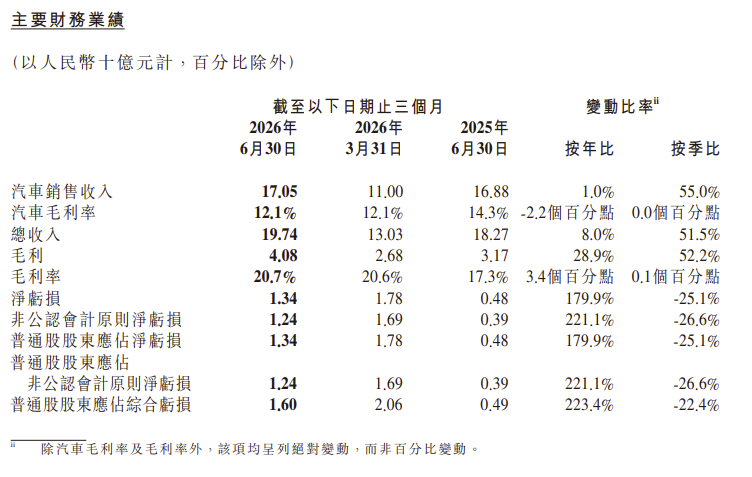
XPeng's first-half net loss widened to RMB 3.12 billion, while vehicle deliveries fell 15.8% year over year.
Why It Matters
XPeng's strategy illustrates the opportunity and risk of extending automotive manufacturing and AI capabilities into embodied robotics. For founders, the financing validates investor interest but also highlights the danger of scaling hardware before repeatable demand and unit economics are proven.
What To Do Next
Prototype a retail-service robotics workflow with an SDK simulator and validate customer willingness to pay before investing in custom humanoid hardware.
Key Points
- •XPeng's first-half net loss widened to RMB 3.12 billion, while vehicle deliveries fell 15.8% year over year.
- •IRON is planned for limited mass production by the end of 2026 and external deliveries from the first half of 2027.
- •XPeng says more than 85% of the robot supply chain can overlap with its automotive manufacturing system.
- •The robot unit raised more than $900 million at a post-money valuation above $6.3 billion, despite unresolved demand and monetization questions.
🧠 Deep Insight
Background and context from public sources — not the original article. 16 sources cited.
🔑 Enhanced Key Takeaways
- •XPeng CEO He Xiaopeng assumed the role of CEO for the robotics subsidiary in June 2026 to directly oversee the transition from R&D to mass production.
- •The company targets a production capacity of 1,000 units per month for the IRON robot by the end of 2026.
- •Initial commercial deployment of IRON units is scheduled for Q1 2027, specifically targeting internal use as sales and service assistants within XPeng's retail stores and corporate campuses.
- •The robotics unit operates under the subsidiary name Dogotix, facilitating technology cross-pollination with XPeng's automotive and autonomous driving divisions.
- •XPeng is pursuing a full-stack self-reliance strategy, developing proprietary Turing AI chips, operating systems, and motion control modules in-house.
📊 Competitor Analysis▸ Show
| Feature | XPeng (IRON) | Tesla (Optimus) | Figure AI (Figure 02) |
|---|---|---|---|
| Computing Power | 2,250 TOPS | FSD Computer (Custom) | NVIDIA Orin/Custom |
| Hand DOF | 21 DOF | 11 DOF | 16 DOF |
| Primary Focus | Retail/Service/Auto-Supply Chain | Factory Automation/General Purpose | Industrial/Logistics |
| Status | Pre-production (2026) | Pilot Testing | Commercial Deployment |
🛠️ Technical Deep Dive
- Computing: Powered by proprietary Turing AI chips delivering 2,250 TOPS of processing power.
- Degrees of Freedom: Features 76 total degrees of freedom (DOF) across the body, with 21 DOF dedicated to each hand for high-dexterity tasks.
- Structural Design: Incorporates a bionic spine and flexible muscle actuators to mimic human movement.
- Material Science: Utilizes soft synthetic skin to enhance safety and natural interaction in human-centric environments.
- Architecture: Built on a full-stack self-developed system including custom operating systems and motion control algorithms.
🔮 Future ImplicationsAI analysis grounded in cited sources
⏳ Timeline
📎 Sources (16)
Factual claims are grounded in the sources below. Forward-looking analysis is AI-generated interpretation.
Weekly AI Recap
Read this week's curated digest of top AI events →
👉Related Updates

AI-curated news aggregator. All content rights belong to original publishers.
Original source: 虎嗅 ↗
This is a summary, not the original. Read the source, or get the weekly briefing.
Weekly AI briefing
One email a week. Unsubscribe anytime.