Xiaomi Open-Sources Miloco 2.0 Smart Home AI System
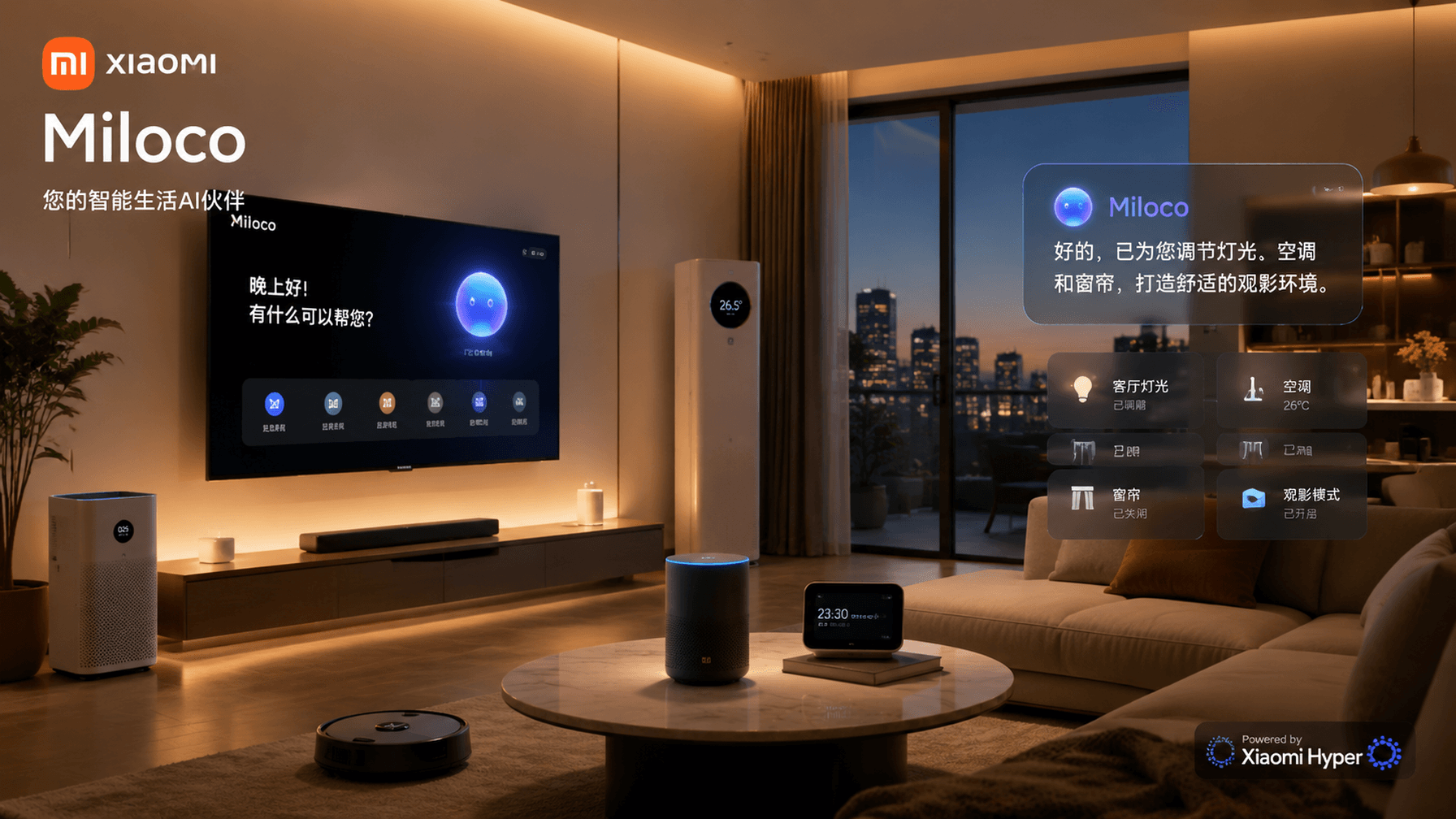
💡Xiaomi open-sources its 'JARVIS' smart home AI—check the repo for advanced multimodal home automation.
⚡ 30-Second TL;DR
What Changed
Features multimodal perception and proactive intelligence
Why It Matters
The open-sourcing of a full-home AI system accelerates the development of 'JARVIS-like' domestic assistants and standardizes smart home intelligence.
What To Do Next
Explore the Miloco 2.0 GitHub repository to integrate its multimodal perception modules into your own smart home automation projects.
Key Points
- •Features multimodal perception and proactive intelligence
- •Includes long-term family memory for personalized tasks
- •Open-source release to foster ecosystem integration
🧠 Deep Insight
AI-generated analysis for this event — not the original article.
🔑 Enhanced Key Takeaways
- •Miloco 2.0 utilizes a decentralized edge-computing architecture to ensure user data privacy by processing sensitive home interactions locally rather than in the cloud.
- •The system is built on a proprietary lightweight transformer model optimized specifically for low-power IoT hardware, reducing latency in voice and gesture recognition.
- •Xiaomi has released the Miloco 2.0 SDK under the Apache 2.0 license, allowing third-party developers to integrate custom smart home devices into the Xiaomi ecosystem.
- •The platform includes a new 'Contextual Awareness Engine' that integrates real-time sensor data from Xiaomi's Mijia IoT ecosystem to predict user needs before commands are issued.
- •Miloco 2.0 introduces a cross-device synchronization protocol that enables seamless AI state persistence when users move between different Xiaomi smart home hubs.
📊 Competitor Analysis▸ Show
| Feature | Xiaomi Miloco 2.0 | Apple HomeKit (Siri) | Amazon Alexa (LLM) |
|---|---|---|---|
| Open Source | Yes (Core SDK) | No | No |
| Edge Processing | High (Primary) | Moderate | Low (Cloud-heavy) |
| Ecosystem | Xiaomi/Mijia | Apple Home | Amazon/Echo |
| Memory | Long-term Personal | Session-based | Session-based |
🛠️ Technical Deep Dive
- Architecture: Employs a hierarchical transformer model where the 'Perception Layer' runs on NPU-enabled edge hubs while the 'Reasoning Layer' utilizes federated learning for personalization.
- Memory System: Implements a vector database stored locally on the hub, allowing the AI to index and retrieve historical family interaction patterns without cloud dependency.
- Multimodal Fusion: Uses a unified embedding space to process inputs from cameras, microphones, and environmental sensors simultaneously.
- Connectivity: Supports Matter 1.3 standard integration, ensuring interoperability with non-Xiaomi devices while maintaining the Miloco AI layer as the primary controller.
🔮 Future ImplicationsAI analysis grounded in cited sources
⏳ Timeline
Weekly AI Recap
Read this week's curated digest of top AI events →
👉Related Updates
AI-curated news aggregator. All content rights belong to original publishers.
Original source: Pandaily ↗
This is a summary, not the original. Read the source, or get the weekly briefing.
Weekly AI briefing
One email a week. Unsubscribe anytime.