Source钛媒体•Stalecollected in 29m
Xiaomi Cars Break Even, AI Next Big Bet
#earnings#strategy-shift#consumer-aixiaomi-aixiaomi
💡Xiaomi's EV breakeven enables bold AI push—watch for new APIs/tools
⚡ 30-Second TL;DR
What Changed
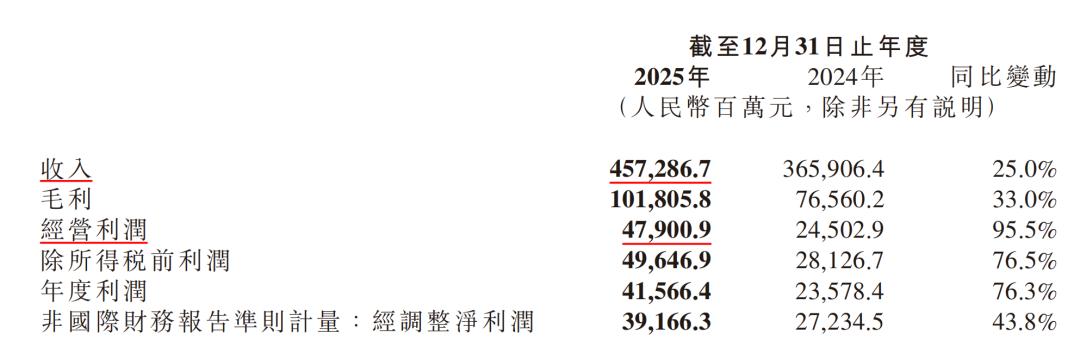
Xiaomi auto segment achieves break-even in latest report
Why It Matters
Xiaomi's move underscores broader consumer tech pivot to AI, potentially accelerating device-side AI integrations but raising execution risks.
What To Do Next
Assess Xiaomi HyperOS AI APIs for embedding in mobile apps.
Who should care:Founders & Product Leaders
Key Points
- •Xiaomi auto segment achieves break-even in latest report
- •AI identified as high-stakes next growth driver
- •Strategic shift from EVs to AI investments highlighted
🧠 Deep Insight
AI-generated analysis for this event — not the original article.
🔑 Enhanced Key Takeaways
- •Xiaomi's automotive profitability is largely attributed to the high-margin SU7 Ultra and the rapid scaling of its 'Smart Factory' production capacity, which reduced per-unit manufacturing costs significantly in Q1 2026.
- •The company's pivot to AI is centered on the integration of its proprietary 'Xiaomi Brain' foundation model into both its EV autonomous driving stack and its 'Human x Car x Home' ecosystem, aiming to monetize AI-as-a-Service (AIaaS) for vehicle owners.
- •Financial analysts note that Xiaomi's automotive division achieved break-even faster than industry peers like Nio or Xpeng, largely due to the company's existing supply chain leverage from its smartphone business and aggressive direct-to-consumer sales model.
📊 Competitor Analysis▸ Show
| Feature | Xiaomi SU7 | Tesla Model 3 | BYD Seal |
|---|---|---|---|
| Autonomous Driving | Xiaomi Pilot (End-to-End) | FSD (End-to-End) | DiPilot |
| Ecosystem | Human x Car x Home | Tesla App/Energy | DiLink |
| Pricing (CNY) | 215,900+ | 231,900+ | 175,800+ |
🛠️ Technical Deep Dive
- Xiaomi Pilot utilizes an end-to-end large model architecture, moving away from traditional rule-based algorithms to a transformer-based perception and planning system.
- The 'Xiaomi Brain' foundation model leverages a multi-modal approach, processing sensor fusion data (LiDAR, cameras, ultrasonic) alongside real-time traffic and map data.
- The vehicle architecture is built on the 'Xiaomi HyperOS' kernel, enabling low-latency communication between the vehicle's cockpit domain controller and the autonomous driving domain controller.
🔮 Future ImplicationsAI analysis grounded in cited sources
Xiaomi will launch a dedicated AI-native vehicle model by 2027.
The company's strategic shift prioritizes AI-integrated hardware, suggesting a move toward a vehicle designed specifically for autonomous-first operation.
Xiaomi's automotive division will contribute over 20% of total group revenue by 2027.
Achieving break-even status allows the company to reinvest capital into production expansion and R&D, accelerating market share growth.
⏳ Timeline
2021-03
Xiaomi officially announces entry into the electric vehicle market.
2023-12
Xiaomi hosts its first EV technology launch event, unveiling the SU7.
2024-03
Xiaomi SU7 officially launches in China, receiving over 50,000 orders in 27 minutes.
2024-10
Xiaomi SU7 Ultra prototype sets a lap record at the Nürburgring Nordschleife.
2026-03
Xiaomi automotive division reports reaching the break-even point.
📰
Weekly AI Recap
Read this week's curated digest of top AI events →
👉Related Updates



AI-curated news aggregator. All content rights belong to original publishers.
Original source: 钛媒体 ↗
This is a summary, not the original. Read the source, or get the weekly briefing.
The weekly digest
One email a week. Unsubscribe anytime.