Xiangdao Chuxing's Robotaxi Pivot and Profitability Struggle
💡Insight into how traditional ride-hailing platforms are pivoting to AI-driven Robotaxi models to survive.
⚡ 30-Second TL;DR
What Changed
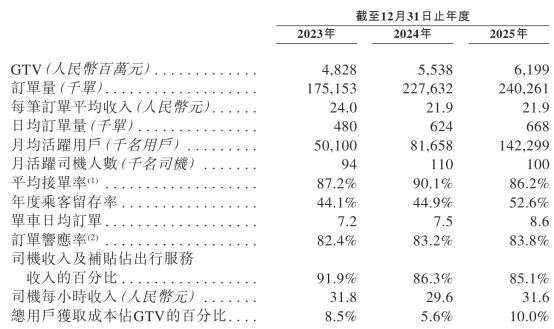
Net loss narrowed to 246 million RMB in 2025 with revenue reaching 6.77 billion RMB.
Why It Matters
The shift to Robotaxi models forces ride-hailing platforms to transition from human-centric dispatching to AI-driven fleet management systems, potentially devaluing traditional operational expertise.
What To Do Next
Evaluate the integration of third-party autonomous driving APIs into your fleet management software to prepare for the transition from human to robot fleets.
Key Points
- •Net loss narrowed to 246 million RMB in 2025 with revenue reaching 6.77 billion RMB.
- •98.5% of orders are dependent on third-party aggregators like Amap, leading to high commission costs.
- •Robotaxi strategy relies on partnerships with Momenta and SAIC to shift from driver-based to autonomous dispatching.
🧠 Deep Insight
AI-generated analysis for this event — not the original article.
🔑 Enhanced Key Takeaways
- •Xiangdao Chuxing is a subsidiary of SAIC Motor, leveraging the automaker's vehicle supply chain to integrate custom-built Robotaxi hardware directly into production lines.
- •The company's reliance on third-party aggregators is part of a broader industry trend in China where ride-hailing platforms face 'traffic anxiety' due to the dominance of platforms like Amap and Baidu Maps.
- •Momenta, the strategic partner, utilizes a 'flywheel' approach to autonomous driving, focusing on data-driven iteration from mass-produced passenger vehicles to L4 Robotaxi capabilities.
- •Xiangdao Chuxing has been actively expanding its presence in Tier-1 cities like Shanghai and Suzhou to test Robotaxi operations in complex urban environments.
- •The pivot to Robotaxis is partly driven by the need to bypass the high labor costs and commission fees associated with the traditional human-driven ride-hailing model, which currently caps profit margins.
📊 Competitor Analysis▸ Show
| Feature | Xiangdao Chuxing (Robotaxi) | Apollo Go (Baidu) | Pony.ai |
|---|---|---|---|
| Primary Backer | SAIC Motor | Baidu | Independent/Toyota |
| Tech Strategy | Momenta (Flywheel) | Apollo (Full Stack) | Proprietary Full Stack |
| Fleet Integration | High (SAIC OEM) | Medium (Multiple OEMs) | Medium (Toyota/GAC) |
| Market Focus | Tier-1 Cities (China) | Nationwide (China) | Global/China |
🛠️ Technical Deep Dive
- Utilizes Momenta's MSD (Momenta Self Driving) solution which employs a data-driven, vision-centric architecture.
- Implements a dual-redundancy system for perception, combining LiDAR, high-definition cameras, and millimeter-wave radar for safety.
- Employs a cloud-based simulation platform to train autonomous driving models on edge-case scenarios collected from the existing ride-hailing fleet.
- Integrates with SAIC's vehicle electronic architecture to allow for remote vehicle control and diagnostic monitoring required for driverless operations.
🔮 Future ImplicationsAI analysis grounded in cited sources
⏳ Timeline
Weekly AI Recap
Read this week's curated digest of top AI events →
👉Related Updates
AI-curated news aggregator. All content rights belong to original publishers.
Original source: 36氪 ↗
This is a summary, not the original. Read the source, or get the weekly briefing.
Weekly AI briefing
One email a week. Unsubscribe anytime.