World's Smallest Chip Atomic Clock Unveiled
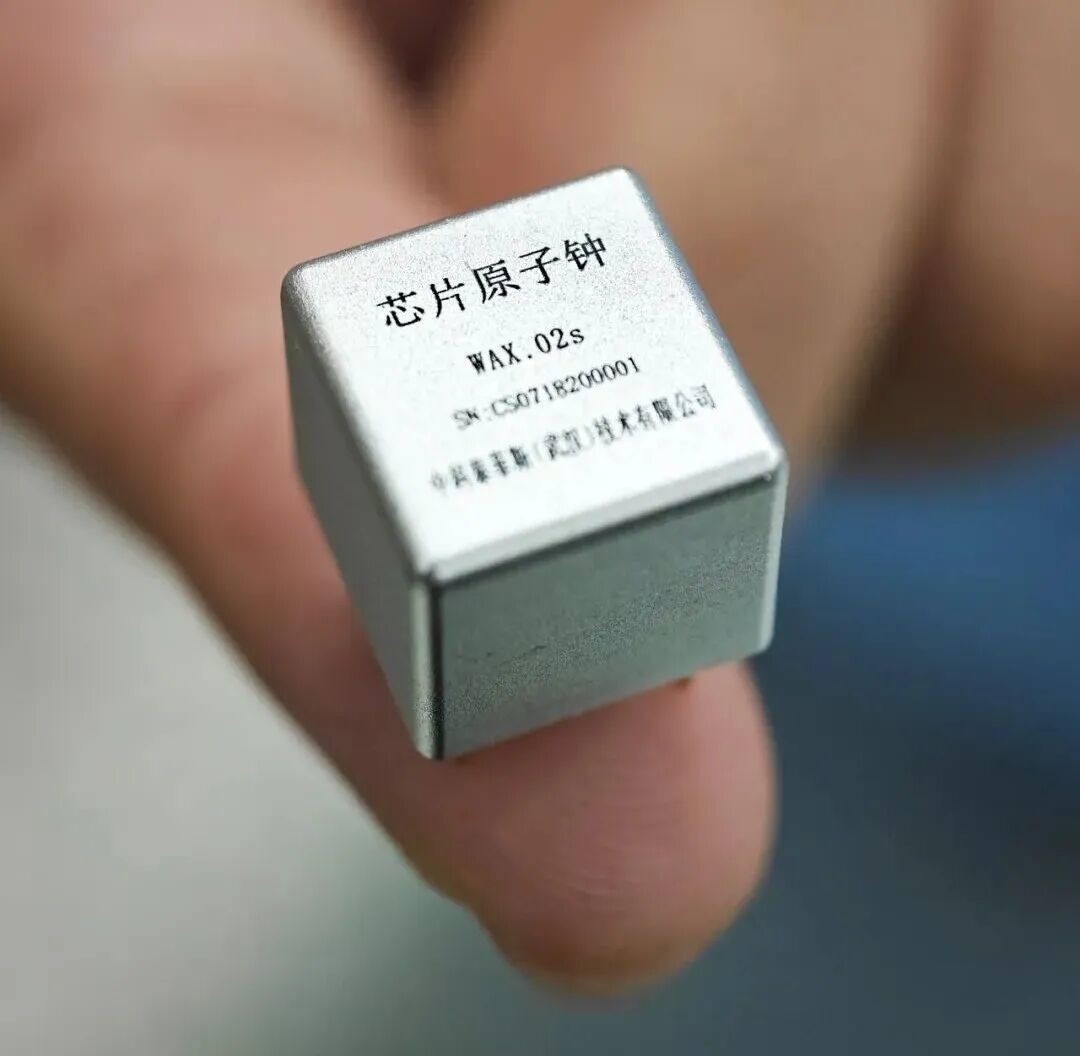
💡Mini atomic clock breakthrough boosts precision timing for AI data centers & edge devices.
⚡ 30-Second TL;DR
What Changed
Volume: 2.3 cm³, comparable to a fingernail
Why It Matters
Enables compact, ultra-precise timing for quantum devices and distributed computing infrastructures vital to large-scale AI training.
What To Do Next
Evaluate chip atomic clocks for synchronization in multi-node AI clusters via NIST benchmarks.
Key Points
- •Volume: 2.3 cm³, comparable to a fingernail
- •Accuracy: 1 second error in over 30,000 years
- •Quantum precision measurement advancement
- •Targets national high-precision timing needs
🧠 Deep Insight
Background and context from public sources — not the original article. 4 sources cited.
🔑 Enhanced Key Takeaways
- •The clock uses coherent population trapping with rubidium atoms and laser-generated optical signals, enabling chip-scale miniaturization beyond microwave-based limits[2][3].
- •It is entering mass production, targeting applications in drone swarms, underwater navigation, and secure military communications[1][2][3].
- •Less than one-seventh the size of leading US models (e.g., 17 cm³ US product) while maintaining comparable performance and lower power consumption[3].
📊 Competitor Analysis▸ Show
| Feature | Wuhan University Clock | US Leading Model |
|---|---|---|
| Volume | 2.3 cm³ | 17 cm³ |
| Size Comparison | Fingernail-sized | Larger |
| Accuracy | 1s/30,000 years | Comparable |
| Power Consumption | Lower (several watts min for traditional) | Higher |
🛠️ Technical Deep Dive
- •Employs quantum optical coherent population trapping (CPT) method, using a tiny rubidium atom chamber and compact lasers aligned to atomic energy states.
- •Atoms enter a non-absorbing state under precise optical signals, generating a stable time reference signal.
- •Reduces size and power vs. traditional microwave atomic clocks, which are limited to several hundred cm³ and several watts minimum.
🔮 Future ImplicationsAI analysis grounded in cited sources
⏳ Timeline
📎 Sources (4)
Factual claims are grounded in the sources below. Forward-looking analysis is AI-generated interpretation.
- interestingengineering.com — China Builds Worlds Smallest Atomic Clock for Drones
- business-standard.com — Tiny Precision Atomic Clocks China Swarm Drones Next Gen Military Warfare 126031900857 1
- scmp.com — Why Tiny Atomic Clocks May Hold Key China Mass Producing Cheap Swarm Drones
- qazinform.com — China Marks Nuclear Clock Advance with World First 148 Nm Laser B30643
Weekly AI Recap
Read this week's curated digest of top AI events →
👉Related Updates
AI-curated news aggregator. All content rights belong to original publishers.
Original source: cnBeta (Full RSS) ↗
This is a summary, not the original. Read the source, or get the weekly briefing.
The weekly digest
One email a week. Unsubscribe anytime.