🐼Pandaily•Freshcollected in 29m
World's First Invasive BCI Device Enters Clinical Use
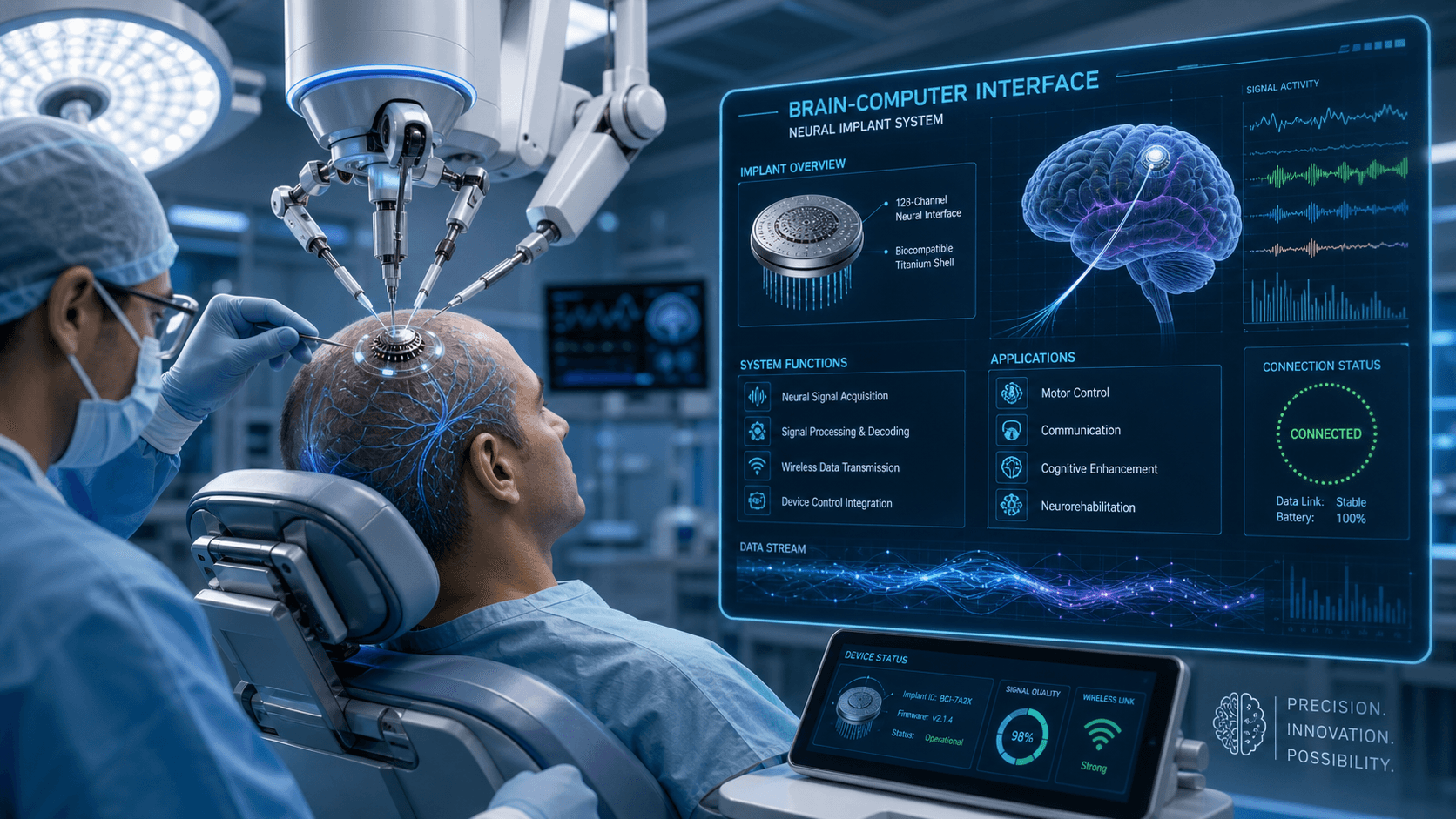
💡The first fully commercialized invasive BCI is now in clinical use, marking a major leap for neuro-tech.
⚡ 30-Second TL;DR
What Changed
NEO-ONE SCI is the first invasive BCI to achieve full commercialization.
Why It Matters
This milestone signals a shift for BCI from research labs to clinical reality, potentially accelerating the development of medical-grade neuro-prosthetics.
What To Do Next
Monitor the clinical outcome data of NEO-ONE SCI to understand the performance benchmarks for future invasive BCI hardware.
Who should care:Researchers & Academics
Key Points
- •NEO-ONE SCI is the first invasive BCI to achieve full commercialization.
- •Successful clinical implementation at Shanghai Huashan Hospital.
- •The device is now integrated into the medical insurance coverage system.
🧠 Deep Insight
AI-generated analysis for this event.
🔑 Enhanced Key Takeaways
- •The NEO-ONE SCI system utilizes a high-density electrode array designed specifically for spinal cord injury (SCI) rehabilitation, focusing on restoring motor function through neural signal decoding.
- •Neuracle's regulatory pathway involved obtaining a Class III medical device registration certificate from China's National Medical Products Administration (NMPA), which is a prerequisite for commercial clinical use.
- •The integration into the medical insurance system in Shanghai represents a significant policy milestone, as it establishes a reimbursement framework for invasive BCI procedures, potentially lowering the barrier to entry for patients.
- •Shanghai Huashan Hospital's neurosurgery department, led by prominent neurosurgeons, served as the primary clinical site, leveraging their expertise in complex neural implant surgeries.
- •The device employs a closed-loop stimulation architecture, which allows for real-time adjustment of neural signals based on the patient's physiological feedback, distinguishing it from open-loop recording-only systems.
📊 Competitor Analysis▸ Show
| Feature | Neuracle (NEO-ONE SCI) | Neuralink (Telepathy) | Synchron (Stentrode) |
|---|---|---|---|
| Invasiveness | Invasive (Direct) | Invasive (Direct) | Minimally Invasive (Endovascular) |
| Primary Target | Spinal Cord Injury | Motor Impairment/General | Motor Impairment |
| Commercial Status | Commercialized (China) | Clinical Trials (US) | Clinical Trials (US) |
| Insurance Coverage | Yes (Shanghai) | No | No |
🛠️ Technical Deep Dive
- Architecture: Utilizes a multi-channel neural signal acquisition module capable of high-fidelity sampling of cortical or spinal neural activity.
- Signal Processing: Implements onboard edge computing for real-time decoding of motor intent, reducing latency between neural firing and device response.
- Electrode Design: Features biocompatible, flexible micro-electrode arrays designed to minimize glial scarring and maintain signal stability over long-term implantation.
- Power Management: Incorporates transcutaneous wireless power transfer technology to allow for internal battery charging without percutaneous wires.
- Data Transmission: Uses high-bandwidth encrypted wireless telemetry to transmit neural data to external processing units.
🔮 Future ImplicationsAI analysis grounded in cited sources
Standardization of BCI reimbursement models will accelerate globally.
The successful inclusion of an invasive BCI in Shanghai's insurance system provides a template for other national health systems to evaluate cost-effectiveness and clinical utility.
Neuracle will expand indications beyond spinal cord injury.
The modular nature of the NEO-ONE platform allows for software-based updates to decoding algorithms, facilitating potential applications in stroke recovery and neurodegenerative diseases.
⏳ Timeline
2021-05
Neuracle completes significant Series B financing round to accelerate R&D.
2023-11
NEO-ONE SCI receives NMPA approval for clinical trials in China.
2025-02
Completion of pivotal clinical trials demonstrating safety and efficacy.
2026-04
NMPA grants final commercial registration certificate for the NEO-ONE SCI device.
2026-07
First commercial prescription and implantation performed at Shanghai Huashan Hospital.
📰
Weekly AI Recap
Read this week's curated digest of top AI events →
👉Related Updates
AI-curated news aggregator. All content rights belong to original publishers.
Original source: Pandaily ↗