Workhuman's Multi-Tenant QuickSight Reporting
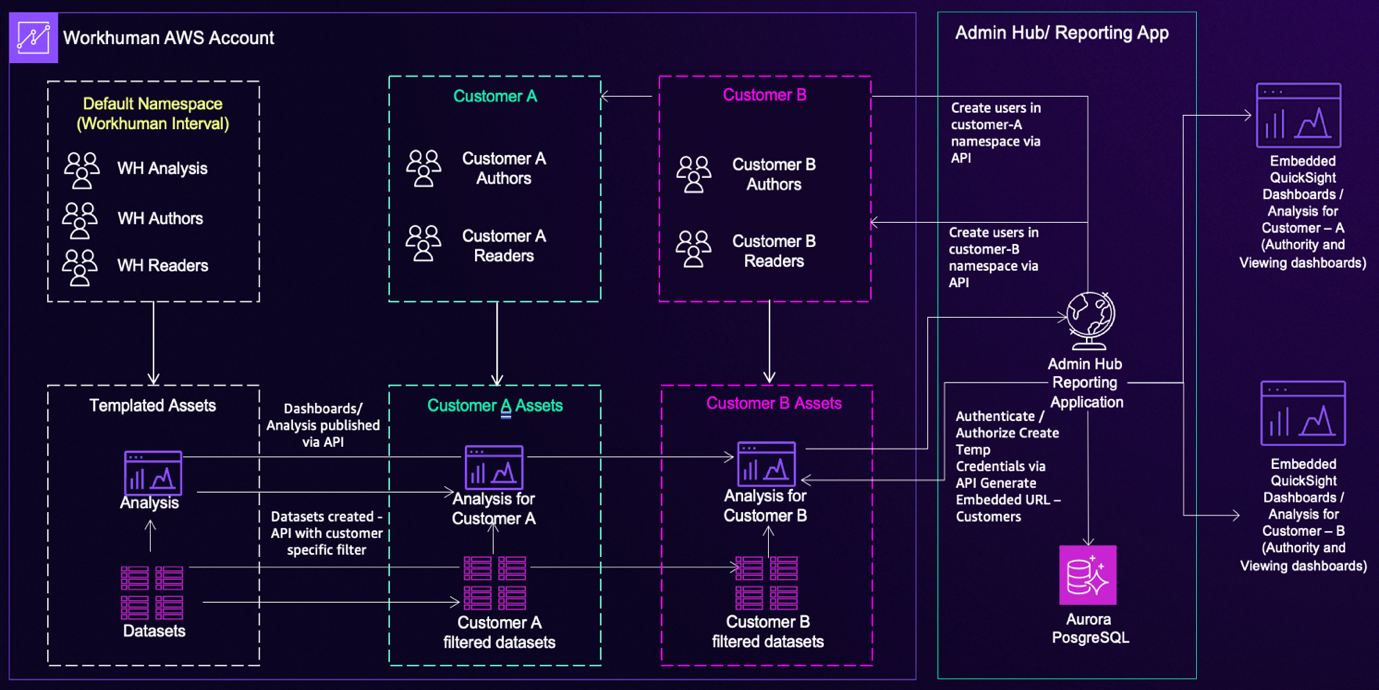
💡SaaS blueprint: Embed QuickSight for scalable multi-tenant analytics like Workhuman
⚡ 30-Second TL;DR
What Changed
Built multi-tenant self-service reporting for SaaS
Why It Matters
Enables SaaS providers to scale self-service analytics without heavy custom development, improving user experience and reducing costs.
What To Do Next
Prototype embedded QuickSight dashboards in your AWS account for SaaS analytics testing.
Key Points
- •Built multi-tenant self-service reporting for SaaS
- •Leveraged embedded Amazon QuickSight dashboards
- •Outlined architecture and implementation strategy
- •Shared business outcomes and lessons learned
🧠 Deep Insight
Background and context from public sources — not the original article. 6 sources cited.
🔑 Enhanced Key Takeaways
- •Amazon QuickSight's multi-tenant embedding capabilities enable SaaS applications to serve thousands of users without requiring user provisioning within QuickSight itself, reducing operational overhead[2].
- •Multi-tenant data isolation in QuickSight can be implemented at multiple levels—including database schema separation, row-level security, and namespace-based isolation—each with distinct architectural implications for data source management[1].
- •AWS Lambda automation enables scalable tenant provisioning workflows that create assets, apply namespace-specific permissions, and manage lifecycle operations (including tenant cleanup) across distributed SaaS environments[1].
🛠️ Technical Deep Dive
- •Multi-tenant isolation strategies: Database-level separation (dedicated schemas/clusters per tenant) requires one data source per tenant; application-level isolation uses shared infrastructure with row-level security or namespace-based filtering[1].
- •Embedding workflow: SaaS applications call QuickSight APIs to generate single-use, time-limited URLs embedded in iFrames, eliminating the need for QuickSight user authentication and passing user context directly via the embedding URL[1].
- •Authentication architecture: Amazon Cognito User Pools with pre-token generation Lambda triggers inject tenant context (tenant_id, tenant_role) into JWT tokens, enabling downstream middleware to enforce tenant isolation at the application layer[3].
- •Automation and provisioning: AWS Lambda functions automate namespace creation, group/user provisioning, asset deployment, and permission assignment across tenants; namespace creation is asynchronous and requires status verification[1].
- •Identity federation: Groups can be managed externally to QuickSight using identity federation, reducing manual provisioning overhead in large-scale deployments[1].
🔮 Future ImplicationsAI analysis grounded in cited sources
⏳ Timeline
📎 Sources (6)
Factual claims are grounded in the sources below. Forward-looking analysis is AI-generated interpretation.
Weekly AI Recap
Read this week's curated digest of top AI events →
👉Related Updates
AI-curated news aggregator. All content rights belong to original publishers.
Original source: AWS Machine Learning Blog ↗
This is a summary, not the original. Read the source, or get the weekly briefing.
Weekly AI briefing
One email a week. Unsubscribe anytime.