WorkBuddy’s Ecosystem Edge
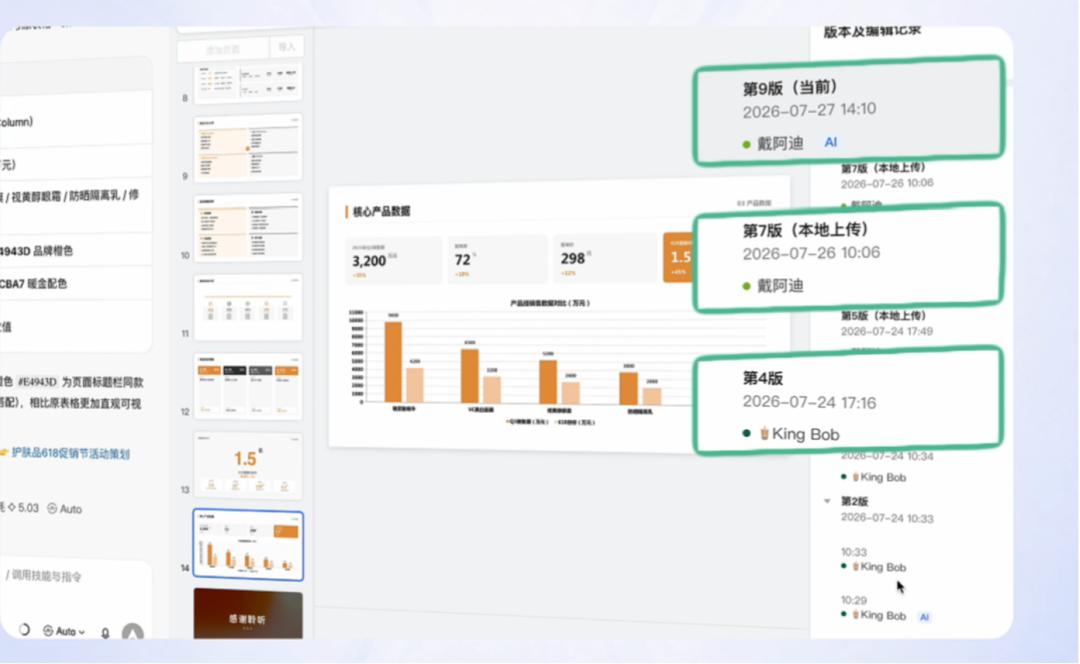
WorkBuddy may not have the best raw capabilities, but Tencent’s ecosystem could decide the next AI assistant battle.
30-Second TL;DR
What Changed
WorkBuddy’s underlying capabilities are rated as acceptable rather than exceptional.
Why It Matters
For AI builders, the review suggests that distribution, integrations, and ecosystem access can matter as much as raw model capability. Tencent’s platform advantages could help WorkBuddy gain adoption even if its standalone performance is only average.
What To Do Next
Run a one-week pilot of WorkBuddy on one repetitive workflow and measure task success, setup time, and the usefulness of its available ecosystem integrations.
Key Points
- •WorkBuddy’s underlying capabilities are rated as acceptable rather than exceptional.
- •Tencent’s ecosystem is presented as WorkBuddy’s strongest competitive advantage.
- •The product’s next challenge is maintaining its lead as the market enters a more competitive phase.
Deep Insight
AI-generated analysis for this event — not the original article.
Enhanced Key Takeaways
- •Tencent WorkBuddy (Tencent Gongzuo) leverages deep integration with WeChat Work (WeCom) to facilitate seamless cross-organizational collaboration, a feature often cited as its primary moat.
- •The platform utilizes Tencent's proprietary Hunyuan large language model to power its AI-driven document summarization and automated meeting minutes features.
- •Market analysis indicates that WorkBuddy's adoption is heavily concentrated within large-scale enterprises that already utilize Tencent's cloud infrastructure and enterprise communication suites.
- •Recent updates have focused on 'Agent-as-a-Service' capabilities, allowing enterprises to deploy custom AI agents that interact directly with internal databases via Tencent Cloud.
- •Despite ecosystem advantages, the platform faces significant pressure from specialized SaaS providers offering more granular, industry-specific workflow automation tools.
Competitor Analysis
- Tencent WorkBuddy
- WeChat/Tencent Cloud
- DingTalk (Alibaba)
- Alibaba Cloud/Taobao
- Feishu/Lark (ByteDance)
- ByteDance/Global SaaS
- Tencent WorkBuddy
- Hunyuan LLM
- DingTalk (Alibaba)
- Tongyi Qianwen
- Feishu/Lark (ByteDance)
- Doubao/Gemini-like
- Tencent WorkBuddy
- Large Enterprise
- DingTalk (Alibaba)
- SME/Large Enterprise
- Feishu/Lark (ByteDance)
- Tech/Creative/Global
- Tencent WorkBuddy
- Tiered/Enterprise
- DingTalk (Alibaba)
- Freemium/Subscription
- Feishu/Lark (ByteDance)
- Tiered/Subscription
| Feature | Tencent WorkBuddy | DingTalk (Alibaba) | Feishu/Lark (ByteDance) |
|---|---|---|---|
| Ecosystem | WeChat/Tencent Cloud | Alibaba Cloud/Taobao | ByteDance/Global SaaS |
| AI Integration | Hunyuan LLM | Tongyi Qianwen | Doubao/Gemini-like |
| Target Market | Large Enterprise | SME/Large Enterprise | Tech/Creative/Global |
| Pricing Model | Tiered/Enterprise | Freemium/Subscription | Tiered/Subscription |
Technical Deep Dive
- Architecture: Built on a microservices-based cloud-native framework designed for high-concurrency enterprise environments.
- AI Engine: Integrates Tencent Hunyuan foundation model via API, supporting multimodal inputs including text, image, and document parsing.
- Security: Implements end-to-end encryption and localized data residency options to comply with Chinese data security regulations.
- Interoperability: Utilizes Open Platform APIs to allow third-party developers to build mini-apps that run within the WorkBuddy container.
Future ImplicationsAI analysis grounded in cited sources
Timeline
- 2023-09Tencent officially unveils the Hunyuan large language model, laying the foundation for WorkBuddy's AI features.
- 2024-05Tencent integrates advanced AI agent capabilities into the WorkBuddy suite to enhance enterprise workflow automation.
- 2025-03WorkBuddy expands its open platform ecosystem to include third-party AI plugin support.
- 2026-02Tencent announces a strategic push to deepen WorkBuddy's integration with Tencent Cloud's enterprise data lakes.
Weekly AI Recap
Read this week's curated digest of top AI events →
AI-curated news aggregator. All content rights belong to original publishers.
Original source: 钛媒体 ↗
This is a summary, not the original. Read the source, or get the weekly briefing.
The weekly digest
One email a week. Unsubscribe anytime.