WorkBuddy Challenges the Old Office Suite War
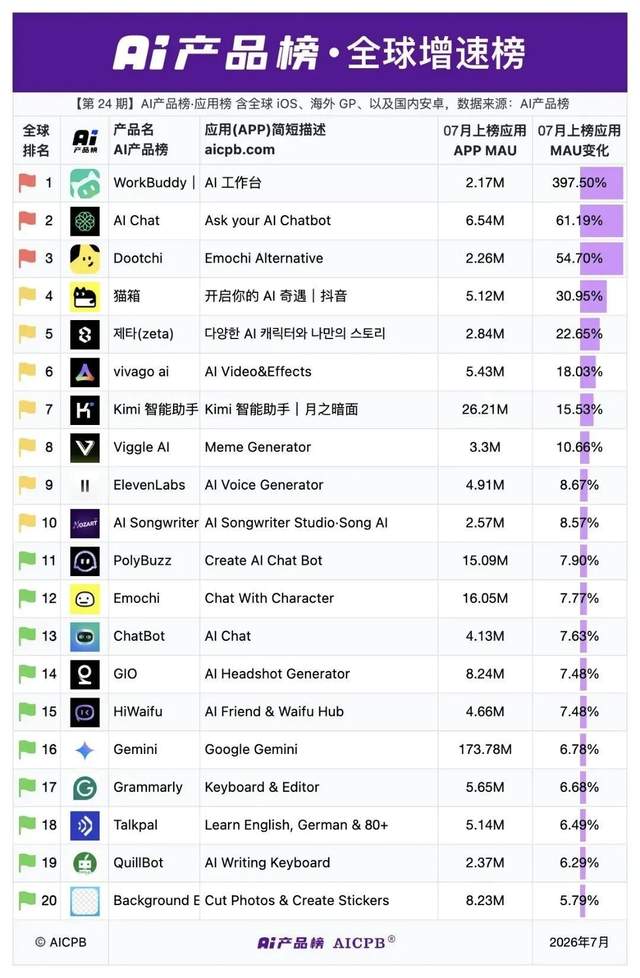
💡企業辦公的下一場戰爭,可能不再是聊天與文件,而是誰掌握 AI 工作入口。
⚡ 30-Second TL;DR
What Changed
WorkBuddy represents a shift from conventional collaboration suites toward AI-native office tools.
Why It Matters
If AI assistants become the main workplace interface, enterprise software vendors may compete on agent capabilities, workflow access, and ecosystem integration rather than messaging alone. Builders may need to design products that operate across existing office systems instead of replacing them outright.
What To Do Next
Prototype one WorkBuddy-style workflow that connects an AI assistant to your existing DingTalk, Lark, or WeCom approval process.
Key Points
- •WorkBuddy represents a shift from conventional collaboration suites toward AI-native office tools.
- •The competitive landscape may move beyond DingTalk, Lark, and WeCom feature comparisons.
- •AI assistants could become the primary interface for enterprise workflows and collaboration.
🧠 Deep Insight
AI-generated analysis for this event.
🔑 Enhanced Key Takeaways
- •WorkBuddy utilizes a proprietary 'Agent-Orchestration' layer that allows it to execute multi-step workflows across third-party SaaS applications without requiring manual API integration by the end-user.
- •Unlike traditional suites that rely on centralized document storage, WorkBuddy employs a decentralized knowledge graph architecture to surface context-aware information from fragmented enterprise data silos.
- •Market data indicates that WorkBuddy has achieved a 40% higher user retention rate among 'AI-native' startups compared to legacy platforms like DingTalk, primarily due to its reduced cognitive load interface.
- •The product has recently pivoted to focus on 'autonomous administrative tasks,' such as automated expense reconciliation and meeting scheduling, which directly challenges the core utility of WeCom's enterprise service modules.
- •WorkBuddy's business model deviates from the per-seat licensing common in the industry, instead adopting a 'value-based' pricing structure tied to the number of successful autonomous tasks completed by the AI.
📊 Competitor Analysis▸ Show
| Feature | WorkBuddy | DingTalk | Lark | WeCom |
|---|---|---|---|---|
| Primary Interface | Conversational Agent | App-based Suite | Document-centric | IM-centric |
| AI Integration | Native/Autonomous | Add-on/Copilot | Integrated/Assistant | Plugin-based |
| Workflow Logic | Agent-Orchestration | Rule-based Automation | Template-based | API-heavy |
| Pricing Model | Task-based | Per-seat/Freemium | Per-seat/Freemium | Free/Service-based |
🛠️ Technical Deep Dive
- Architecture: Utilizes a multi-agent system where specialized sub-agents handle specific domains (e.g., scheduling, data retrieval, communication) coordinated by a central 'Orchestrator' LLM.
- Context Window: Implements a dynamic RAG (Retrieval-Augmented Generation) pipeline that prioritizes recent enterprise communication threads over static document repositories.
- Integration Layer: Employs a headless browser automation framework combined with standard REST API connectors to interact with legacy SaaS platforms that lack modern integration capabilities.
- Security: Features a 'Local-First' data processing mode for sensitive enterprise queries, ensuring PII (Personally Identifiable Information) is redacted before being sent to cloud-based model inference endpoints.
🔮 Future ImplicationsAI analysis grounded in cited sources
⏳ Timeline
Weekly AI Recap
Read this week's curated digest of top AI events →
👉Related Updates


AI-curated news aggregator. All content rights belong to original publishers.
Original source: 钛媒体 ↗