ByteDance Pushes Manga Dramas Toward Industrial Scale
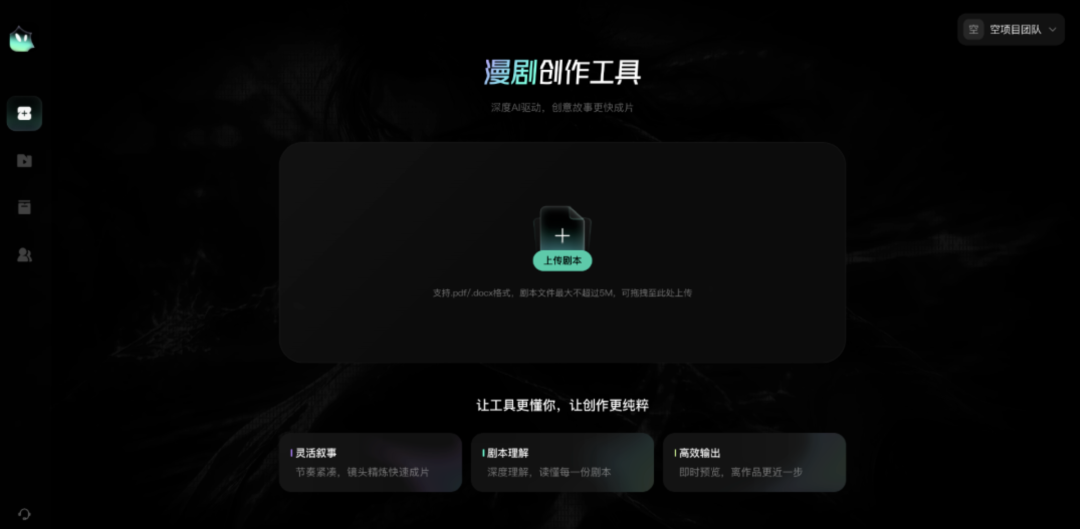
💡ByteDance’s next manga-drama tool could reshape AI content pipelines and challenge LibTV’s position.
⚡ 30-Second TL;DR
What Changed
ByteDance has already placed 即夢 and 小雲雀 in the manga-drama market.
Why It Matters
A new ByteDance tool could accelerate AI-assisted manga-drama production and raise competitive pressure across the creator ecosystem. For founders and creators, the key issue is whether ByteDance can turn separate generation tools into a repeatable, scalable production pipeline.
What To Do Next
Benchmark 即夢 and 小雲雀 on a three-episode pilot for character consistency, production time, and per-episode cost before adopting ByteDance’s new tool.
Key Points
- •ByteDance has already placed 即夢 and 小雲雀 in the manga-drama market.
- •The company is reportedly adding another tool instead of relying solely on its existing products.
- •LibTV and other incumbents may face pressure from ByteDance’s integrated content-production strategy.
🧠 Deep Insight
AI-generated analysis for this event.
🔑 Enhanced Key Takeaways
- •ByteDance's strategy focuses on 'Short Drama' (短剧) production, leveraging AI to drastically reduce the cost of script-to-video conversion, which historically required significant manual labor in storyboard and animation.
- •The new tool is reportedly designed to integrate directly with Douyin's recommendation algorithm, allowing for real-time A/B testing of AI-generated manga-drama segments to optimize viewer retention.
- •Industry analysts note that ByteDance is shifting from being a mere distribution platform for short dramas to an infrastructure provider, aiming to standardize the 'AI-native' production pipeline.
- •The move is part of a broader 'AI for Content' initiative within ByteDance, which seeks to mitigate rising production costs for professional content creators on its platforms.
- •LibTV and other incumbents are responding by forming alliances with specialized AI animation studios to differentiate their content quality from ByteDance's potentially more automated, high-volume output.
📊 Competitor Analysis▸ Show
| Feature | ByteDance (Jimeng/Xiaoyunque) | LibTV | Traditional Studios |
|---|---|---|---|
| Workflow | Fully Automated/Industrial | Hybrid AI-Assisted | Manual/Human-Centric |
| Integration | Native to Douyin/TikTok | Third-party/Standalone | N/A |
| Cost | Low (Scale-driven) | Medium | High |
| Output Speed | Real-time/Rapid | Moderate | Slow |
🛠️ Technical Deep Dive
- The underlying architecture for ByteDance's video tools utilizes a proprietary latent diffusion model optimized for temporal consistency in manga-style character rendering.
- Implementation involves a multi-stage pipeline: LLM-based script generation, followed by text-to-image storyboard generation, and finally image-to-video animation using motion-control adapters.
- The system employs a 'Reference-Net' approach to maintain character consistency across long-form short drama episodes, a common pain point in generative video.
- Integration with the ByteDance ecosystem allows for fine-tuning models on proprietary high-quality video datasets, improving aesthetic alignment with popular manga genres.
🔮 Future ImplicationsAI analysis grounded in cited sources
⏳ Timeline
Weekly AI Recap
Read this week's curated digest of top AI events →
👉Related Updates


AI-curated news aggregator. All content rights belong to original publishers.
Original source: 钛媒体 ↗