Windows 11 26H2 continues small-step update strategy
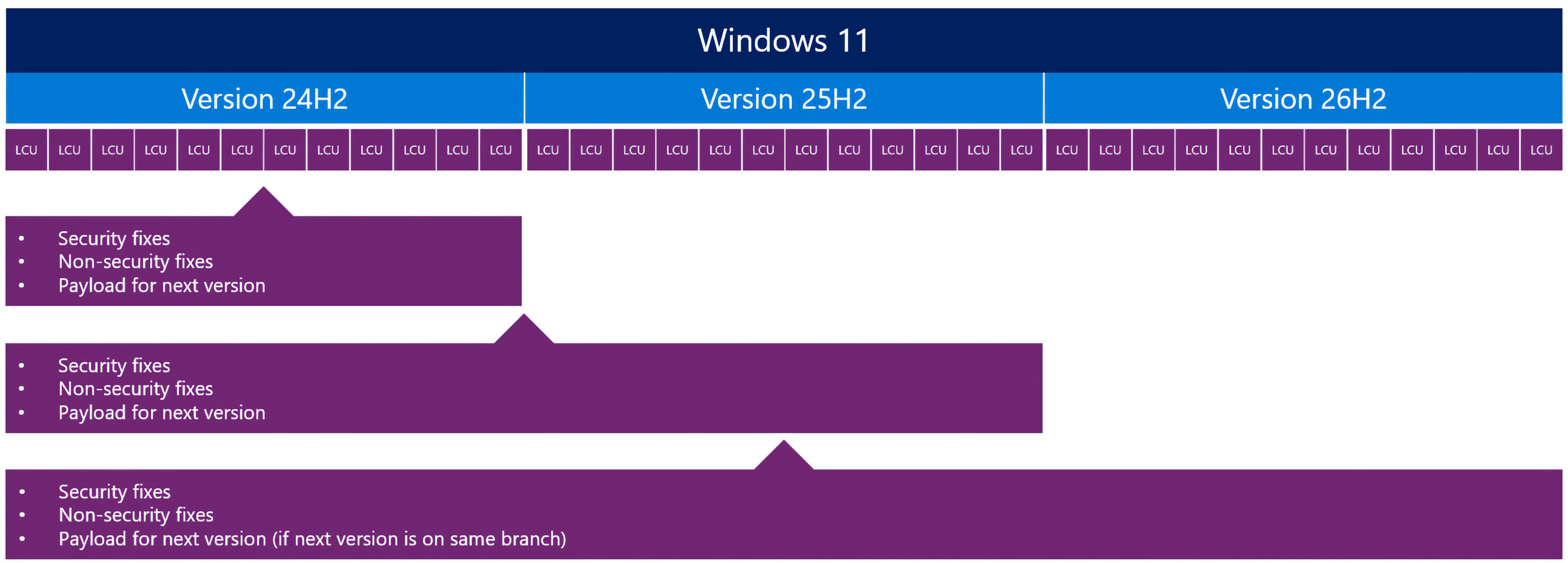
Stable OS updates mean fewer breaking changes for your local AI development and inference workflows.
30-Second TL;DR
What Changed
Windows 11 26H2 prioritizes stability and rapid deployment
Why It Matters
For AI developers, this ensures a stable environment for local model execution without unexpected OS-level breaking changes. It simplifies long-term support planning for enterprise AI applications.
What To Do Next
Standardize your local AI development environment on Windows 11 26H2 to leverage improved stability for long-running inference tasks.
Key Points
- •Windows 11 26H2 prioritizes stability and rapid deployment
- •No changes to existing hardware requirements or thresholds
- •Update delivered via lightweight enablement packages
Deep Insight
AI-generated analysis for this event — not the original article.
Enhanced Key Takeaways
- •The 26H2 update cycle aligns with Microsoft's shift toward a 'Windows as a Service' model that emphasizes annual feature updates delivered in the second half of the calendar year.
- •Microsoft is leveraging the 'Experience Pack' delivery mechanism to decouple UI improvements from core OS kernel updates, allowing for faster iteration of shell components.
- •Internal telemetry indicates that the enablement package strategy has significantly reduced the average time required for enterprise-wide deployment compared to full-image upgrades.
- •The 26H2 release includes refined AI-driven power management optimizations designed to extend battery life on NPU-equipped hardware without requiring new silicon.
- •Security enhancements in 26H2 focus on hardening the virtualization-based security (VBS) stack to mitigate emerging firmware-level attack vectors.
Competitor Analysis
- Windows 11 26H2
- Enablement Packages
- macOS (Latest)
- Annual Major OS
- ChromeOS
- Frequent Rolling
- Windows 11 26H2
- Strict (TPM 2.0)
- macOS (Latest)
- Silicon-Specific
- ChromeOS
- Flexible
- Windows 11 26H2
- Enterprise-Focused
- macOS (Latest)
- Managed/Consumer
- ChromeOS
- Cloud-Native
| Feature | Windows 11 26H2 | macOS (Latest) | ChromeOS |
|---|---|---|---|
| Update Strategy | Enablement Packages | Annual Major OS | Frequent Rolling |
| Hardware Req | Strict (TPM 2.0) | Silicon-Specific | Flexible |
| Deployment | Enterprise-Focused | Managed/Consumer | Cloud-Native |
Technical Deep Dive
- Utilization of Unified Update Platform (UUP) to minimize download sizes by only fetching differential binary changes.
- Implementation of the latest Windows Subsystem for Linux (WSL) kernel updates integrated directly into the 26H2 baseline.
- Refinement of the Windows Kernel Scheduler to better prioritize background tasks on hybrid architecture CPUs (P-cores and E-cores).
- Integration of updated driver frameworks that improve compatibility with next-generation peripheral standards.
Future ImplicationsAI analysis grounded in cited sources
Timeline
- 2021-10Windows 11 officially launches with a new design language and hardware requirements.
- 2022-09Windows 11 22H2 released as the first major feature update.
- 2023-10Windows 11 23H2 introduced, solidifying the annual update cadence.
- 2024-10Windows 11 24H2 released, focusing on AI integration and NPU support.
- 2025-10Windows 11 25H2 released, continuing the stability-first small-step strategy.
Weekly AI Recap
Read this week's curated digest of top AI events →
Related Updates

AI-curated news aggregator. All content rights belong to original publishers.
Original source: cnBeta (Full RSS) ↗
This is a summary, not the original. Read the source, or get the weekly briefing.
The weekly digest
One email a week. Unsubscribe anytime.