Will AWS challenge NVIDIA in the AI chip market?
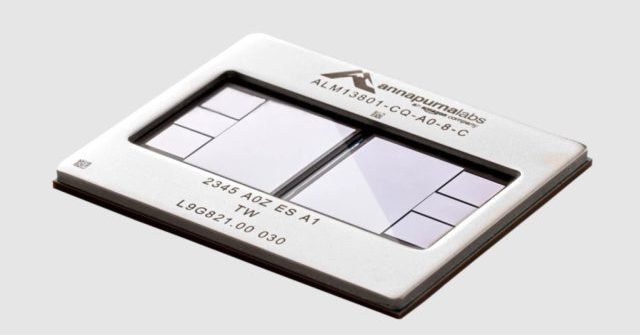
AWS may challenge NVIDIA's dominance with its own AI chips, potentially lowering cloud infrastructure costs.
30-Second TL;DR
What Changed
AWS is positioning itself to capture market share in the AI hardware sector.
Why It Matters
If AWS successfully scales its own chips, it could reduce dependency on NVIDIA and lower infrastructure costs for developers. This would significantly alter the competitive landscape of AI cloud computing.
What To Do Next
Monitor AWS Inferentia and Trainium performance benchmarks to evaluate if they can replace NVIDIA GPUs for your specific model training workloads.
Key Points
- •AWS is positioning itself to capture market share in the AI hardware sector.
- •The strategy involves large-scale distribution of proprietary AI accelerators.
- •This marks a potential strategic pivot against NVIDIA's hardware monopoly.
Deep Insight
AI-generated analysis for this event — not the original article.
Enhanced Key Takeaways
- •AWS has been developing its custom silicon strategy for over a decade, starting with the acquisition of Annapurna Labs in 2015 to build the Nitro system.
- •The Trainium and Inferentia chip lines are specifically optimized for AWS's internal infrastructure, allowing for lower cost-per-inference compared to general-purpose GPUs.
- •AWS is increasingly offering 'Capacity Blocks' for Trainium instances, allowing customers to reserve compute power in advance, directly challenging NVIDIA's supply-constrained H100/B200 availability.
- •Industry analysts note that AWS's strategy focuses on 'vertical integration'—controlling the hardware, the virtualization layer (Nitro), and the software stack (Neuron SDK) to create a closed, optimized ecosystem.
- •Unlike NVIDIA, which sells hardware to all cloud providers, AWS's proprietary chips are exclusive to the AWS cloud, creating a 'lock-in' mechanism that incentivizes long-term platform migration.
Competitor Analysis
- AWS Trainium2
- Large-scale LLM Training
- NVIDIA Blackwell (B200)
- General Purpose AI/HPC
- Google TPU v5p
- Large-scale LLM Training
- AWS Trainium2
- Custom ASIC
- NVIDIA Blackwell (B200)
- GPU (Hopper/Blackwell)
- Google TPU v5p
- Custom ASIC (CISC)
- AWS Trainium2
- AWS Neuron SDK
- NVIDIA Blackwell (B200)
- CUDA (Industry Standard)
- Google TPU v5p
- JAX/TensorFlow/PyTorch
- AWS Trainium2
- AWS Cloud Only
- NVIDIA Blackwell (B200)
- Global/Multi-Cloud
- Google TPU v5p
- Google Cloud Only
| Feature | AWS Trainium2 | NVIDIA Blackwell (B200) | Google TPU v5p |
|---|---|---|---|
| Primary Use | Large-scale LLM Training | General Purpose AI/HPC | Large-scale LLM Training |
| Architecture | Custom ASIC | GPU (Hopper/Blackwell) | Custom ASIC (CISC) |
| Ecosystem | AWS Neuron SDK | CUDA (Industry Standard) | JAX/TensorFlow/PyTorch |
| Availability | AWS Cloud Only | Global/Multi-Cloud | Google Cloud Only |
Technical Deep Dive
- Trainium2 chips are built using a 5nm process node and are designed to deliver up to 4x faster training performance than first-generation Trainium chips.
- The architecture utilizes a high-bandwidth memory (HBM) subsystem to handle the massive data throughput required for training models with hundreds of billions of parameters.
- AWS Neuron SDK provides a compiler that automatically optimizes PyTorch and TensorFlow models to run on Trainium/Inferentia hardware, abstracting the underlying hardware complexity from developers.
- The Nitro System offloads networking, storage, and security functions from the main CPU, allowing Trainium clusters to dedicate nearly all compute resources to AI workloads.
- Inter-chip communication is facilitated by AWS's proprietary high-speed interconnect, which scales across thousands of chips in a single UltraCluster configuration.
Future ImplicationsAI analysis grounded in cited sources
Timeline
- 2015-01AWS acquires Annapurna Labs to begin internal custom silicon development.
- 2018-11AWS announces Inferentia, its first custom AI inference chip.
- 2020-12AWS launches Trainium, the first custom chip dedicated to deep learning training.
- 2023-11AWS unveils Trainium2, promising significant performance gains for large model training.
- 2024-04AWS announces the general availability of Amazon EC2 Trn2 instances powered by Trainium2.
Weekly AI Recap
Read this week's curated digest of top AI events →
Related Updates
AI-curated news aggregator. All content rights belong to original publishers.
Original source: ITmedia AI+ (日本) ↗
This is a summary, not the original. Read the source, or get the weekly briefing.
The weekly digest
One email a week. Unsubscribe anytime.