Will Agent Skills replace low-code workflow platforms?
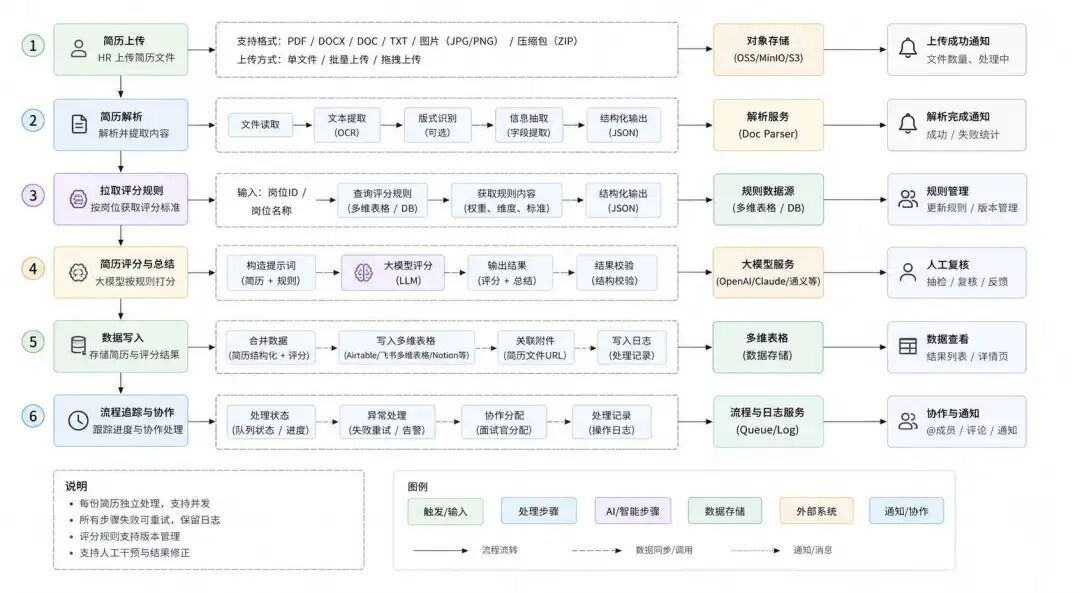
💡Are Agent Skills killing low-code platforms? A practical comparison.
⚡ 30-Second TL;DR
What Changed
Workflow platforms (Coze/Dify) provide visual, stable, and auditable processes.
Why It Matters
Developers should not abandon low-code platforms for pure agentic flows yet. Instead, focus on integrating Agent capabilities as 'nodes' within established workflow systems to balance innovation with reliability.
What To Do Next
Build a hybrid system where your Coze/Dify workflow handles the core logic and uses an Agent node for complex, non-deterministic sub-tasks.
Key Points
- •Workflow platforms (Coze/Dify) provide visual, stable, and auditable processes.
- •Agent Skills offer dynamic execution but lack the rigid control required for enterprise production.
- •Workflow platforms excel in error tracking, permission management, and team collaboration.
- •The future likely involves a hybrid approach combining Agent flexibility with Workflow stability.
🧠 Deep Insight
Web-grounded analysis with 34 cited sources.
🔑 Enhanced Key Takeaways
- •AI Agent Skills are formalized as modular, reusable units of procedural logic and domain knowledge, enabling agents to dynamically load specialized expertise and execute tasks through structured, step-based instructions and tool usage, rather than merely possessing knowledge.
- •Low-code AI agent platforms differentiate from traditional low-code by integrating Large Language Model (LLM) orchestration, tool-use frameworks, and agentic workflow design, allowing for autonomous, multi-step actions across integrated systems, extending beyond simple responses.
- •Platforms like Dify employ a 'Beehive' microservices architecture, where core components such as the Retrieval Augmented Generation (RAG) engine, agent framework, and workflow orchestration function independently yet communicate via standardized interfaces, enhancing scalability and resilience.
- •The broader low-code/no-code movement, which underpins these workflow platforms, has roots dating back to the 1970s-1990s, with the term 'low-code' being formally defined by Forrester in 2014, signifying a long evolution towards democratizing software development.
- •Enterprise adoption of AI agents in 2026 often involves 'Level 2-3 agents,' which are either strategic automation platforms with predefined workflows or co-pilot agents requiring human oversight for critical decisions, indicating a measured approach to autonomy in production environments.
📊 Competitor Analysis▸ Show
| Feature / Platform | Coze | Dify | N8N |
|---|---|---|---|
| Primary Use Case | Conversational AI, chatbots, rapid experimentation, cross-platform deployment. | LLM-powered applications, RAG, AI-native applications, sophisticated agent orchestration. | General workflow automation, integration-heavy automations, connecting SaaS tools, data movement, AI/ML workflows. |
| Ease of Use | Highly beginner-friendly, drag-and-drop chatbot builder, no-code/low-code. | Low-code/no-code experience, visual workflow engine, accessible to non-technical users. | Visual workflow builder, node-based interface, user-friendly for developers/technical users, learning curve for beginners. |
| Deployment/Hosting | Primarily cloud-based, Coze Studio (open-source version) is self-hostable. | Cloud-based by default, open-source with self-hosting options. | Open-source, self-hostable or cloud service. |
| AI Capabilities | LLM integration, RAG (built-in document upload, vectorization, semantic retrieval), plugin system, dual execution modes (exploration/planning). | Comprehensive RAG pipelines (hybrid search, parent-child retrieval), agent orchestration (ReAct, Function Calling, Chain-of-Thoughts), multi-model support, LLMOps. | Integrates AI tools (e.g., OpenAI's GPT-4o, Whisper), supports custom code (JavaScript/Python) within workflows, AI agent capabilities. |
| Integration Breadth | Supports various social platforms (TikTok, Lark, Discord, Telegram), ByteDance plugin marketplace. | Middleware platform between data, LLM providers, and end-users. | Extensive integrations (hundreds of built-in nodes), connects with various applications, APIs, and services. |
| Open Source | Coze Studio is open-source. | Yes. | Yes. |
🛠️ Technical Deep Dive
- Dify: Utilizes a 'Beehive' microservices architecture, where core components like the RAG engine, agent framework, and workflow orchestration operate independently but communicate via standardized interfaces. Its technical stack includes PostgreSQL and vector databases for data storage, and Celery for asynchronous task processing. Dify's RAG engine supports sophisticated features such as hybrid search, parent-child retrieval, and multi-path retrieval strategies.
- Coze: Features a backend developed with Golang for high performance and concurrency, and a frontend built with React + TypeScript. It is based on a microservices architecture and follows Domain-Driven Design principles. Coze's data storage components include MySQL, ClickHouse, Redis, MinIO, Milvus (vector database), etcd, and NSQ (message queue).
- N8N: Operates as a node-based visual workflow builder where each step is a node that receives, transforms, and passes on data. Workflows are directed graphs of nodes, with each run carrying an array of JSON items. It supports custom JavaScript or Python code within its nodes for advanced logic and can be deployed via Docker.
- AI Agent Skills: Defined as reusable, structured procedures that include a Goal, Trigger, Step sequence, explicit Tool & MCP (Model Context Protocol) usage, Output contract, and Guardrails. They follow a 'progressive disclosure' architecture, where agents discover skills by their description and then activate them to read full instructions for execution.
🔮 Future ImplicationsAI analysis grounded in cited sources
⏳ Timeline
📎 Sources (34)
Factual claims are grounded in the sources below. Forward-looking analysis is AI-generated interpretation.
- animaapp.com
- pinggy.io
- gleecus.com
- rasa.com
- agent.nexus
- medium.com
- d.foundation
- dify.ai
- develocity.io
- kissflow.com
- formstack.com
- aimultiple.com
- lightnode.com
- meterra.ai
- medium.com
- browseract.com
- digitalocean.com
- colonelserver.com
- aalto.fi
- fast.io
- zeabur.com
- medium.com
- geeksforgeeks.org
- n8n.io
- jimmysong.io
- dev.to
- github.com
- medium.com
- sysdig.com
- codestoresolutions.com
- dust.tt
- flatlogic.com
- monkedo.com
- smartsuite.com
Weekly AI Recap
Read this week's curated digest of top AI events →
👉Related Updates


AI-curated news aggregator. All content rights belong to original publishers.
Original source: 虎嗅 ↗