Wiki Memory Gives AI Agents Persistent Knowledge
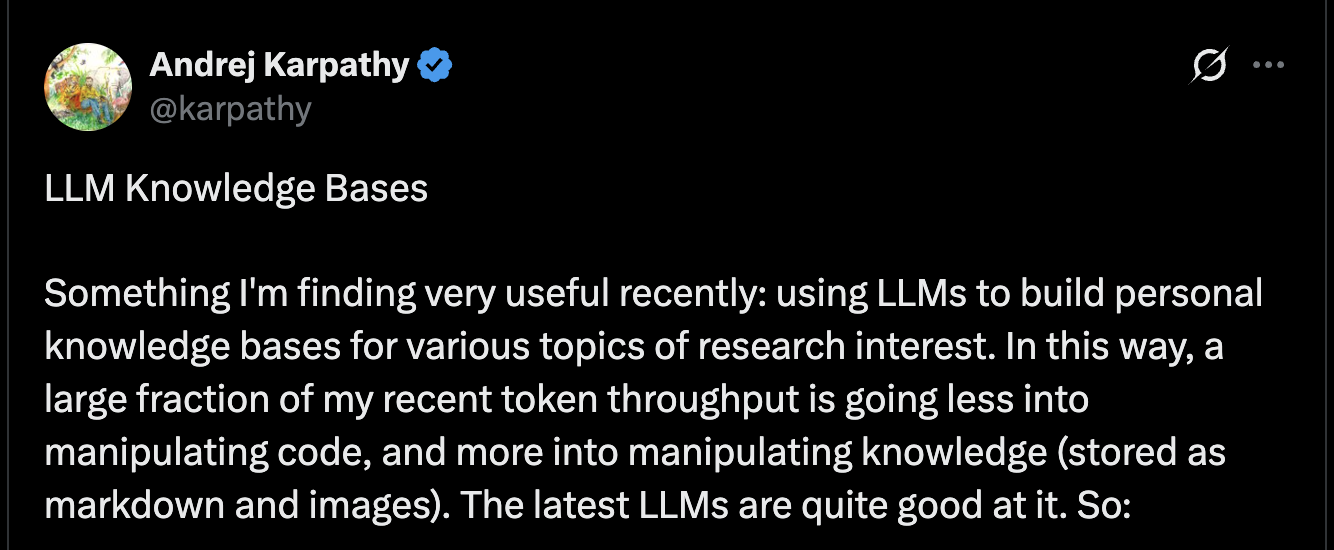
💡See when persistent, agent-compressed files may work better than conventional RAG.
⚡ 30-Second TL;DR
What Changed
Uses an agent to compress raw data into a persistent file-based knowledge base
Why It Matters
Wiki Memory could simplify persistent context management for agents that need to accumulate and refine knowledge over time. Its comparison with RAG helps builders choose between retrieval-based context and an evolving, agent-maintained knowledge base.
What To Do Next
Prototype Wiki Memory on a small document set and compare its answer quality, update behavior, and storage costs against your existing RAG pipeline.
Key Points
- •Uses an agent to compress raw data into a persistent file-based knowledge base
- •Positions Wiki Memory as a distinct approach from conventional RAG
- •Provides real examples and guidance on when file-based memory is appropriate
🧠 Deep Insight
Background and context from public sources — not the original article. 5 sources cited.
🔑 Enhanced Key Takeaways
- •Wiki Memory utilizes the Open Knowledge Format (OKF), a metadata standard incorporating YAML front matter to ensure agent-readable structure and filterability.
- •Unlike reactive RAG systems, Wiki Memory implementations like OpenWiki Brains operate proactively by autonomously fetching and updating context on a scheduled basis.
- •The architecture is designed to facilitate 'knowledge compounding,' allowing agents to build upon synthesized information rather than re-processing raw data for every query.
- •LangChain's implementation includes specialized 'Brains' (Code Brain and Personal Brain) that integrate directly with external platforms like Gmail, Notion, and GitHub.
- •The industry has shifted toward 'Agentic Memory Operating Systems' that treat memory as a first-class component, supported by specific benchmarks like LoCoMo and LongMemEval.
📊 Competitor Analysis▸ Show
| Feature | Wiki Memory (LangChain) | DeepWiki (Cognition) | AutoWiki (Factory) |
|---|---|---|---|
| Primary Focus | General Agentic Knowledge | Codebase Documentation | Codebase Documentation |
| Standard | Open Knowledge Format (OKF) | Proprietary | Proprietary |
| Integration | Gmail, Notion, GitHub | Git Repositories | Git Repositories |
| Pricing | Open Source / Framework | Enterprise / SaaS | Enterprise / SaaS |
🛠️ Technical Deep Dive
- Architecture: Utilizes a persistent, file-based knowledge layer (Markdown-based) that acts as an intermediary between raw data and the LLM.
- Metadata Handling: Employs YAML front matter to store structured attributes, enabling efficient filtering and retrieval beyond vector similarity.
- Synthesis Mechanism: Employs an agent-driven compression loop that transforms raw logs, transcripts, and code into dense, high-level summaries.
- Scheduling: Implements proactive background workers that autonomously poll data sources to maintain the freshness of the knowledge base.
- Interoperability: Adheres to the Open Knowledge Format (OKF) to ensure compatibility across different agentic frameworks.
🔮 Future ImplicationsAI analysis grounded in cited sources
⏳ Timeline
📎 Sources (5)
Factual claims are grounded in the sources below. Forward-looking analysis is AI-generated interpretation.
Weekly AI Recap
Read this week's curated digest of top AI events →
👉Related Updates
AI-curated news aggregator. All content rights belong to original publishers.
Original source: LangChain Blog ↗
This is a summary, not the original. Read the source, or get the weekly briefing.
Weekly AI briefing
One email a week. Unsubscribe anytime.