Wiener Intelligence publishes AI prognostic model in Nature
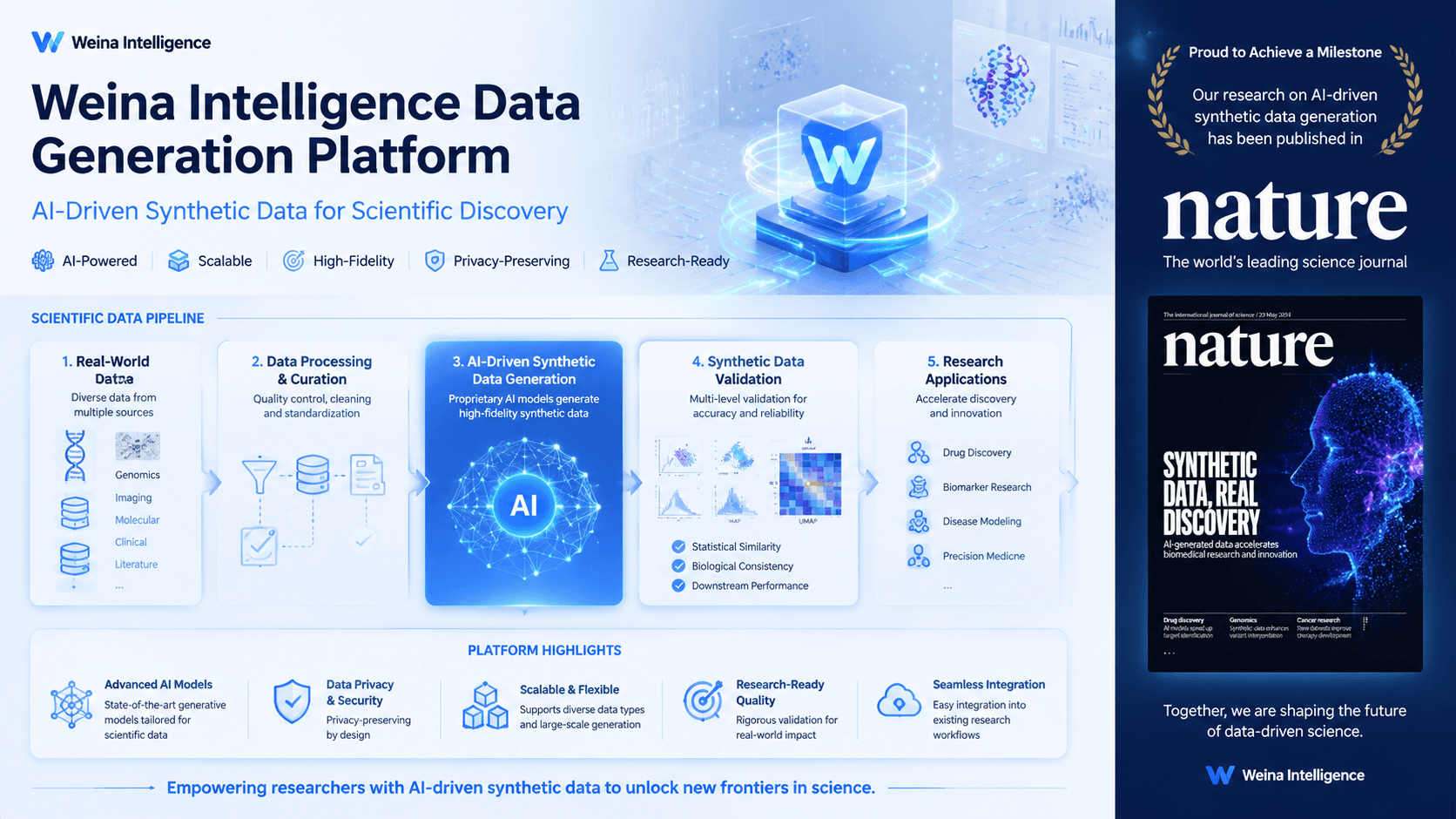
💡First Chinese data generation firm to land a Nature publication—see how they applied AI to medical prognosis.
⚡ 30-Second TL;DR
What Changed
First Chinese data generation firm published in Nature Communications
Why It Matters
This milestone validates the application of generative data techniques in high-stakes medical diagnostics. It signals a growing trend of AI-driven clinical decision support systems gaining academic and peer-reviewed credibility.
What To Do Next
Review the Nature Communications paper to understand how they handle multimodal data fusion for clinical risk stratification.
Key Points
- •First Chinese data generation firm published in Nature Communications
- •Focuses on multimodal deep learning for medical prognosis
- •Implements AI-based functional risk stratification for patients
🧠 Deep Insight
AI-generated analysis for this event — not the original article.
🔑 Enhanced Key Takeaways
- •The research specifically addresses the challenge of prognostic risk stratification for patients with hepatocellular carcinoma (HCC) by integrating multi-omics data.
- •Wiener Intelligence's model utilizes a novel graph neural network (GNN) architecture to capture complex biological interactions that traditional linear models often overlook.
- •The study demonstrates that the model achieves superior predictive accuracy compared to standard clinical staging systems like the BCLC (Barcelona Clinic Liver Cancer) classification.
- •The company's proprietary data generation platform, which powers this model, focuses on synthesizing high-fidelity medical datasets to overcome data scarcity and privacy constraints in clinical research.
- •The publication marks a strategic shift for Wiener Intelligence from a data-centric service provider to a research-driven AI healthcare entity aiming for clinical validation.
📊 Competitor Analysis▸ Show
| Feature | Wiener Intelligence (Prognostic Model) | Traditional Clinical Scoring (e.g., BCLC/TNM) | Competitor AI Models (e.g., PathAI/Owkin) |
|---|---|---|---|
| Data Modality | Multimodal (Omics + Clinical) | Clinical/Imaging only | Primarily Imaging/Pathology |
| Architecture | Graph Neural Networks | Statistical/Linear | CNNs/Transformers |
| Pricing | Research-based/B2B Licensing | Standard of Care (Low) | High-cost Enterprise SaaS |
| Benchmark | Superior AUC/C-index in HCC | Baseline | Competitive/Variable |
🛠️ Technical Deep Dive
- Architecture: Employs a multimodal fusion framework that integrates transcriptomic, proteomic, and clinical data streams.
- Graph Neural Network: Utilizes GNNs to model patient-specific biological pathways as nodes and edges, allowing for the identification of non-linear prognostic biomarkers.
- Training Strategy: Leverages synthetic data augmentation techniques to balance rare clinical event classes within the training set.
- Validation: Validated using both internal cohorts and external multi-center datasets to ensure generalizability across different patient populations.
- Interpretability: Incorporates attention mechanisms to highlight specific biological features contributing to the risk score, aiding clinical decision support.
🔮 Future ImplicationsAI analysis grounded in cited sources
⏳ Timeline
Weekly AI Recap
Read this week's curated digest of top AI events →
👉Related Updates
AI-curated news aggregator. All content rights belong to original publishers.
Original source: Pandaily ↗
This is a summary, not the original. Read the source, or get the weekly briefing.
Weekly AI briefing
One email a week. Unsubscribe anytime.