Why WorkBuddy Won the Office Agent Race
💡WorkBuddy’s edge may be workflow context—not better generation—and that changes how office agents should be built.
⚡ 30-Second TL;DR
What Changed
WorkBuddy ranked first among China’s desktop-native AI office agents in June 2026, with 20.97 million monthly visits.
Why It Matters
WorkBuddy demonstrates that an AI agent can gain traction by orchestrating fragmented enterprise context, even without a clearly superior underlying feature set. For AI builders, the case reinforces the importance of distribution, permissions, workflow ownership, and cross-application context.
What To Do Next
Prototype an agent workflow that links meeting transcripts, shared documents, and enterprise contacts, then test whether permission-aware context improves task completion over standalone tools.
Key Points
- •WorkBuddy ranked first among China’s desktop-native AI office agents in June 2026, with 20.97 million monthly visits.
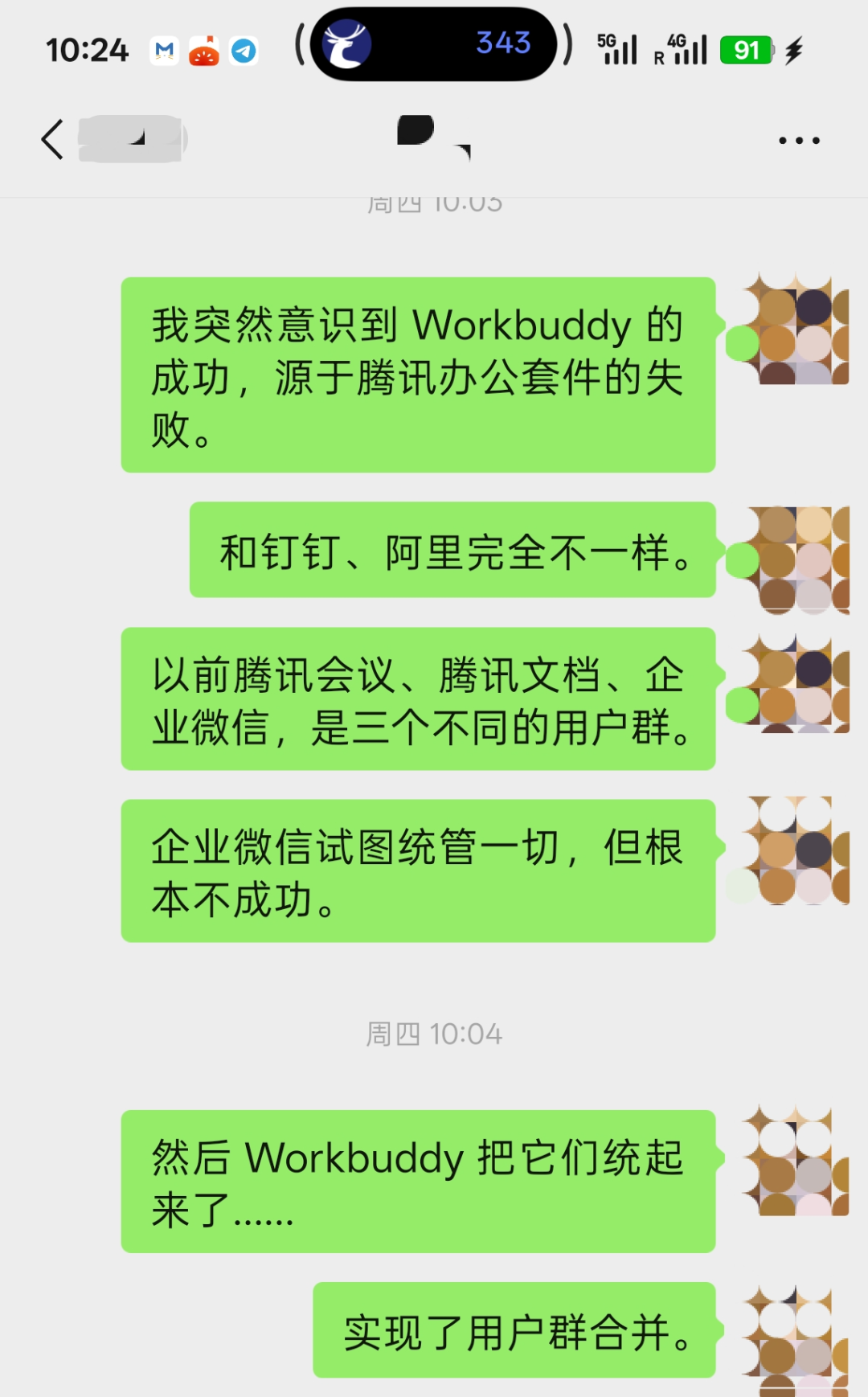
- •Tencent Meeting, Tencent Docs, and WeCom each succeeded independently but lacked unified identity, data, permissions, and workflows.
- •WorkBuddy combines Tencent Meeting’s events, Tencent Docs’ work objects, and WeCom’s organizational and customer relationships.
- •The product’s differentiation is contextual orchestration across existing tools rather than a decisive lead in document, browser, or presentation generation.
Weekly AI Recap
Read this week's curated digest of top AI events →
👉Related Updates



AI-curated news aggregator. All content rights belong to original publishers.
Original source: 虎嗅 ↗
This is a summary, not the original. Read the source, or get the weekly briefing.
Weekly AI briefing
One email a week. Unsubscribe anytime.