Why Tech Giants are Investing in Fusion Energy
Discover why AI compute demand is forcing tech giants to invest in nuclear fusion energy.
30-Second TL;DR
What Changed
AI data centers are driving an urgent demand for stable, 24/7 clean energy.
Why It Matters
Energy infrastructure is becoming a competitive moat for AI companies. Fusion energy is no longer just a scientific goal but a strategic necessity for large-scale AI compute.
What To Do Next
Monitor energy-efficient compute and power infrastructure trends, as energy availability will be the next major bottleneck for scaling LLMs.
Key Points
- •AI data centers are driving an urgent demand for stable, 24/7 clean energy.
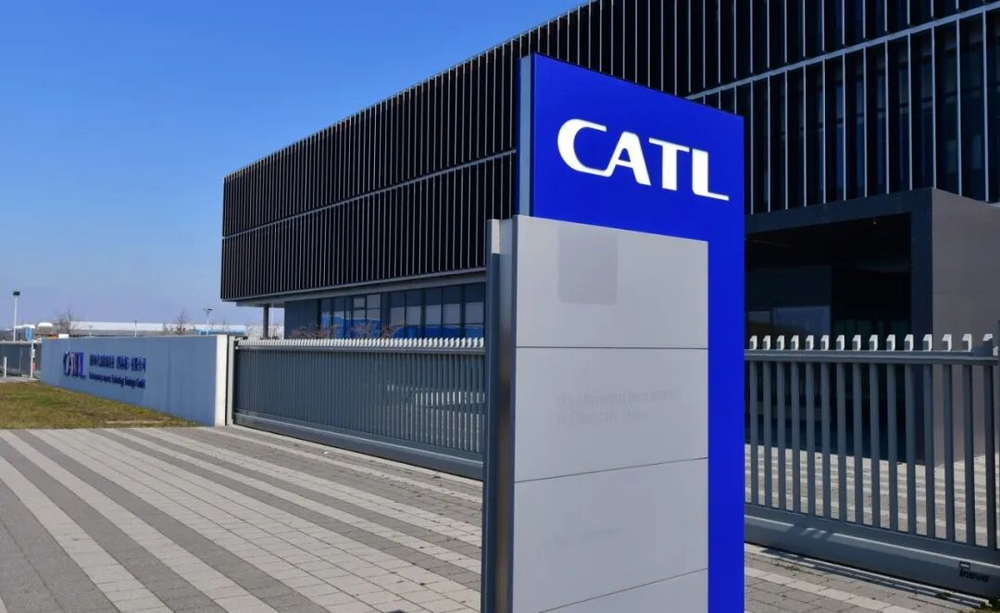
- •CATL is leading investments in 'Beta Fusion' to secure energy supply for future AI infrastructure.
- •The industry is divided between modular FRC startups and traditional Tokamak research.
- •Policy support in China has accelerated, with fusion energy included in the 15th Five-Year Plan.
Deep Insight
AI-generated analysis for this event — not the original article.
Enhanced Key Takeaways
- •The Chinese government has established a 'Fusion Energy Innovation Consortium' to bridge the gap between academic research and commercial deployment, specifically targeting the 2030s for pilot grid integration.
- •Beta Fusion, the startup backed by CATL, is utilizing high-temperature superconducting (HTS) magnets to reduce the physical footprint of their reactor designs, aiming for a power density significantly higher than traditional ITER-scale projects.
- •Energy-intensive AI training clusters are increasingly being co-located with experimental fusion sites to create 'micro-grid' testing environments, bypassing existing grid transmission bottlenecks.
- •Beyond CATL and miHoYo, other Chinese tech conglomerates are forming 'Fusion-as-a-Service' partnerships to hedge against rising electricity costs associated with large-scale GPU cluster operations.
- •The 15th Five-Year Plan explicitly prioritizes the development of tritium breeding blanket technology, a critical bottleneck for achieving fuel self-sufficiency in commercial fusion reactors.
Competitor Analysis
- Tokamak (Traditional)
- High (ITER/EAST)
- FRC (Modular/Compact)
- Emerging (Startups)
- Tokamak (Traditional)
- Large-scale/Centralized
- FRC (Modular/Compact)
- Modular/Distributed
- Tokamak (Traditional)
- Lower (Proven Physics)
- FRC (Modular/Compact)
- Higher (Unproven Stability)
- Tokamak (Traditional)
- Extremely High
- FRC (Modular/Compact)
- Moderate to High
| Feature | Tokamak (Traditional) | FRC (Modular/Compact) |
|---|---|---|
| Maturity | High (ITER/EAST) | Emerging (Startups) |
| Scalability | Large-scale/Centralized | Modular/Distributed |
| Risk Profile | Lower (Proven Physics) | Higher (Unproven Stability) |
| Capital Intensity | Extremely High | Moderate to High |
Technical Deep Dive
- Tokamak Architecture: Utilizes magnetic confinement in a toroidal vacuum chamber to stabilize plasma; relies on massive superconducting magnets to maintain high-pressure states.
- FRC (Field-Reversed Configuration): Employs a compact, linear geometry where plasma is confined by self-generated magnetic fields, theoretically allowing for smaller, more cost-effective reactor vessels.
- HTS Integration: Implementation of Rare-Earth Barium Copper Oxide (REBCO) tapes allows for stronger magnetic fields at higher temperatures, enabling smaller reactor sizes.
- Tritium Breeding: Utilization of lithium-based blankets to convert neutron flux into tritium fuel, essential for closing the fuel cycle in commercial-scale reactors.
Future ImplicationsAI analysis grounded in cited sources
Timeline
- 2023-11CATL announces strategic investment in fusion energy research to support industrial decarbonization.
- 2024-05Beta Fusion completes initial funding round with participation from major tech entities.
- 2025-03Fusion energy is formally integrated into the strategic objectives of China's 15th Five-Year Plan.
- 2026-01First pilot testing of modular FRC components begins in collaboration with academic partners.
Weekly AI Recap
Read this week's curated digest of top AI events →
AI-curated news aggregator. All content rights belong to original publishers.
Original source: 虎嗅 ↗
This is a summary, not the original. Read the source, or get the weekly briefing.
The weekly digest
One email a week. Unsubscribe anytime.