Why Shenzhen’s Hardware Talent Moves So Fast
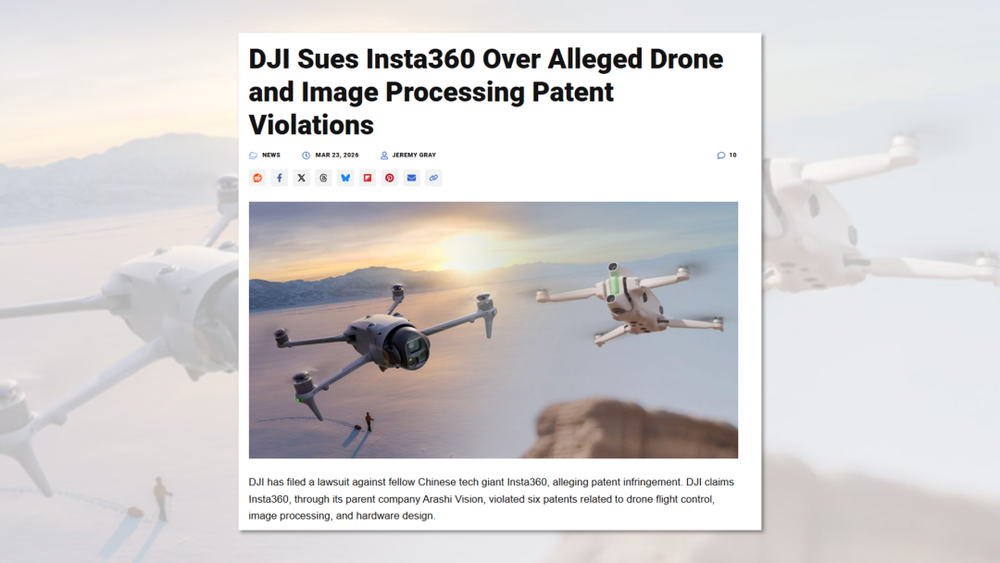
💡Learn how talent mobility—not just suppliers—turns Shenzhen into a robotics innovation engine.
⚡ 30-Second TL;DR
What Changed
Nearly 20 companies founded by former DJI employees reportedly raised funding in 2025.
Why It Matters
For robotics and AI founders, dense talent networks can accelerate technology transfer and shorten product cycles, but they also increase retention, IP ownership, and employee-mobility risks. Companies should design incentives and invention-assignment processes that reflect how much value resides in tacit engineering knowledge.
What To Do Next
Map your robotics hiring and IP-risk plan around former DJI, EcoFlow, Bambu Lab, and other local engineering networks before opening a new hardware program.
Key Points
- •Nearly 20 companies founded by former DJI employees reportedly raised funding in 2025.
- •DJI alumni have started companies spanning industrial drones, energy storage, 3D printing, hair dryers, wheelchairs, and robots.
- •The transferable asset is not simply drone IP, but expertise in flight control, sensor fusion, motor systems, structural design, and mass production.
- •The article frames talent mobility as a measurable cluster-health indicator alongside supplier density and iteration speed.
🧠 Deep Insight
AI-generated analysis for this event.
🔑 Enhanced Key Takeaways
- •The 'DJI Mafia' phenomenon is increasingly compared to the 'PayPal Mafia' in Silicon Valley, where former employees leverage a shared culture of 'hardcore' engineering and rapid prototyping to dominate niche hardware markets.
- •Shenzhen's local government has implemented specific talent retention and incubation policies, such as the 'Nanshan District High-Tech Talent Support Program,' which specifically targets spin-offs from major local tech anchors like DJI.
- •The migration of talent is facilitated by the 'Shenzhen Hardware Supply Chain Index,' a localized informal network that allows former DJI engineers to secure preferential pricing and priority manufacturing slots for their new ventures.
- •Data indicates that DJI alumni-founded startups often achieve 'Product-Market Fit' 30% faster than non-alumni hardware startups in the Pearl River Delta due to pre-existing relationships with Tier-1 component suppliers.
- •The shift in talent is moving beyond consumer electronics into 'Hard Tech' sectors, specifically autonomous mobile robots (AMRs) for logistics and precision agricultural automation, driven by the modular nature of DJI's flight control software architecture.
🛠️ Technical Deep Dive
- DJI's proprietary flight control algorithms utilize a highly modular architecture that separates sensor fusion (IMU, GPS, Vision) from motor control loops, allowing engineers to port these control systems to non-aerial platforms like robotic arms or electric mobility devices.
- The 'DJI-style' rapid prototyping workflow relies on a unified internal CAD/CAM standard that integrates directly with local Shenzhen CNC and injection molding machine protocols, reducing the time from design to physical prototype to under 72 hours.
- Alumni startups frequently utilize the 'DJI-standard' communication protocols (such as customized CAN bus implementations) for inter-module communication, ensuring high reliability in high-vibration or high-interference environments.
🔮 Future ImplicationsAI analysis grounded in cited sources
⏳ Timeline
Weekly AI Recap
Read this week's curated digest of top AI events →
👉Related Updates


AI-curated news aggregator. All content rights belong to original publishers.
Original source: 虎嗅 ↗