Why Human Attention Is Not AI Attention
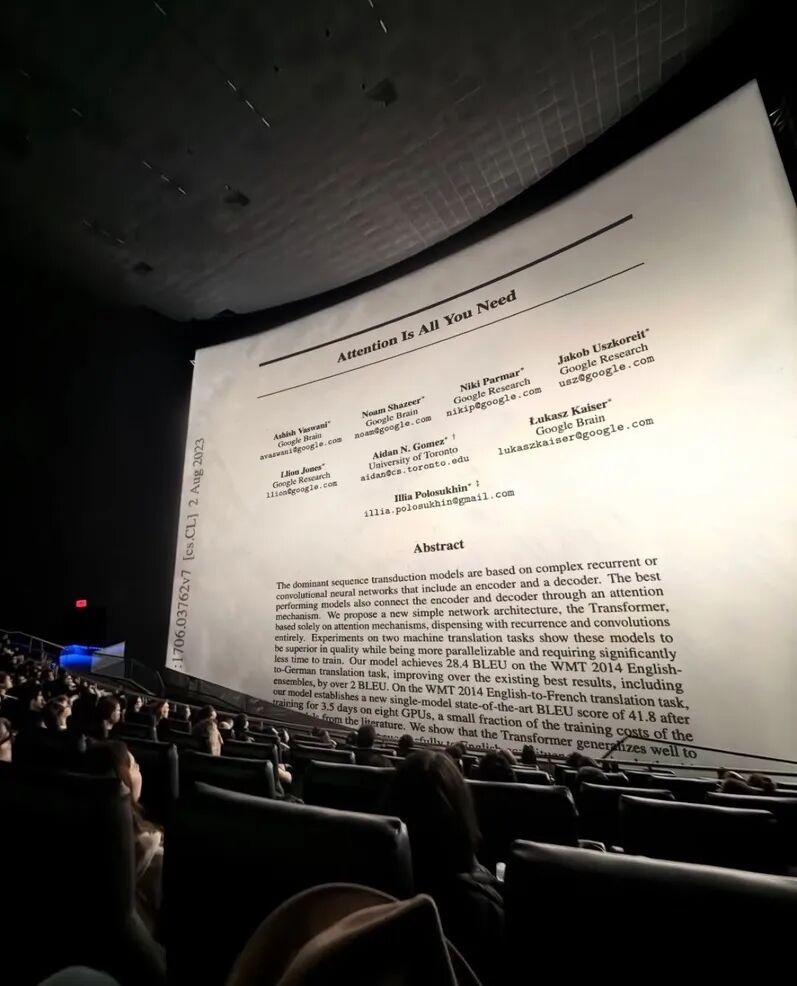
It explains why better context weighting cannot replace human judgment, purpose, or responsibility in AI products.
30-Second TL;DR
What Changed
Transformer attention assigns weights to relationships across a sequence instead of processing tokens strictly one by one.
Why It Matters
The analysis is relevant to AI product design because optimizing model attention or user engagement does not guarantee better judgment, learning, or wellbeing. Builders should treat relevance ranking as a technical capability, not as a substitute for human goals, values, or accountability.
What To Do Next
When evaluating an AI feature, track task-success and user-wellbeing metrics alongside engagement so ranking optimization does not become the product’s only objective.
Key Points
- •Transformer attention assigns weights to relationships across a sequence instead of processing tokens strictly one by one.
- •Engagement-driven platforms optimize for clicks, retention, and emotional arousal rather than understanding or clarity.
- •The article frames AI attention as a relevance-and-weighting mechanism, while human attention includes intentional orientation and moral significance.
- •Replacing human judgment with automated information prioritization may weaken people’s ability to engage with slow, complex, or unrewarded work.
- •Simone Weil’s concept of attention is presented as an alternative to relying solely on willpower for personal change.
Deep Insight
AI-generated analysis for this event — not the original article.
Enhanced Key Takeaways
- •The Transformer architecture's 'Attention' mechanism is mathematically derived from the dot-product of Query and Key vectors, which calculates a probability distribution rather than a cognitive focus.
- •Simone Weil's philosophical framework defines attention as 'the rarest and purest form of generosity,' contrasting sharply with the extractive nature of modern algorithmic recommendation engines.
- •Neuroscientific research suggests human attention involves top-down modulation from the prefrontal cortex, a process fundamentally different from the static weight-assignment in feed-forward neural networks.
- •The 'Attention Economy' model, pioneered by Herbert Simon, posits that human attention is a scarce resource, whereas AI attention is computationally abundant and infinitely scalable.
- •Recent studies in Human-Computer Interaction (HCI) indicate that prolonged exposure to AI-curated content reduces 'cognitive endurance,' the ability to sustain focus on non-rewarding, complex tasks.
Technical Deep Dive
- Transformer Attention (Scaled Dot-Product Attention): Attention(Q, K, V) = softmax((QK^T) / sqrt(d_k)) * V
- Q (Query), K (Key), and V (Value) are linear projections of the input embeddings.
- The softmax function ensures that attention weights sum to 1, creating a probability distribution over the input sequence.
- Unlike human attention, which is dynamic and state-dependent, Transformer attention is stateless and depends entirely on the input sequence provided during inference.
- Multi-Head Attention allows the model to jointly attend to information from different representation subspaces at different positions.
Future ImplicationsAI analysis grounded in cited sources
Timeline
- 1971-01Herbert Simon introduces the concept of the 'Attention Economy' in his work on organizational behavior.
- 1951-01Simone Weil's 'Waiting for God' is published posthumously, detailing her foundational philosophy on attention.
- 2017-06Google researchers publish 'Attention Is All You Need,' introducing the Transformer architecture.
- 2022-11The release of ChatGPT triggers a global shift toward AI-mediated information consumption.
Weekly AI Recap
Read this week's curated digest of top AI events →
AI-curated news aggregator. All content rights belong to original publishers.
Original source: 虎嗅 ↗
This is a summary, not the original. Read the source, or get the weekly briefing.
The weekly digest
One email a week. Unsubscribe anytime.