Why global tourists are flocking to China for cooling
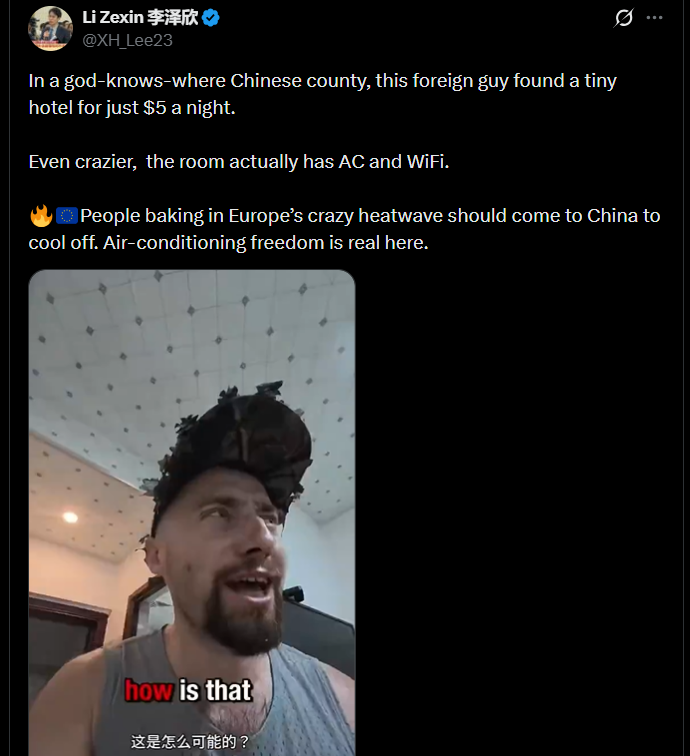
💡Insights into large-scale energy infrastructure management and grid stability under extreme load.
⚡ 30-Second TL;DR
What Changed
China's electricity consumption exceeded 10 trillion kWh in 2025, demonstrating massive capacity.
Why It Matters
Highlights the critical role of energy infrastructure stability in supporting modern living and tourism.
What To Do Next
Analyze energy consumption data patterns to optimize power grid management AI models.
Key Points
- •China's electricity consumption exceeded 10 trillion kWh in 2025, demonstrating massive capacity.
- •Affordable electricity (approx. 0.5 RMB/kWh) enables widespread air conditioning usage.
- •European power grids face frequent failures and high costs during extreme heat peaks.
🧠 Deep Insight
AI-generated analysis for this event — not the original article.
🔑 Enhanced Key Takeaways
- •China's investment in Ultra-High Voltage (UHV) transmission lines has been critical in balancing regional power loads, allowing surplus renewable energy from the west to support cooling demands in eastern urban centers.
- •The 'Cooling Economy' in China has spurred a surge in demand for smart HVAC systems integrated with AI-driven energy management, which optimizes power consumption based on real-time occupancy and ambient temperature.
- •China's massive deployment of distributed photovoltaic (PV) systems on residential and commercial rooftops has provided a localized buffer, reducing the strain on the central grid during peak summer heatwaves.
- •Unlike many European nations that rely heavily on market-based spot pricing for electricity, China's state-regulated pricing model provides price stability for consumers, insulating them from the extreme volatility seen in European energy markets during heatwaves.
- •The Chinese government has accelerated the 'Green Cooling' initiative, mandating higher energy efficiency standards for air conditioning units to mitigate the environmental impact of the country's record-breaking electricity consumption.
🛠️ Technical Deep Dive
- UHV Transmission: China utilizes 800kV and 1100kV DC transmission lines to transport electricity over thousands of kilometers with minimal loss, a key factor in grid stability.
- AI-Driven Load Balancing: Implementation of 'Virtual Power Plants' (VPPs) that aggregate distributed energy resources (DERs) to respond to grid frequency fluctuations in milliseconds.
- Smart HVAC Architecture: Modern Chinese cooling systems increasingly utilize Variable Refrigerant Flow (VRF) technology combined with IoT sensors to adjust compressor speeds dynamically, significantly lowering kWh per cooling unit compared to traditional on/off systems.
🔮 Future ImplicationsAI analysis grounded in cited sources
⏳ Timeline
Weekly AI Recap
Read this week's curated digest of top AI events →
👉Related Updates



AI-curated news aggregator. All content rights belong to original publishers.
Original source: 虎嗅 ↗
This is a summary, not the original. Read the source, or get the weekly briefing.
The weekly digest
One email a week. Unsubscribe anytime.