Why Full-Stack AI May Become a Trap
💡Learn why owning every AI layer can drain resources—and when vertical integration actually strengthens your moat.
⚡ 30-Second TL;DR
What Changed
OpenAI CEO Sam Altman argued that OpenAI should become a platform company rather than build every AI application itself.
Why It Matters
The analysis challenges the assumption that broader AI ownership automatically creates a stronger moat. For AI founders and builders, it reinforces the value of choosing one defensible layer while integrating only where dependency or bargaining power justifies the investment.
What To Do Next
Map your AI product's dependency chain across models, inference, data, and distribution, then choose one layer to own before building additional infrastructure.
Key Points
- •OpenAI CEO Sam Altman argued that OpenAI should become a platform company rather than build every AI application itself.
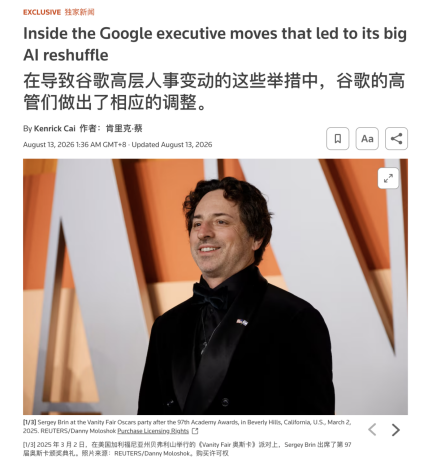
- •Google's broad stack—from chips and cloud to models, search, software, and devices—has increased internal coordination complexity.
- •Nvidia demonstrates that controlling a concentrated layer such as GPUs, CUDA, networking, and accelerated computing can produce strong economics.
- •Anthropic shows that a model-centered company can create substantial value without owning its own cloud, chips, operating system, or devices.
- •Vertical integration can reduce dependence on suppliers, but owning too many layers can dilute capital, talent, and management attention.
🧠 Deep Insight
Background and context from public sources — not the original article. 4 sources cited.
🔑 Enhanced Key Takeaways
- •The 'full-stack' strategy is increasingly viewed as a transitional phase in an immature market, with industry trends shifting toward modularization and specialization to avoid operational bloat.
- •Internal organizational friction at Google, exacerbated by the full-stack mandate, has directly contributed to the departure of senior talent who are now launching independent AI startups.
- •OpenAI has actively pivoted away from internal product development, specifically citing the cancellation of projects like Sora and Atlas to prioritize its role as a platform provider.
- •While private tech giants struggle with the 'complexity trap,' some state-backed entities like China Telecom are doubling down on national-level integrated stacks to standardize token-based commercialization.
- •The current AI landscape forces companies to treat every layer as a 'must-win' battlefield, a departure from the internet era where platform giants typically succeeded by focusing on specific core competencies rather than total vertical integration.
🔮 Future ImplicationsAI analysis grounded in cited sources
⏳ Timeline
📎 Sources (4)
Factual claims are grounded in the sources below. Forward-looking analysis is AI-generated interpretation.
Weekly AI Recap
Read this week's curated digest of top AI events →
👉Related Updates

AI-curated news aggregator. All content rights belong to original publishers.
Original source: 虎嗅 ↗
This is a summary, not the original. Read the source, or get the weekly briefing.
Weekly AI briefing
One email a week. Unsubscribe anytime.