Why Doom is impossible on Neo Geo hardware
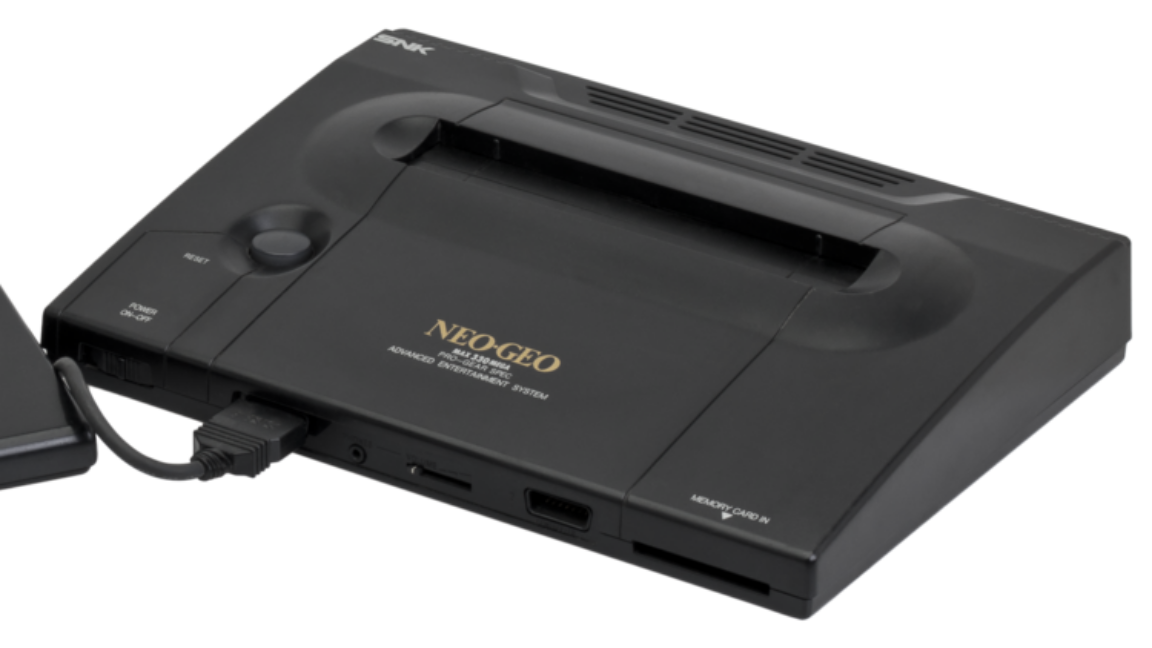
💡A deep dive into hardware constraints that shaped early 3D rendering—useful context for low-level AI optimization.
⚡ 30-Second TL;DR
What Changed
Neo Geo sprite-based architecture limitations
Why It Matters
Technical analysis explains why porting Doom to the Neo Geo is functionally impossible due to its sprite-based architecture.
What To Do Next
Study the architectural differences between sprite-based and polygon-based systems to understand modern GPU optimization.
Key Points
- •Neo Geo sprite-based architecture limitations
- •Challenges of rendering 3D first-person environments on 2D hardware
- •Hardware-level constraints for porting modern engines
🧠 Deep Insight
Background and context from public sources — not the original article. 13 sources cited.
🔑 Enhanced Key Takeaways
- •The Neo Geo's sprite-based graphics system utilized 16x16 pixel tiles, which could be combined into vertical strips up to 16x512 pixels and horizontally 'stuck together' to form larger objects, but lacked the ability for dynamic scaling upwards or rotation, only allowing sprites to be shrunk.
- •Unlike pure raycasting engines such as Wolfenstein 3D, Doom's engine employed a more advanced pseudo-3D technique using Binary Space Partitioning (BSP) for walls and a scanline renderer for floors and ceilings, a method fundamentally incompatible with the Neo Geo's sprite-centric rendering approach.
- •A critical limitation of the Neo Geo for 3D rendering was its absence of a bitmap graphics mode, which is essential for games like Doom that rely on direct pixel manipulation to construct 3D environments rather than assembling pre-defined 2D sprites.
- •Despite its reputation for powerful 2D graphics, largely due to massive cartridge ROM capacities for storing extensive sprite animations, the Neo Geo's Motorola 68000 CPU (12 MHz) and lack of Direct Memory Access (DMA) were insufficient for the intensive 32-bit calculations required by Doom's engine.
- •Any attempt to simulate 3D environments on the Neo Geo would necessitate storing vast amounts of pre-scaled and potentially pre-rotated sprite graphics in ROM, which would consume immense cartridge space and still be constrained by the hardware's inability to dynamically manipulate sprites beyond simple shrinking.
🛠️ Technical Deep Dive
- CPU: Motorola 68000 at 12 MHz (main processor), Zilog Z80A at 4 MHz (audio control).
- Graphics Processor: Custom LSPC2-A2 and NEO-B1 sprite generator.
- Display Resolution: 320x224 pixels, with many games utilizing a central 304 pixels horizontally.
- Color Capabilities: Supports a palette of 65,536 colors, with up to 4,096 colors displayable on screen simultaneously.
- Sprite System:
- Maximum of 380 sprites on screen, with a limit of 96 sprites per scanline.
- Sprites are composed of 16x16 pixel tiles, which can be combined to form vertical strips up to 16x512 pixels.
- Hardware only supports scaling sprites down (shrinking); dynamic scaling up (zooming) or rotation is not supported. Graphics for different sizes must be pre-rendered and stored.
- Lacks a dedicated bitmap graphics mode, relying solely on sprites and a fixed background plane for visual output.
- Memory:
- 64 KB of main RAM for the 68000 CPU.
- 84 KB of main video memory, comprising 64 KB video RAM, 16 KB palette memory, and 4 KB fast video RAM.
- 2 KB of sound memory for the Z80.
- Does not feature Direct Memory Access (DMA) for accelerated memory transfers.
- Cartridge Capacity: Known for its exceptionally large ROM cartridges, with later titles like King of Fighters '98 and '99 reaching up to 1 Gigabit (128 MB), primarily used for storing extensive 2D sprite animations and audio samples.
- Doom Engine (Contextual Details):
- Employs a pseudo-3D rendering technique, not true polygonal 3D.
- Utilizes Binary Space Partitioning (BSP) trees for rendering walls and a scanline renderer for floors and ceilings.
- Requires significant 32-bit floating-point calculations for perspective correction and texture mapping, which the Neo Geo's CPU is not optimized for.
🔮 Future ImplicationsAI analysis grounded in cited sources
⏳ Timeline
📎 Sources (13)
Factual claims are grounded in the sources below. Forward-looking analysis is AI-generated interpretation.
Weekly AI Recap
Read this week's curated digest of top AI events →
👉Related Updates
AI-curated news aggregator. All content rights belong to original publishers.
Original source: Ars Technica ↗
This is a summary, not the original. Read the source, or get the weekly briefing.
The weekly digest
One email a week. Unsubscribe anytime.