Why do few fitness coaches hold bachelor's degrees?
💡Understand the talent gap in the fitness industry to better position AI-driven coaching solutions.
⚡ 30-Second TL;DR
What Changed
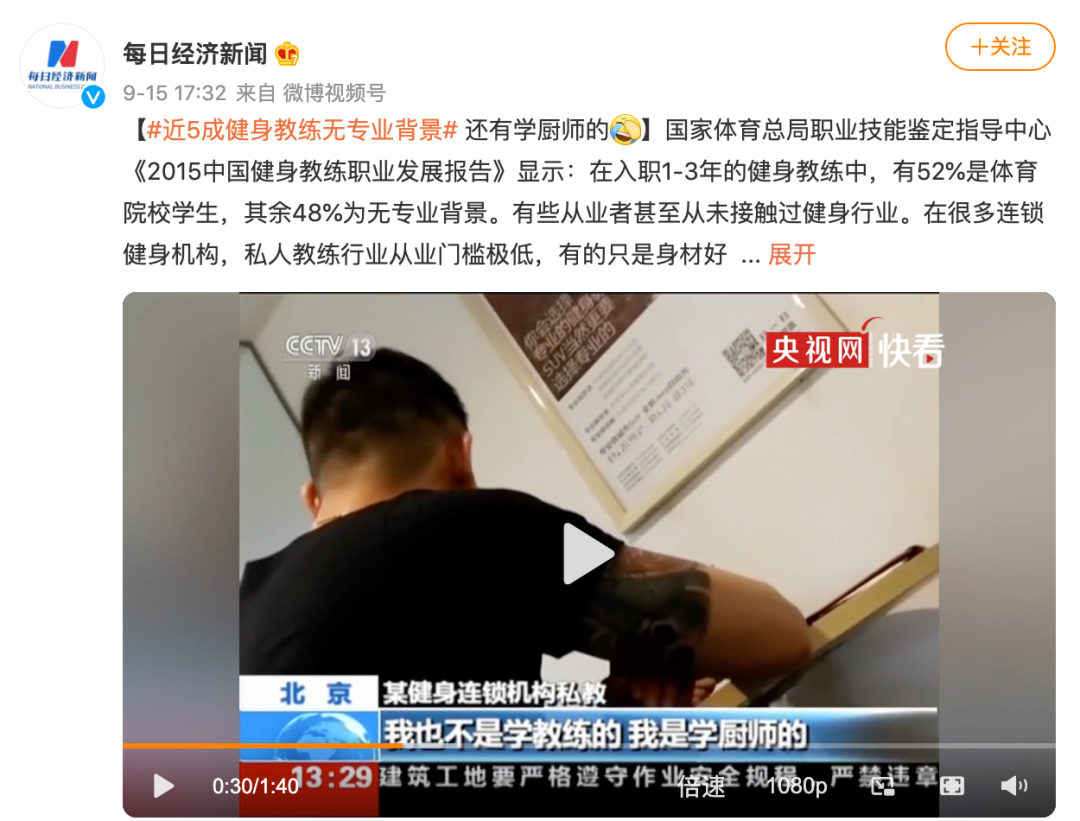
52% of new fitness coaches come from sports colleges, yet industry-wide bachelor's degree rates remain low.
Why It Matters
The industry's reliance on short-term training over academic foundations limits long-term professionalization and innovation in personalized fitness.
What To Do Next
If building a fitness AI, focus on standardizing 'coaching logic' rather than high-level sports science to match current market demand.
Key Points
- •52% of new fitness coaches come from sports colleges, yet industry-wide bachelor's degree rates remain low.
- •Academic curricula focus on elite sports performance, while gyms prioritize standardized, low-barrier service skills.
- •Graduates often prefer stable paths like teaching or civil service over the volatile fitness industry.
🧠 Deep Insight
Background and context from public sources — not the original article. 17 sources cited.
🔑 Enhanced Key Takeaways
- •While a bachelor's degree in fields like kinesiology or exercise science can provide a strong foundation and be preferred by some employers, it is typically not a strict requirement to become a personal trainer, with national certifications often serving as a substitute.
- •The rise of online certification courses has significantly impacted the fitness industry by offering accessible, cost-effective, and flexible pathways for aspiring fitness professionals to gain essential knowledge in exercise science, nutrition, and program design.
- •Sports science graduates, despite their academic training, frequently face challenges in finding full-time employment within the fitness industry, with some studies indicating that a significant portion (up to 48%) consciously choose careers outside of sports due to perceived low-level entry jobs.
- •The demand for certified fitness professionals is projected to grow, with an estimated 14% increase in job opportunities for fitness coaches by 2026, and specialization in areas like nutrition or sports performance can further enhance marketability and earning potential.
- •Many roles in the fitness and sports science fields, particularly mid-career and specialized positions in healthcare or professional sports, often demand additional licensure or certification beyond a bachelor's degree, such as Certified Strength and Conditioning Specialist (CSCS) or Registered Clinical Exercise Physiologist (RCEP).
🔮 Future ImplicationsAI analysis grounded in cited sources
⏳ Timeline
📎 Sources (17)
Factual claims are grounded in the sources below. Forward-looking analysis is AI-generated interpretation.
Weekly AI Recap
Read this week's curated digest of top AI events →
👉Related Updates




AI-curated news aggregator. All content rights belong to original publishers.
Original source: 虎嗅 ↗
This is a summary, not the original. Read the source, or get the weekly briefing.
The weekly digest
One email a week. Unsubscribe anytime.