Why Alibaba Is Betting Big on a Chinese Google
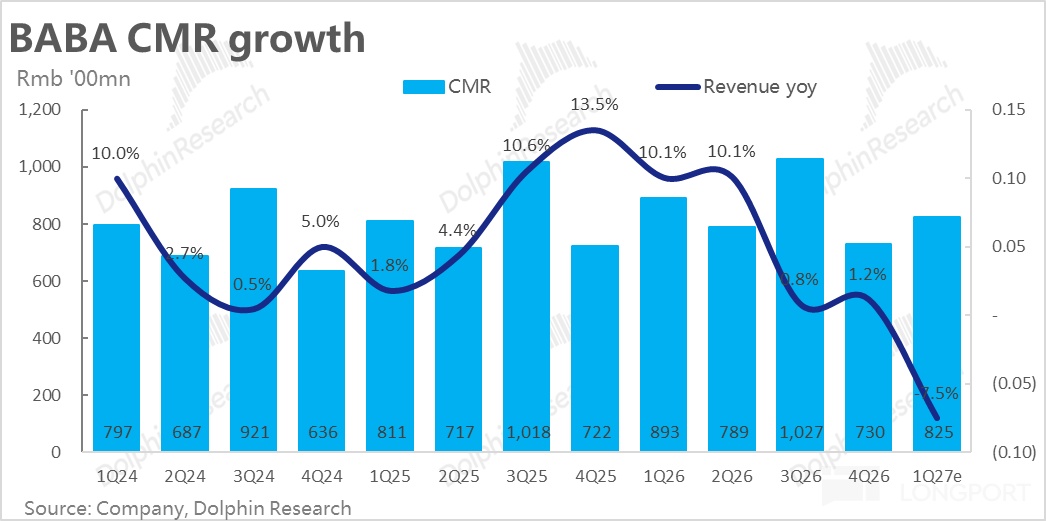
💡Alibaba’s spending may signal a broader AI platform strategy, not just another isolated product bet.
⚡ 30-Second TL;DR
What Changed
Alibaba’s investment intensity is the central subject of the analysis.
Why It Matters
A Google-like ambition would imply long-term investment in search, cloud, data, and AI capabilities rather than a narrow product launch. Practitioners should watch whether future disclosures connect this spending to specific developer platforms or customer use cases.
What To Do Next
Review Alibaba Cloud’s AI platform announcements after the next earnings update and assess whether they expose usable APIs or infrastructure for your product.
Key Points
- •Alibaba’s investment intensity is the central subject of the analysis.
- •The article raises the strategic possibility of building a broad, Google-like AI and technology platform.
- •Quarterly results reportedly differed little from market expectations.
🧠 Deep Insight
Background and context from public sources — not the original article. 23 sources cited.
🔑 Enhanced Key Takeaways
- •Alibaba's AI Cloud and Compute Services segment reported a 45% revenue growth in Q2 2026, with AI-related product revenue experiencing triple-digit growth for 12 consecutive quarters.
- •Alibaba has committed to investing at least RMB 380 billion (US$53 billion) over three years (2025-2028) in cloud computing and AI infrastructure, a sum that surpasses its total AI and cloud spending over the preceding decade.
- •The Qwen family of large language models, developed by Alibaba, has emerged as the world's most popular open-source AI model, accumulating over 3 billion global downloads and fostering more than 300,000 derivative models by August 2026.
- •Alibaba's investment strategy extends to providing cloud computing credits to promising generative AI startups in China, such as Moonshot AI and MiniMax, a move that mirrors Microsoft's investment approach with OpenAI.
- •The company has undergone a major strategic reorganization, consolidating its business units into three core segments: Alibaba E-commerce Group, AI Cloud and Compute Services, and AI Labs and Applications, with CEO Eddie Wu directly leading the newly formed Alibaba Token Hub for AI research and product teams.
📊 Competitor Analysis▸ Show
| Feature/Aspect | Alibaba (AI Cloud & Qwen) | Baidu (Ernie & Apollo Go) |
|---|---|---|
| Primary AI Strategy | Open-source-first cloud ecosystem, full-stack AI (chips to applications), extensive investment in AI startups via cloud credits. | Vertically integrated AI stack, strong focus on enterprise AI contracts and autonomous driving. |
| AI Cloud Market Share (Q1 2025) | 35.8% | 6.1% |
| Flagship LLM | Qwen (Tongyi Qianwen) family, including Qwen-Max, Qwen-Plus, Qwen-Turbo, Qwen-VL, Qwen-Audio. | Ernie family, including Ernie 4.5 Turbo and Ernie X1 Turbo. |
| LLM Adoption/Popularity | Qwen ranked first with 17.7% daily invocation shares (H1 2025); over 3 billion global downloads of open-weight models by Aug 2026. | Leads in enterprise AI software contracts; specific LLM invocation shares lower than Qwen. |
| Key Applications | E-commerce integration (Accio, Accio Work), enterprise communication (DingTalk), smart assistants (Tmall Genie), general content generation, coding, multimodal. | Autonomous driving (Apollo Go), enterprise AI solutions, search. |
| Investment Approach | Significant capital expenditure (RMB 380B over 3 years) in cloud/AI infrastructure; invests in startups with cloud credits. | Heavy investment in AI models, cloud infrastructure, and enterprise software. |
🛠️ Technical Deep Dive
- Qwen (Tongyi Qianwen) is a family of large language models developed by Alibaba Cloud, built on a transformer-based architecture.
- The models incorporate innovations in attention mechanisms, training methodologies, and multilingual capabilities.
- Qwen models are trained on billions of words and sentences from diverse languages and domains, including social media, news, literature, and e-commerce.
- They leverage cutting-edge AI techniques such as transformer networks, self-attention, and pre-training tools to enhance understanding and generation.
- Qwen functions as a multilingual chatbot, capable of interacting in English and Chinese, and performing high-accuracy text translation.
- Capabilities include generating creative content like stories, business pitches, and slogans, as well as practical tasks such as summarizing meeting notes, transcribing conversations, and drafting emails.
- The Qwen-VL series extends the family into multimodal territory by combining language and vision capabilities, with variants like Qwen2-VL and Qwen2.5-VL.
- Alibaba Cloud's Platform for AI (PAI) serves as a scalable and cost-effective platform for machine learning and deep learning, providing tools across the entire AI development lifecycle, from data labeling to model deployment.
- Alibaba also develops proprietary chips through its T-Head unit, covering GPU, CPU, storage, and networking, which are utilized extensively across the company's operations.
🔮 Future ImplicationsAI analysis grounded in cited sources
⏳ Timeline
📎 Sources (23)
Factual claims are grounded in the sources below. Forward-looking analysis is AI-generated interpretation.
- investing.com
- futunn.com
- alibabacloud.com
- reddit.com
- business-standard.com
- bobsguide.com
- semiconductorreports.com
- businesstimes.com.sg
- secondtalent.com
- moomoo.com
- tradingview.com
- galileo.ai
- wikipedia.org
- computerworld.com
- uctoday.com
- medium.com
- alibabacloud.com
- techfundingnews.com
- alibabacloud.com
- alibabacloud.com
- constellationr.com
- globaltimes.cn
- swedenherald.com
Weekly AI Recap
Read this week's curated digest of top AI events →
👉Related Updates


AI-curated news aggregator. All content rights belong to original publishers.
Original source: 钛媒体 ↗
This is a summary, not the original. Read the source, or get the weekly briefing.
Weekly AI briefing
One email a week. Unsubscribe anytime.