Why AI Won’t Eliminate Most Jobs
AI’s biggest limit may be economics, not capability—useful context for automation planning.
30-Second TL;DR
What Changed
AI deployment and operating expenses remain too high for many businesses to replace entire workforces.
Why It Matters
The analysis suggests that AI adoption will more likely target selected high-value workflows than eliminate most jobs outright. For AI founders and developers, cost efficiency and measurable productivity gains may matter as much as model capability.
What To Do Next
Build a per-workflow cost model that compares API inference, integration, monitoring, and maintenance expenses with the human labor being automated.
Key Points
- •AI deployment and operating expenses remain too high for many businesses to replace entire workforces.
- •Steve Hanke, a Johns Hopkins University applied economics professor, rejects mass-unemployment predictions.
- •The economic value of automation must be weighed against infrastructure, maintenance, and implementation costs.
Deep Insight
AI-generated analysis for this event — not the original article.
Enhanced Key Takeaways
- •Steve Hanke's economic perspective aligns with the 'productivity paradox,' where significant technological investment often fails to yield immediate, measurable gains in aggregate labor productivity.
- •Recent industry data indicates that 'hidden costs' of AI, including data cleaning, model fine-tuning, and cybersecurity hardening, often exceed initial software licensing fees by a factor of three.
- •The concept of 'human-in-the-loop' (HITL) requirements for high-stakes decision-making remains a significant barrier to full automation, as AI error rates in complex environments necessitate human oversight.
- •Energy consumption and the scarcity of specialized GPU compute resources have created a 'compute ceiling' that prevents small-to-medium enterprises from scaling AI beyond pilot projects.
- •Labor market data from 2025-2026 suggests that AI is currently functioning more as a 'task-augmenter' rather than a 'job-replacer,' with firms prioritizing efficiency gains over headcount reduction.
Future ImplicationsAI analysis grounded in cited sources
Timeline
- 2023-05Steve Hanke publishes critiques on the economic viability of rapid AI integration.
- 2024-09Hanke emphasizes the role of 'institutional knowledge' as a non-automatable asset in labor markets.
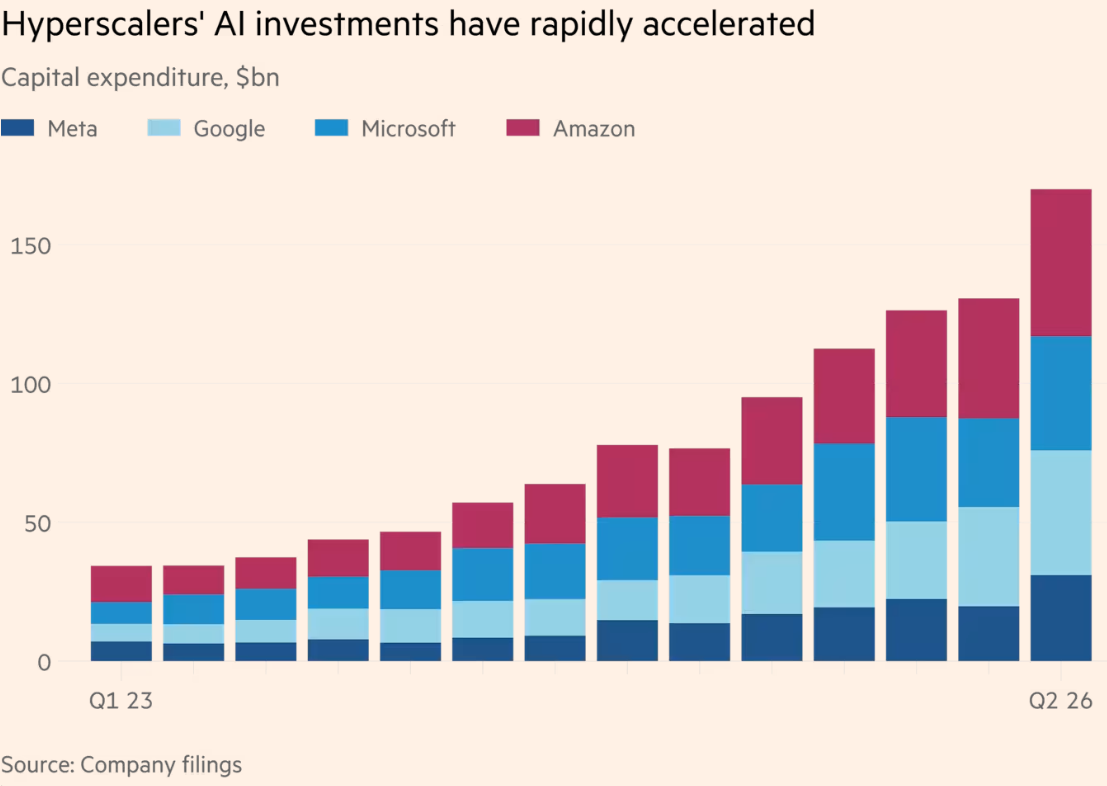
- 2025-11Hanke releases analysis on the 'AI bubble' regarding capital expenditure versus actual ROI.
Weekly AI Recap
Read this week's curated digest of top AI events →
Related Updates


AI-curated news aggregator. All content rights belong to original publishers.
Original source: cnBeta (Full RSS) ↗
This is a summary, not the original. Read the source, or get the weekly briefing.
The weekly digest
One email a week. Unsubscribe anytime.