Who Captures the AI Spending Wave?
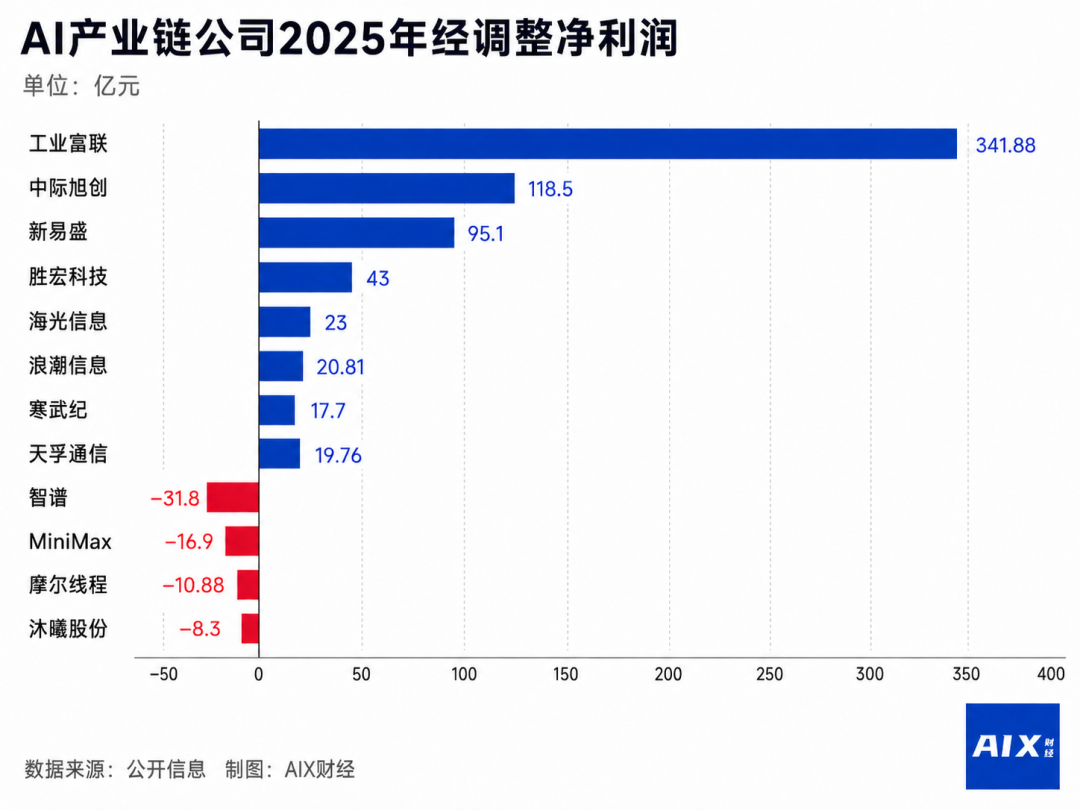
See which layers of the AI stack—not just model companies—may capture the spending boom.
30-Second TL;DR
What Changed
AI資金首先由雲端服務商投入並向供應鏈下游傳導
Why It Matters
For AI founders and enterprise buyers, the analysis highlights how infrastructure bottlenecks can affect capacity, pricing, and vendor dependence. It also suggests that value capture may extend beyond model providers to the hardware ecosystem.
What To Do Next
Use your cloud provider’s billing dashboard to map spending across GPU instances, networking, storage, and inference before expanding AI capacity.
Key Points
- •AI資金首先由雲端服務商投入並向供應鏈下游傳導
- •光模組、AI晶片與伺服器是主要受益環節
- •AI產業價值正在沿著資料中心基礎設施鏈條重新分配
Deep Insight
AI-generated analysis for this event — not the original article.
Enhanced Key Takeaways
- •The shift toward liquid cooling technologies has become a critical bottleneck and value-add for server manufacturers as AI chip TDPs (Thermal Design Power) exceed 1000W.
- •Custom ASIC development by hyperscalers (e.g., Google TPU, AWS Trainium) is increasingly challenging the dominance of general-purpose GPU suppliers in the value chain.
- •High-bandwidth memory (HBM) supply constraints have emerged as the primary limiting factor for AI hardware production, creating a new tier of 'kingmaker' suppliers in the semiconductor ecosystem.
- •Energy infrastructure, specifically power distribution units (PDUs) and backup power systems, has transitioned from a commodity utility to a high-margin component of the AI data center stack.
- •The rise of 'sovereign AI' initiatives is forcing a geographic diversification of the AI supply chain, leading to increased capital expenditure in regional data center hubs outside of traditional US-based cloud regions.
Technical Deep Dive
- Optical Interconnects: Transition from 400G to 800G and 1.6T pluggable modules using Silicon Photonics to reduce power consumption per bit.
- Server Architecture: Adoption of modular rack-scale designs (e.g., NVIDIA GB200 NVL72) that integrate compute, networking, and cooling into a single cohesive unit.
- Memory Integration: Utilization of HBM3e and HBM4 to overcome the memory wall, enabling higher throughput for large language model (LLM) inference and training.
- Power Delivery: Implementation of 48V DC power distribution architectures within racks to minimize conversion losses compared to traditional 12V systems.
Future ImplicationsAI analysis grounded in cited sources
Timeline
- 2023-01Generative AI boom triggers massive capital expenditure pivot by major cloud service providers.
- 2023-11Supply chain bottlenecks for high-end AI GPUs become the primary constraint on global AI model training capacity.
- 2024-06Market focus shifts toward the 'AI Infrastructure Stack,' emphasizing the importance of networking and cooling over raw compute.
- 2025-03HBM3e production scaling begins to alleviate some, but not all, memory-related hardware delivery delays.
- 2026-02Industry-wide adoption of liquid cooling standards for next-generation AI server racks reaches critical mass.
Weekly AI Recap
Read this week's curated digest of top AI events →
AI-curated news aggregator. All content rights belong to original publishers.
Original source: 钛媒体 ↗
This is a summary, not the original. Read the source, or get the weekly briefing.
The weekly digest
One email a week. Unsubscribe anytime.