White House Launches Major Research System Reform
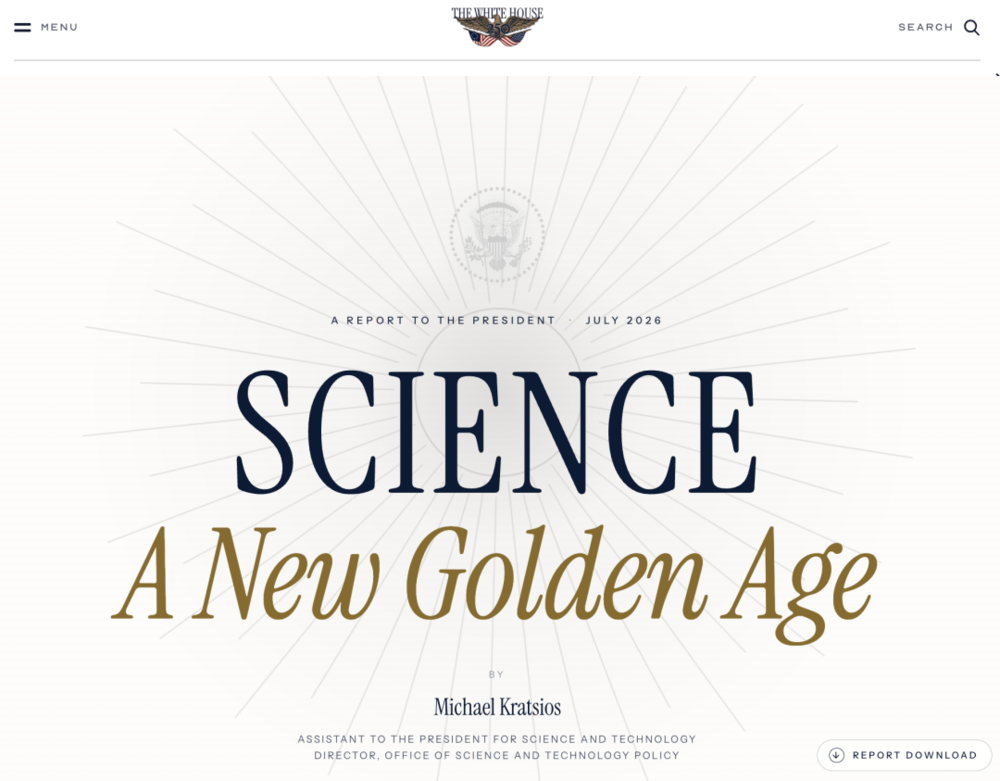
Major shift in US federal research funding: new rules for AI-focused grants and political oversight for researchers.
30-Second TL;DR
What Changed
Shifted funding focus from institutional grants to individual researchers and high-risk, strategic projects.
Why It Matters
This shift could fundamentally alter the landscape for AI research in the US, potentially favoring industry-aligned labs over traditional academic institutions and increasing the influence of political agendas on scientific inquiry.
What To Do Next
If you are a researcher or founder, monitor the upcoming federal grant guidelines to see if your AI project qualifies for new 'Focused Research Organization' funding channels.
Key Points
- •Shifted funding focus from institutional grants to individual researchers and high-risk, strategic projects.
- •Mandated that research institutions secure private or local matching funds, reducing reliance on federal budgets.
- •Integrated non-university entities like Focused Research Organizations (FROs) and X-Labs into the federal funding pipeline.
- •Proposed mandatory political review of research projects to ensure alignment with national interests.
Deep Insight
AI-generated analysis for this event — not the original article.
Enhanced Key Takeaways
- •The 'Science: A New Golden Age' initiative is modeled after the ARPA-H framework, emphasizing 'milestone-based' contracting rather than traditional multi-year grant cycles.
- •The policy introduces a 'National Interest Alignment' (NIA) score, which utilizes AI-driven predictive modeling to assess the potential economic and security impact of proposed research before funding approval.
- •Federal agencies are now required to allocate at least 15% of their R&D budget to 'non-traditional' performers, specifically targeting startups and independent research labs that lack university affiliation.
- •The reform establishes a centralized 'Research Integrity and Alignment Office' (RIAO) tasked with auditing the political and strategic alignment of ongoing projects, a departure from the previous peer-review-only model.
- •New intellectual property (IP) guidelines mandate that research funded under this initiative must grant the federal government 'march-in rights' if the technology is not commercialized domestically within 36 months.
Future ImplicationsAI analysis grounded in cited sources
Timeline
- 2025-03White House Office of Science and Technology Policy (OSTP) initiates a review of federal research funding efficacy.
- 2025-11Pilot program for 'Milestone-Based Research Funding' launched across select Department of Energy labs.
- 2026-05Draft of 'Science: A New Golden Age' framework circulated to congressional committees for feedback.
- 2026-07Official executive order signed, formalizing the transition to the new research funding architecture.
Weekly AI Recap
Read this week's curated digest of top AI events →
AI-curated news aggregator. All content rights belong to original publishers.
Original source: 虎嗅 ↗
This is a summary, not the original. Read the source, or get the weekly briefing.
The weekly digest
One email a week. Unsubscribe anytime.