WeChat to Launch AI Assistant for Mini-Program Integration
💡WeChat's AI assistant could redefine how 1 billion+ users interact with apps via LLM-driven intent routing.
⚡ 30-Second TL;DR
What Changed
WeChat AI assistant enables direct invocation of millions of mini-programs via natural language.
Why It Matters
The integration of AI into the WeChat ecosystem could significantly lower the barrier for user interaction with mini-programs, potentially creating a new paradigm for 'Agent-based' application discovery in China.
What To Do Next
If you are a developer, explore the WeChat mini-program documentation to prepare your services for natural language intent-based invocation.
Key Points
- •WeChat AI assistant enables direct invocation of millions of mini-programs via natural language.
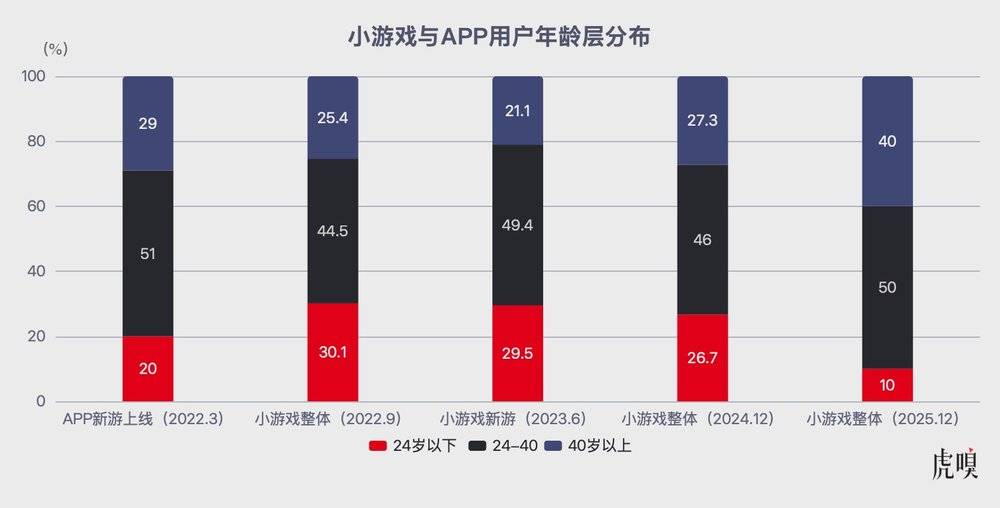
- •WeChat mini-games have reached 500 million MAU with over 500,000 developers.
- •The platform is shifting focus from user growth to deep retention and scenario penetration.
- •New incentive policies for IAA (In-App Advertising) developers include up to 90% total revenue sharing.
🧠 Deep Insight
Background and context from public sources — not the original article. 23 sources cited.
🔑 Enhanced Key Takeaways
- •The upcoming WeChat AI assistant, a top strategic priority for Tencent, is currently in prototype testing and will undergo compliance processes and a phased rollout, aiming to transform WeChat into a "super intelligent assistant" capable of handling diverse daily tasks like hailing taxis, ordering takeout, and making payments.
- •Tencent previously integrated its QClaw AI agent as a mini-program within WeChat in March 2026, enabling remote PC control, file transfers, and command execution via audio messages and images, a strategic move to leverage WeChat's ecosystem amidst challenges in standalone AI model performance.
- •WeChat's 2026 "AI Application and Online Tool Mini-Program Growth Plan," launched in January 2026, provides developers with 1 billion token credits for Tencent's Hunyuan large language model (Hunyuan 2.0), free cloud development resources, and reduced transaction fees to democratize AI application development.
- •The AI assistant leverages Tencent's proprietary Hunyuan large language model, with the "WeChat AI Mini Program Growth Plan" having officially integrated the latest Hy3preview model in May 2026 to enhance intelligent development and operation experience for developers through improved logical reasoning and context understanding.
📊 Competitor Analysis▸ Show
| Feature/Platform | WeChat AI Assistant | Alipay AI Assistant | ByteDance AI Assistant (Doubao/UI-TARS) |
|---|---|---|---|
| Core Integration | Deeply embedded in WeChat super-app, right-swipe access for mini-programs. | Integrated into Alipay app and mini-programs, also via standalone AI assistant "Lingguang". | Integrated across Douyin, TikTok, Toutiao mini-programs; standalone AI coding tools and mobile assistants. |
| Primary Function | Orchestrates millions of mini-programs via natural language for life services, commerce, and information search. | AI-powered payments, ordering, and mini-app generation from natural language descriptions. | AI-powered recommendations, coding assistance, and mobile phone operations (e.g., ordering, booking, replying to messages). |
| Underlying AI Model | Tencent Hunyuan (Hunyuan 2.0, Hy3preview). | Ant Group's Lingguang, integrates DeepSeek model. | Doubao large language model, UI-TARS-2 for multimodal interaction. |
| Developer Incentives | 1 billion token credits for Hunyuan LLM, free cloud development, reduced transaction fees, up to 90% IAA revenue sharing. | Model Context Protocol (MCP) server for payment integration, traffic rewards, long-term traffic reward policy. | AI-native integrated development environment (TRAE, SOLO mode), affordable AI coding agent (Doubao-Seed-Code at $1.30/month). |
| Launch/Rollout | Prototype testing, compliance process, phased rollout targeted for Q3 2026. | Alipay Tap! launched Sep 2025; Lingguang launched Nov 2025; Alipay AI Pay exceeded 100M users by Feb 2026. | Doubao-Seed-Code launched Nov 2025; TRAE/SOLO in 2025-2026; UI-TARS in May 2026. |
🛠️ Technical Deep Dive
- The AI assistant is designed for deep integration into the WeChat interface, accessible via a right-swipe gesture on the main screen.
- It leverages natural language processing (NLP) to understand user commands and automatically invoke relevant mini-programs for task completion.
- The core AI capabilities are powered by Tencent's Hunyuan large language model, with the "WeChat AI Mini Program Growth Plan" having integrated the latest Hy3preview model for enhanced logical reasoning and context understanding.
- WeChat mini-programs themselves are built using proprietary versions of CSS (WXSS), JavaScript, and templated XML (WXML) with a rich set of proprietary APIs.
- The mini-program architecture separates the logical layer (running in JSCore without a full browser object) from the rendering layer, which means some standard web development libraries are not compatible.
- WeChat Cloud Development provides backend services, including databases, cloud functions, and direct integration with AI models and agents, to support mini-program functionality.
- The QClaw AI agent, already integrated as a mini-program, supports multimodal inputs (text, images, audio) and enables remote control of personal computers.
🔮 Future ImplicationsAI analysis grounded in cited sources
⏳ Timeline
📎 Sources (23)
Factual claims are grounded in the sources below. Forward-looking analysis is AI-generated interpretation.
- 36kr.com
- panewslab.com
- super-apps.ai
- asiabusinessoutlook.com
- super-apps.ai
- sourceforge.net
- aibase.com
- futurecio.tech
- 36kr.com
- businesswire.com
- mp.ac.cn
- scmp.com
- chinadaily.com.cn
- startupfortune.com
- tech360.tv
- youtube.com
- binance.com
- oceanpayment.com
- elixirclaw.ai
- wikipedia.org
- tencentcloud.com
- github.com
- aragonresearch.com
Weekly AI Recap
Read this week's curated digest of top AI events →
👉Related Updates

AI-curated news aggregator. All content rights belong to original publishers.
Original source: 虎嗅 ↗
This is a summary, not the original. Read the source, or get the weekly briefing.
The weekly digest
One email a week. Unsubscribe anytime.