WeChat set to challenge Qwen in Agent market
💡WeChat's entry into the A2A market could be the biggest catalyst for AI agent adoption in the Chinese market.
⚡ 30-Second TL;DR
What Changed
WeChat is entering the Agent-to-Agent business
Why It Matters
WeChat's massive user base could accelerate the mass adoption of AI agents, forcing other model providers to rethink their distribution strategies.
What To Do Next
Monitor WeChat's open platform updates for new Agent APIs to integrate your services into their ecosystem.
Key Points
- •WeChat is entering the Agent-to-Agent business
- •Direct competition with Alibaba's Qwen ecosystem
- •Potential shift in AI agent distribution channels
🧠 Deep Insight
Background and context from public sources — not the original article. 29 sources cited.
🔑 Enhanced Key Takeaways
- •WeChat is opening its AI ecosystem to mini-program developers, allowing them to integrate AI agents into the app, with major companies like JD, Meituan, KFC China, Trip.com, and Poizon already participating in trials.
- •WeChat is collaborating with smartphone manufacturers (Huawei, Honor, Xiaomi, OPPO, Vivo) to enable Agent-to-Agent (A2A) capabilities, allowing phone-based AI assistants to initiate WeChat calls or send messages through a controlled, dual-authorization protocol, rather than relying on screen-reading GUI agents.
- •Tencent has developed a "UI-Oceanus world model" to train AI in operating mini-programs and utilizes the A2A protocol for inter-agent communication, integrating capabilities from products like Yuanbao, ima, and WorkBuddy to build the central hub of WeChat AI.
- •WeChat's developer integration approach includes an "automatic mode," where WeChat AI autonomously analyzes and operates mini-programs without additional coding, and a "development mode" for creating customized skills.
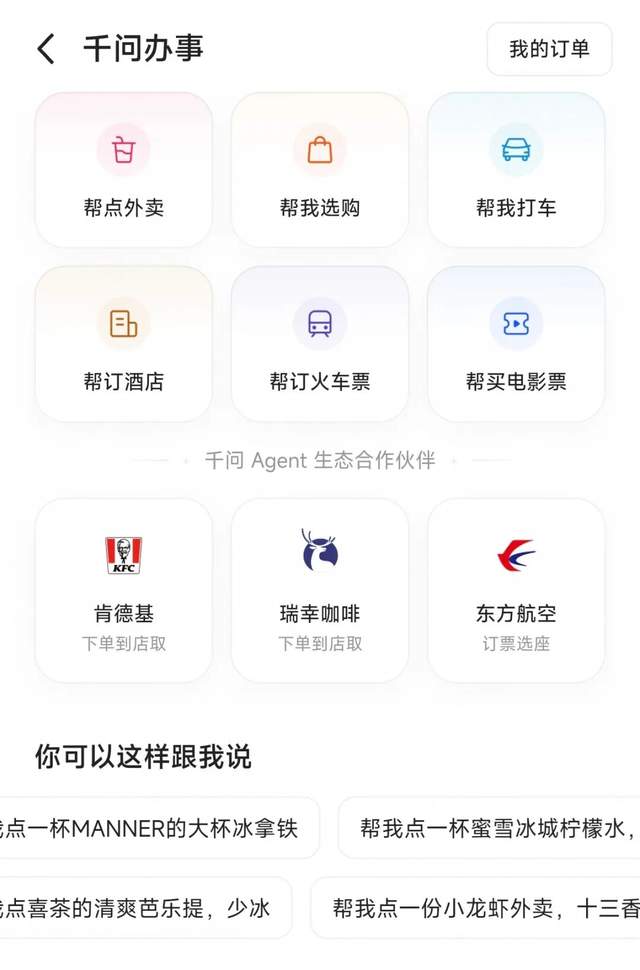
- •Alibaba's Qwen platform has also opened its platform to third-party agents and skills, with companies such as Luckin Coffee, KFC, Mixue, and China Eastern Airlines testing services to allow users to complete tasks like ordering food or arranging travel through natural language within the Qwen app.
📊 Competitor Analysis▸ Show
| Feature/Aspect | WeChat (Tencent) | Qwen (Alibaba) |
|---|---|---|
| Core Strategy | Embed AI agents within its existing super-app ecosystem (WeChat, mini-programs, social, payments) leveraging 1.4 billion users. Focus on seamless integration and A2A with smartphone OS. | Evolve from a general-purpose AI assistant to a platform integrating third-party services and workflows, leveraging Alibaba's commercial infrastructure. |
| Developer Integration | Offers "automatic mode" (AI autonomously operates mini-programs) and "development mode" (customized skills) for mini-program developers. | Opens platform to third-party Agents and Skills, allowing businesses to operate branded AI agents within the Qwen app. |
| Key Partnerships | Smartphone manufacturers (Huawei, Honor, Xiaomi, OPPO, Vivo) for A2A capabilities; major mini-program operators (JD, Meituan, KFC China, Trip.com, Poizon) for AI integration. | Consumer brands (Luckin Coffee, KFC, Mixue, China Eastern Airlines) for agent services within the Qwen app. |
| Underlying Models/Platforms | Leverages Tencent Cloud Agent Development Platform (ADP), ClawPro (built on OpenClaw), and internal models like Hy3 Preview and UI-Oceanus world model. | Family of large language models (LLMs) and multimodal models (MLLMs) including Qwen3 series (dense and MoE architectures), Qwen-Image, Qwen-VL. |
| Pricing (API) | Null (WeChat's agent pricing not specified, but Tencent Cloud offers various AI services with associated costs). | Qwen-Turbo: $0.05 input / $0.20 output per million tokens. Qwen-Plus: $0.40 input / $1.20 output per million tokens. Qwen3.7-Max: $1.25 input / $3.75 output per million tokens (promotional). |
| Benchmarks (Qwen3.7-Max) | Null (WeChat's agent-specific benchmarks not publicly detailed). | Overall intelligence: 53.3 (better than 95% of models). Coding capability: 46.5 (better than 92%). Agentic capability: 65.1 (better than 93%). Leads on GPQA Diamond (92.4%) and Terminal Bench 2.0-Terminus (69.7) against some competitors. |
🛠️ Technical Deep Dive
- WeChat's AI Skill system adopts the Model Context Protocol (MCP) architecture, an industry standard for AI development.
- The system employs a two-stage "Fact + Action" format for interface return, ensuring reliable operations.
- Parameter passing within WeChat's AI system prioritizes using IDs over natural language for precision.
- Tencent has developed a "UI-Oceanus world model" specifically to train AI in operating mini-programs.
- The Agent-to-Agent (A2A) protocol is used for inter-agent communication within WeChat's ecosystem and with external smartphone AI assistants.
- Tencent Cloud offers an Agent Development Platform (ADP) that provides an LLM+RAG, Workflow, and Multi-agent development framework.
- Tencent's ClawPro is an enterprise AI agent management platform built on the OpenClaw open-source framework.
- Qwen models are built on transformer-based architecture, incorporating innovations in attention mechanisms, training methodologies, and multilingual capabilities.
- The Qwen3 series includes both dense and Mixture-of-Expert (MoE) architectures, with parameter scales ranging from 0.6 billion to 235 billion. The flagship Qwen3-235B-A22B has 235 billion total parameters with 22 billion activated ones.
- Qwen models support "dual thinking modes" (Thinking for deep reasoning and Non-thinking for rapid responses) to balance inference depth and speed.
- Qwen-Image, an image-generation foundation model, utilizes a three-core module architecture: Multimodal Large Language Model (MLLM) Qwen2.5-VL, Variational AutoEncoder (VAE), and Multimodal Diffusion Transformer (MMDiT) with Multimodal Scalable RoPE (MSRoPE).
- Qwen3.7-Plus features a hybrid sparse mixture-of-experts architecture combining Gated DeltaNet linear attention with standard gated attention layers, supporting a 262K token native context window (extensible to 1M via YaRN) and accepting text, image, and video inputs.
🔮 Future ImplicationsAI analysis grounded in cited sources
⏳ Timeline
📎 Sources (29)
Factual claims are grounded in the sources below. Forward-looking analysis is AI-generated interpretation.
- chinadaily.com.cn
- futunn.com
- htx.com
- kr-asia.com
- 36kr.com
- lightreading.com
- kucoin.com
- biggo.com
- technode.com
- scmp.com
- moomoo.com
- tencentcloud.com
- thenextweb.com
- tencent.com
- galileo.ai
- nvidia.com
- arxiv.org
- wikipedia.org
- alibabacloud.com
- eesel.ai
- felloai.com
- openrouter.ai
- datacamp.com
- qwen.ai
- kucoin.com
- chatbotsmagazine.com
- beam.ai
- note.com
- tencent.com
Weekly AI Recap
Read this week's curated digest of top AI events →
👉Related Updates



AI-curated news aggregator. All content rights belong to original publishers.
Original source: 钛媒体 ↗
This is a summary, not the original. Read the source, or get the weekly briefing.
The weekly digest
One email a week. Unsubscribe anytime.