WeChat integrates A2A assistant with major phone brands
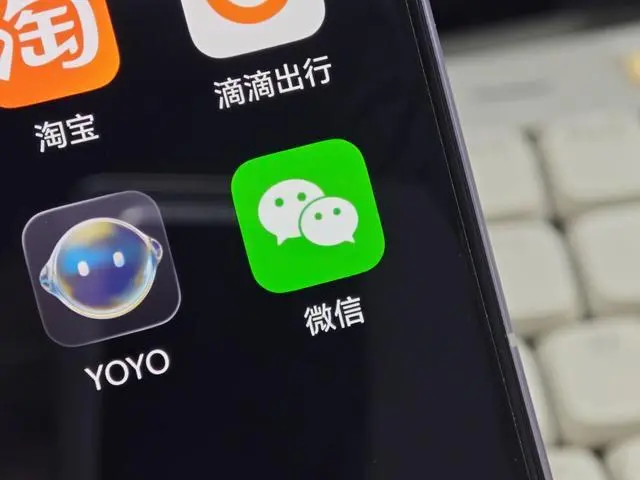
💡See how major mobile OS and super-apps are standardizing agentic AI to bridge the gap between voice and app actions.
⚡ 30-Second TL;DR
What Changed
WeChat is collaborating with Huawei, Honor, and Xiaomi.
Why It Matters
This integration signals a shift toward agentic AI ecosystems where OS-level assistants can control third-party app functionality, significantly improving user experience and AI utility.
What To Do Next
Explore the documentation for Agent-to-Agent frameworks to understand how to expose your own app's functions to OS-level AI assistants.
Key Points
- •WeChat is collaborating with Huawei, Honor, and Xiaomi.
- •A2A (Agent-to-Agent) technology enables cross-platform assistant integration.
- •Users can trigger WeChat calls and messages via native voice assistants.
🧠 Deep Insight
Background and context from public sources — not the original article. 14 sources cited.
🔑 Enhanced Key Takeaways
- •WeChat is expanding its A2A assistant partnerships beyond Huawei, Honor, and Xiaomi to also include OPPO and vivo, broadening the reach of this cross-platform integration.
- •This A2A integration represents a 'controlled opening' by WeChat, a significant shift from its historical stance of blocking third-party AI assistants, such as ByteDance's Doubao phone, from deeply interacting with its app.
- •The implementation utilizes a dual-authorization mechanism to ensure user data security and privacy, addressing concerns related to cross-platform AI interactions.
- •Honor's Magic8, Honor 500, and Honor X70 series are among the first devices to support this new capability, requiring users to update both their phone's native AI assistant (YOYO for Honor) and the WeChat application.
- •Alongside this external integration, Tencent is actively developing its own WeChat-native AI agent, currently in prototype testing, which aims to enable users to navigate mini-programs and perform tasks like ride-hailing, food delivery, and payments directly within the WeChat ecosystem using natural language commands.
🛠️ Technical Deep Dive
- The Agent-to-Agent (A2A) protocol is an open standard designed for AI agents from different platforms to communicate and collaborate securely.
- It leverages established web technologies, including HTTP for transport, JSON-RPC for structured messaging, and Server-Sent Events for real-time updates.
- The A2A framework typically involves a 'client agent' (e.g., the phone's native voice assistant) that orchestrates tasks and a 'remote agent' (e.g., WeChat) that processes these tasks.
- Key architectural components of the A2A protocol include Agent Cards (JSON files that advertise an agent's capabilities), Tasks (units of work), Messages for information exchange, and Artifacts for results.
- The A2A protocol was initially launched by Google and other technology partners in April 2025 and is now an open-source project housed by the Linux Foundation.
- It is designed to complement Anthropic's Model Context Protocol (MCP), with MCP focusing on agents accessing tools/APIs and A2A facilitating direct agent-to-agent collaboration.
- WeChat's specific implementation of this A2A capability incorporates a dual-authorization mechanism to ensure user data security and compliance with privacy regulations.
🔮 Future ImplicationsAI analysis grounded in cited sources
⏳ Timeline
📎 Sources (14)
Factual claims are grounded in the sources below. Forward-looking analysis is AI-generated interpretation.
Weekly AI Recap
Read this week's curated digest of top AI events →
👉Related Updates
AI-curated news aggregator. All content rights belong to original publishers.
Original source: cnBeta (Full RSS) ↗
This is a summary, not the original. Read the source, or get the weekly briefing.
The weekly digest
One email a week. Unsubscribe anytime.