WeChat and Alipay enter the AI assistant race
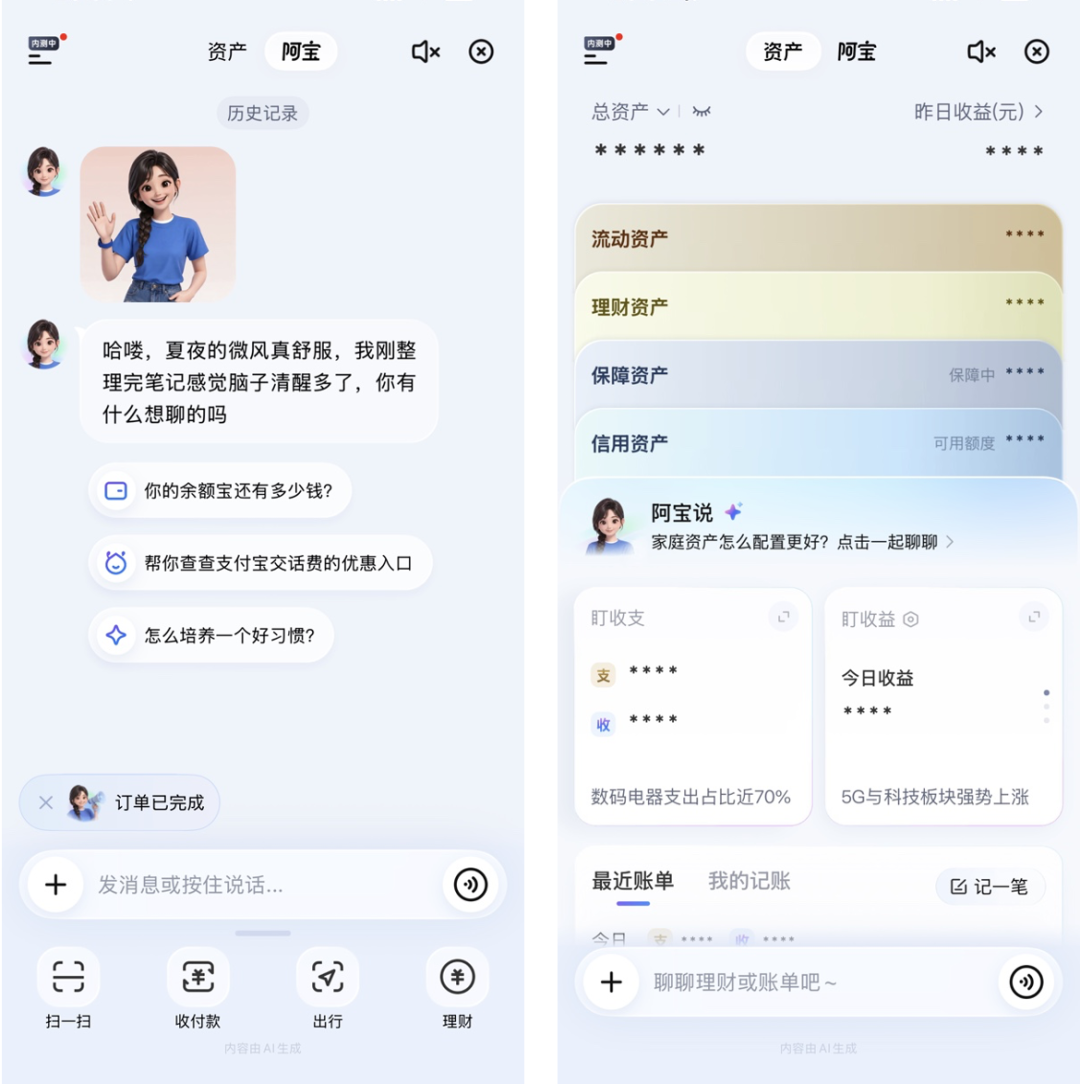
💡See how super-apps are evolving into AI-driven task orchestrators to capture user intent.
⚡ 30-Second TL;DR
What Changed
Major Chinese super-apps are integrating native AI assistants.
Why It Matters
This shift forces developers to optimize for super-app ecosystems rather than standalone AI agents.
What To Do Next
Explore the open platform APIs of WeChat and Alipay to see how to integrate your services into their new AI agents.
Key Points
- •Major Chinese super-apps are integrating native AI assistants.
- •The competition is shifting from simple chat to complex task orchestration.
- •Platform dominance depends on the ability to manage cross-service workflows.
🧠 Deep Insight
AI-generated analysis for this event — not the original article.
🔑 Enhanced Key Takeaways
- •WeChat's AI assistant, 'Yuanbao,' leverages Tencent's proprietary Hunyuan large language model to provide search, writing, and image generation capabilities directly within the app ecosystem.
- •Alipay's AI integration focuses heavily on 'AI Life Services,' allowing users to trigger complex financial and lifestyle transactions, such as booking medical appointments or managing insurance claims, via natural language commands.
- •The shift toward 'Agent-as-a-Service' models in China is driven by the need to reduce user friction in super-apps that have become bloated with thousands of mini-programs.
- •Regulatory compliance remains a critical differentiator, as both Tencent and Ant Group must ensure their AI assistants adhere to China's strict generative AI content filtering and data privacy laws.
- •Both platforms are prioritizing 'closed-loop' ecosystems where the AI assistant can execute tasks entirely within the app without redirecting users to external websites or third-party applications.
📊 Competitor Analysis▸ Show
| Feature | WeChat (Yuanbao) | Alipay (AI Life) | Baidu (Ernie Bot) |
|---|---|---|---|
| Primary Focus | Social/Content/Search | Financial/Life Services | Search/Knowledge/Enterprise |
| Model Backend | Hunyuan | Ant Group Proprietary | Ernie (Wenxin Yiyan) |
| Task Execution | High (Mini-program integration) | High (Transaction-focused) | Medium (Information-focused) |
| Pricing | Freemium | Freemium | Freemium/Enterprise API |
🛠️ Technical Deep Dive
- WeChat utilizes a multi-modal architecture within the Hunyuan model to process text, image, and document analysis simultaneously.
- Alipay employs a specialized 'Agent Orchestration Layer' that maps natural language intent to specific API calls within its vast network of mini-programs.
- Both systems utilize RAG (Retrieval-Augmented Generation) to ground AI responses in real-time, localized data from their respective service ecosystems.
- The implementation relies on lightweight, high-concurrency inference engines designed to handle millions of simultaneous requests without significant latency.
🔮 Future ImplicationsAI analysis grounded in cited sources
⏳ Timeline
Weekly AI Recap
Read this week's curated digest of top AI events →
👉Related Updates


AI-curated news aggregator. All content rights belong to original publishers.
Original source: 钛媒体 ↗
This is a summary, not the original. Read the source, or get the weekly briefing.
Weekly AI briefing
One email a week. Unsubscribe anytime.