WeChat Adds OpenClaw AI Agent Plugin
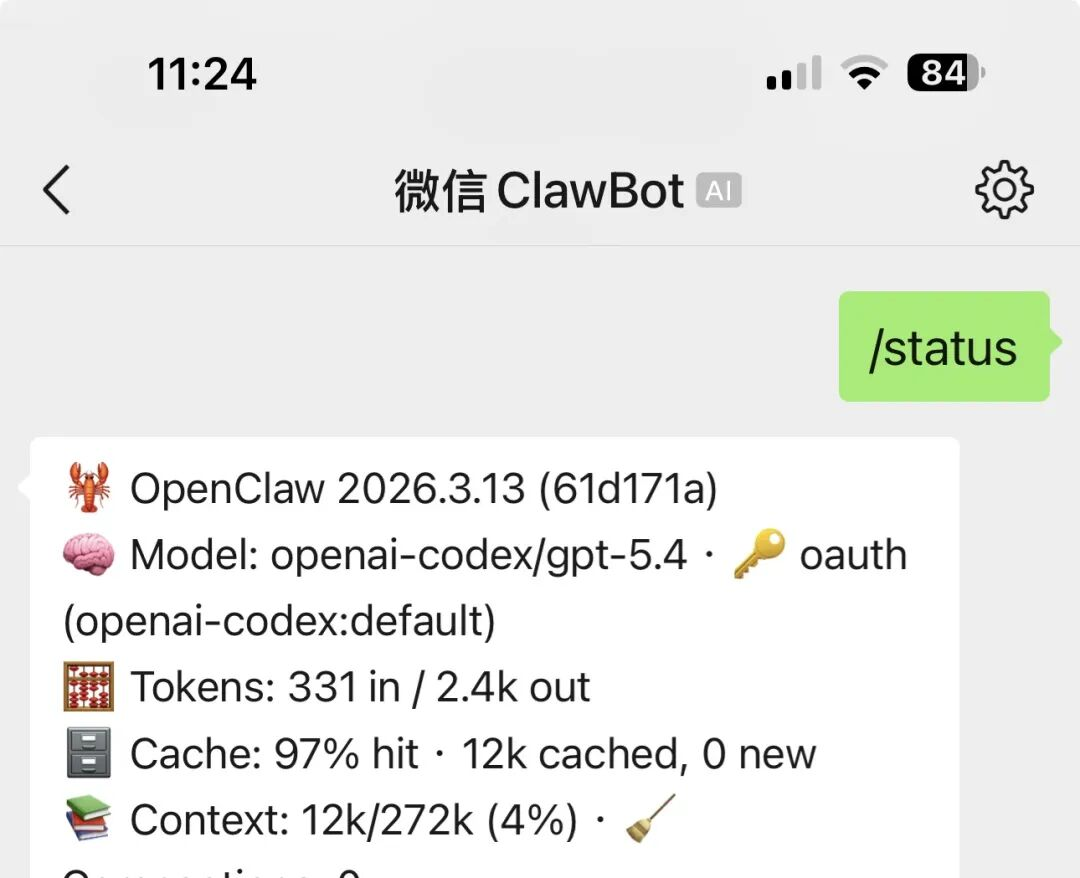
💡WeChat plugin brings OpenClaw agents to 1.4B users—test local LLMs in chats now.
⚡ 30-Second TL;DR
What Changed
2-minute setup via plugin install and WeChat scan; supports unmodified OpenClaw models.
Why It Matters
Reinforces WeChat dominance by natively supporting AI agents without hosting; boosts adoption among Chinese users running local LLMs. Highlights safety priorities in social apps.
What To Do Next
Install WeChat OpenClaw plugin and connect your local model for seamless AI chats.
Key Points
- •2-minute setup via plugin install and WeChat scan; supports unmodified OpenClaw models.
- •Features: slash commands, file transfer; lacks group chat, streaming, multi-select.
- •WeChat acts as 'remote control'—no data breach, preserving privacy boundaries.
- •Not fastest rollout; similar to prior DeepSeek search integration.
- •Lowers chat threshold but agent value depends on model choice and prompt skills.
🧠 Deep Insight
AI-generated analysis for this event — not the original article.
🔑 Enhanced Key Takeaways
- •OpenClaw's architecture utilizes a 'headless' agent design, allowing the WeChat plugin to function as a lightweight interface layer that offloads compute to the user's local machine or a private cloud instance, effectively bypassing WeChat's internal content moderation filters for raw model output.
- •The integration leverages the WeChat Mini Program framework's WebSocket capabilities to maintain persistent connections, enabling near-real-time bidirectional communication between the agent and the user without requiring a dedicated app installation.
- •Industry analysts note that this plugin strategy mirrors Tencent's broader 'Open Platform' initiative, aiming to capture the developer ecosystem by allowing third-party AI agents to tap into WeChat's massive user base without requiring Tencent to host or train the underlying models.
📊 Competitor Analysis▸ Show
| Feature | OpenClaw (WeChat) | Dify (WeChat Integration) | Coze (ByteDance) |
|---|---|---|---|
| Deployment | Local/Private Cloud | Cloud-Hosted | Cloud-Hosted |
| Privacy | High (Local-first) | Medium | Low (Platform-managed) |
| Setup | 2-min Scan | API Key Config | Platform Dashboard |
| Model Support | Unmodified/Open | Curated/API | Platform-specific |
🛠️ Technical Deep Dive
- •Plugin utilizes a custom WebSocket-based bridge protocol to tunnel traffic between the WeChat Mini Program frontend and the OpenClaw backend server.
- •Supports local inference via Ollama or vLLM backends, allowing users to run models like Llama 3 or Qwen locally while using WeChat as the UI.
- •Implements a 'Proxy-Auth' layer that maps WeChat OpenID to local agent sessions, ensuring that only the authorized user can trigger agent actions.
- •The plugin architecture is built on the WeChat 'Taro' framework, facilitating cross-platform compatibility between iOS and Android versions of WeChat.
🔮 Future ImplicationsAI analysis grounded in cited sources
⏳ Timeline
📰 Event Coverage
Weekly AI Recap
Read this week's curated digest of top AI events →
👉Related Updates
AI-curated news aggregator. All content rights belong to original publishers.
Original source: 虎嗅 ↗
This is a summary, not the original. Read the source, or get the weekly briefing.
Weekly AI briefing
One email a week. Unsubscribe anytime.