Weave Robotics Launches Isaac 1 Household Robot
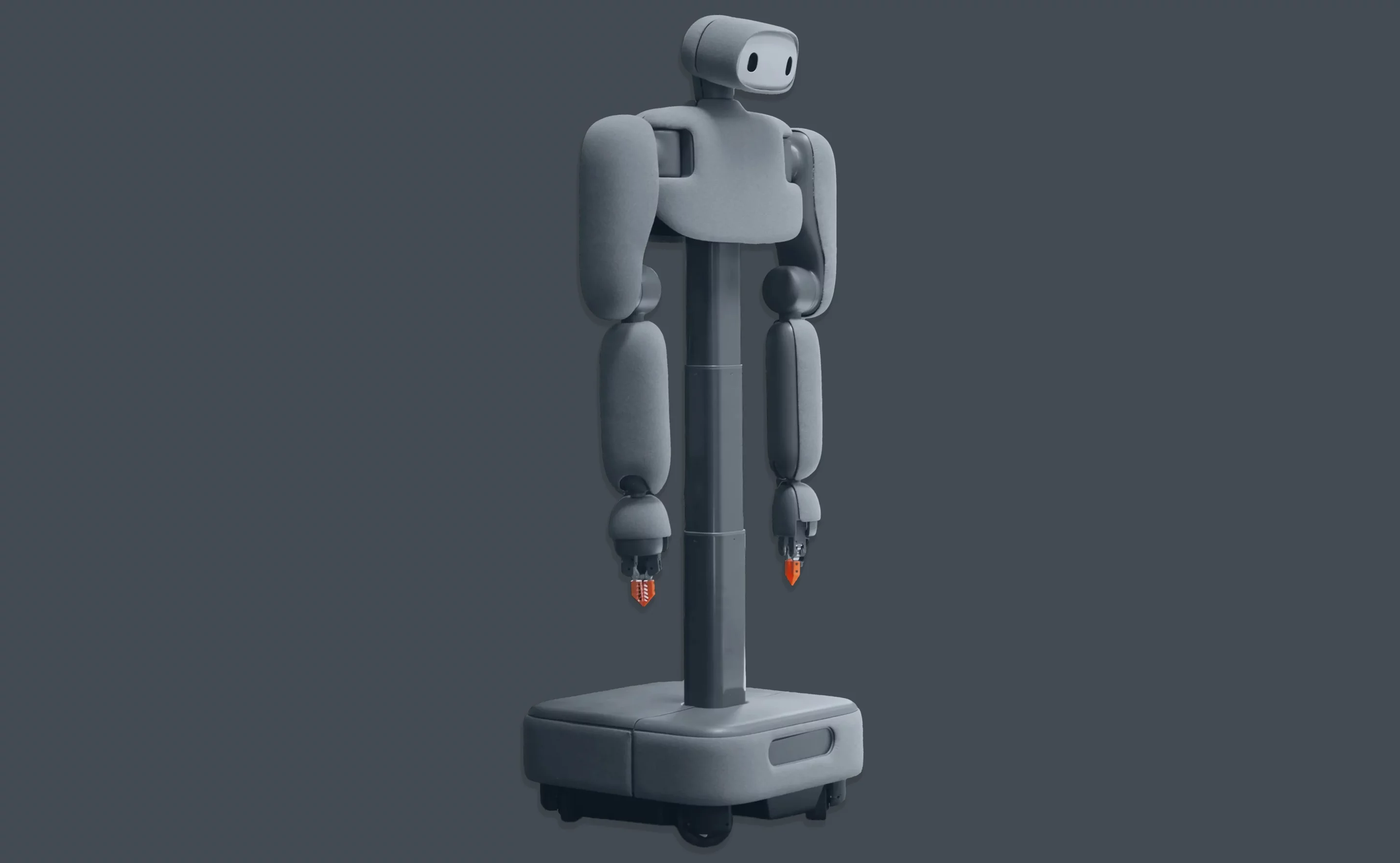
💡A new milestone in embodied AI for the home, moving beyond simple tasks to complex fabric manipulation.
⚡ 30-Second TL;DR
What Changed
Capable of complex household tasks like folding clothes and making beds
Why It Matters
The advancement of affordable, multi-functional domestic robots signals a shift in embodied AI from industrial settings to consumer homes.
What To Do Next
Research the manipulation stack used in Isaac 1 to understand how they handle non-rigid object deformation.
Key Points
- •Capable of complex household tasks like folding clothes and making beds
- •Features a more refined and approachable industrial design
- •Priced at $8,000 per unit
- •Significant functional upgrade from the previous table-top folding model
🧠 Deep Insight
AI-generated analysis for this event — not the original article.
🔑 Enhanced Key Takeaways
- •Weave Robotics utilizes a proprietary 'Soft-Touch' tactile feedback system that allows the Isaac 1 to manipulate delicate fabrics without damaging fibers.
- •The robot integrates a multi-modal transformer architecture, enabling it to process visual and haptic data simultaneously for real-time task adjustment.
- •Isaac 1 operates on a subscription-based 'Robot-as-a-Service' (RaaS) model for software updates, despite the $8,000 upfront hardware cost.
- •The company has secured partnerships with major smart home ecosystem providers to allow Isaac 1 to interface with IoT-enabled laundry appliances.
- •Manufacturing of the Isaac 1 is localized in North America to mitigate supply chain volatility and ensure faster maintenance turnaround times.
📊 Competitor Analysis▸ Show
| Feature | Weave Robotics Isaac 1 | Diligent Robotics Moxi | Aeolus Robotics Aeo |
|---|---|---|---|
| Primary Focus | Household Chores | Hospital Logistics | Elder Care/Security |
| Price | $8,000 | Leasing Model | $10,000+ (Est.) |
| Manipulation | High-Dexterity (Folding) | Pick-and-Place | Navigation/Patrol |
🛠️ Technical Deep Dive
- Actuation: Employs 7-DOF (Degrees of Freedom) robotic arms with high-torque brushless DC motors.
- Vision System: Dual-depth RGB-D cameras with onboard neural processing unit (NPU) for edge-based object recognition.
- Power: Integrated lithium-iron-phosphate (LiFePO4) battery pack providing 4 hours of continuous operation per charge.
- Connectivity: Wi-Fi 7 and Bluetooth 5.4 for low-latency communication with smart home hubs.
- Software: Runs on a customized Linux-based ROS 2 (Robot Operating System) distribution optimized for household environments.
🔮 Future ImplicationsAI analysis grounded in cited sources
⏳ Timeline
Weekly AI Recap
Read this week's curated digest of top AI events →
👉Related Updates



AI-curated news aggregator. All content rights belong to original publishers.
Original source: cnBeta (Full RSS) ↗
This is a summary, not the original. Read the source, or get the weekly briefing.
Weekly AI briefing
One email a week. Unsubscribe anytime.