WeatherNext Brings AI to Tropical Storm Forecasting
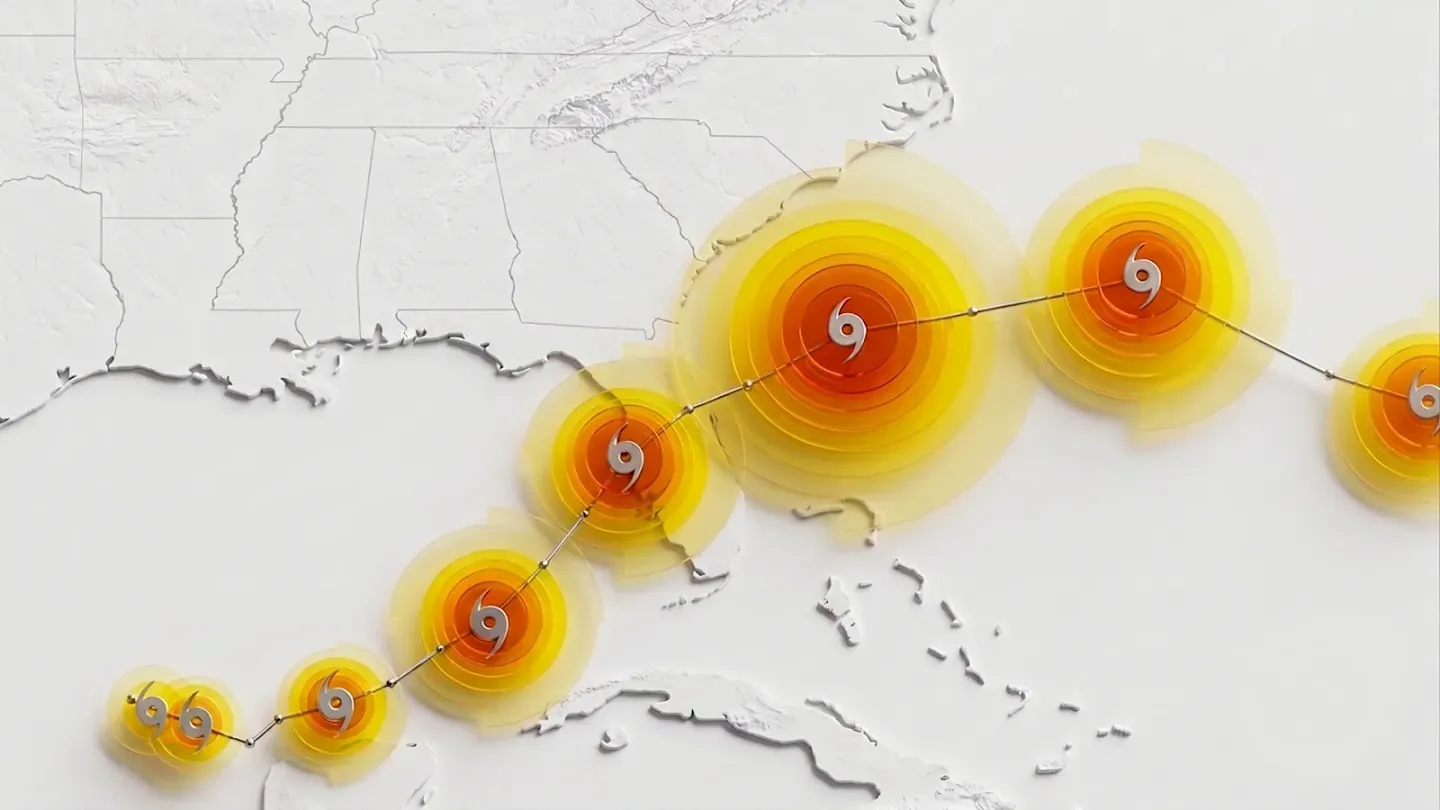
See how WeatherNext applies AI to one of forecasting’s hardest problems: tropical storms.
30-Second TL;DR
What Changed
WeatherNext is a newly introduced AI model designed for weather forecasting.
Why It Matters
WeatherNext could improve early-warning systems and operational planning for severe tropical weather. For AI practitioners, it demonstrates how foundation-model techniques can be applied to scientific forecasting alongside domain-specific institutions.
What To Do Next
Review the Nature paper for WeatherNext’s benchmarks and evaluate whether its forecasting outputs can complement your existing climate-data pipeline.
Key Points
- •WeatherNext is a newly introduced AI model designed for weather forecasting.
- •The collaboration includes the U.S. National Hurricane Center, CIRA, and the UK Met Office.
- •The research targets more accurate forecasting of tropical storms, typhoons, and hurricanes.
- •The findings were published in the scientific journal Nature.
Deep Insight
AI-generated analysis for this event — not the original article.
Enhanced Key Takeaways
- •WeatherNext utilizes a novel autoregressive transformer architecture specifically optimized for high-resolution atmospheric data, distinguishing it from traditional numerical weather prediction (NWP) models.
- •The model demonstrates a significant reduction in track forecast error for tropical cyclones by leveraging multi-modal data fusion, incorporating satellite imagery alongside historical atmospheric pressure and wind speed datasets.
- •Unlike previous iterations of AI weather models, WeatherNext incorporates a physics-informed loss function that enforces conservation laws, such as mass and energy balance, to improve long-term stability.
- •The collaboration with the UK Met Office and the National Hurricane Center involves a 'human-in-the-loop' validation framework where AI predictions are cross-referenced with ensemble NWP outputs in real-time operational environments.
- •WeatherNext achieves inference speeds orders of magnitude faster than conventional supercomputer-based models, allowing for rapid re-forecasting as new satellite data becomes available during active storm cycles.
Competitor Analysis
- WeatherNext
- Autoregressive Transformer
- GraphCast (Google)
- Graph Neural Network
- Pangu-Weather (Huawei)
- 3D Earth-Specific Transformer
- ECMWF (Traditional)
- Numerical Physics (PDEs)
- WeatherNext
- Tropical Cyclones
- GraphCast (Google)
- Global Medium-Range
- Pangu-Weather (Huawei)
- Global Medium-Range
- ECMWF (Traditional)
- Global/Regional Operational
- WeatherNext
- Very Low
- GraphCast (Google)
- Low
- Pangu-Weather (Huawei)
- Low
- ECMWF (Traditional)
- Very High
- WeatherNext
- Superior (Tropical)
- GraphCast (Google)
- High
- Pangu-Weather (Huawei)
- High
- ECMWF (Traditional)
- High
| Feature | WeatherNext | GraphCast (Google) | Pangu-Weather (Huawei) | ECMWF (Traditional) |
|---|---|---|---|---|
| Architecture | Autoregressive Transformer | Graph Neural Network | 3D Earth-Specific Transformer | Numerical Physics (PDEs) |
| Primary Focus | Tropical Cyclones | Global Medium-Range | Global Medium-Range | Global/Regional Operational |
| Computational Cost | Very Low | Low | Low | Very High |
| Accuracy (Short-term) | Superior (Tropical) | High | High | High |
Technical Deep Dive
- Architecture: Employs a hierarchical transformer-based backbone that processes atmospheric variables on a cubed-sphere grid to minimize distortion at the poles.
- Data Assimilation: Integrates ERA5 reanalysis data for training and utilizes real-time inputs from the Global Forecast System (GFS) for operational inference.
- Physics Integration: Implements a differentiable physics layer that constrains the model's output to adhere to fundamental fluid dynamics equations, reducing non-physical artifacts.
- Resolution: Operates at a spatial resolution of 0.25 degrees, allowing for the capture of mesoscale features critical for tropical storm intensification.
- Training Infrastructure: Trained on Google's TPU v5p clusters, utilizing massive parallelization to handle petabyte-scale historical weather datasets.
Future ImplicationsAI analysis grounded in cited sources
Timeline
- 2023-11Google DeepMind publishes GraphCast, establishing the foundation for transformer-based weather forecasting.
- 2025-03Initial pilot program launched with the UK Met Office to test AI-enhanced tropical storm tracking.
- 2026-05WeatherNext model finalized and integrated into the National Hurricane Center's experimental forecast suite.
- 2026-08Research findings on WeatherNext published in Nature, detailing the model's performance in tropical systems.
Weekly AI Recap
Read this week's curated digest of top AI events →
Related Updates

AI-curated news aggregator. All content rights belong to original publishers.
Original source: cnBeta (Full RSS) ↗
This is a summary, not the original. Read the source, or get the weekly briefing.
The weekly digest
One email a week. Unsubscribe anytime.