Wealthy US families shift to AI-focused schools
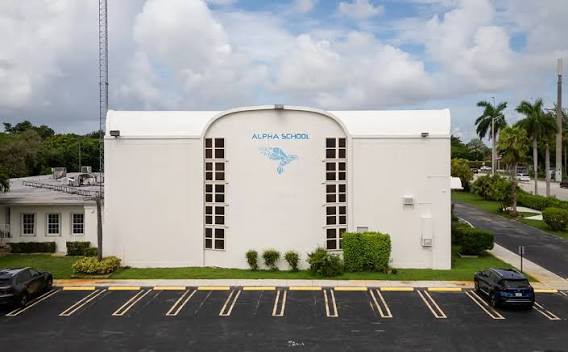
💡Understand the emerging demand for AI-driven personalized learning in the high-end education market.
⚡ 30-Second TL;DR
What Changed
AI tutors are used to compress core academic learning time.
Why It Matters
This trend signals a growing market for specialized AI educational tools and platforms. It may force traditional education systems to integrate AI to maintain relevance.
What To Do Next
Explore the market for personalized AI tutoring APIs to build specialized educational content delivery systems.
Key Points
- •AI tutors are used to compress core academic learning time.
- •Curriculum emphasizes entrepreneurship, product design, and public speaking.
- •Long-term efficacy of this AI-integrated educational model remains unproven.
🧠 Deep Insight
AI-generated analysis for this event — not the original article.
🔑 Enhanced Key Takeaways
- •These schools often utilize 'micro-school' models, which cap enrollment at 10-15 students per cohort to facilitate personalized AI-driven pacing.
- •The shift is largely driven by dissatisfaction with standardized testing metrics, with parents opting for 'mastery-based' progression where students advance only after demonstrating competency.
- •Many of these institutions are adopting 'human-in-the-loop' systems where AI handles content delivery while human mentors focus exclusively on emotional intelligence and conflict resolution.
- •Critics argue this trend exacerbates the 'digital divide,' as the high tuition costs—often exceeding $30,000 annually—limit access to elite socioeconomic groups.
- •Regulatory bodies in several states are currently reviewing whether these AI-heavy curricula meet minimum 'seat-time' requirements for state accreditation.
📊 Competitor Analysis▸ Show
| Feature | AI-Integrated Micro-Schools | Traditional Private Schools | Public Charter Schools |
|---|---|---|---|
| Primary Instruction | AI Tutors / Adaptive Software | Human Teachers (Lectures) | Human Teachers (Standardized) |
| Pricing | $25k - $50k+ / year | $20k - $60k / year | Publicly Funded (Free) |
| Core Metric | Mastery-based progression | Letter grades / GPA | Standardized test scores |
| Student-Teacher Ratio | 1:15 (Mentor-led) | 1:12 - 1:20 | 1:25 - 1:35 |
🛠️ Technical Deep Dive
- Architecture: Most platforms utilize a Multi-Agent System (MAS) where specialized LLM agents act as subject-matter experts, while a 'Supervisor Agent' tracks student engagement and knowledge gaps.
- Adaptive Learning: Systems employ Bayesian Knowledge Tracing (BKT) to predict student mastery levels and dynamically adjust the difficulty of subsequent modules.
- Data Privacy: Schools are increasingly moving toward Localized Edge Computing to process student interaction data, aiming to comply with COPPA and FERPA regulations by minimizing cloud-based data transmission.
- Integration: Platforms often utilize LTI (Learning Tools Interoperability) standards to sync AI-generated performance data with traditional student information systems (SIS).
🔮 Future ImplicationsAI analysis grounded in cited sources
⏳ Timeline
Weekly AI Recap
Read this week's curated digest of top AI events →
👉Related Updates

AI-curated news aggregator. All content rights belong to original publishers.
Original source: cnBeta (Full RSS) ↗
This is a summary, not the original. Read the source, or get the weekly briefing.
Weekly AI briefing
One email a week. Unsubscribe anytime.