Waymo vs Wayve Self-Driving Battle in London
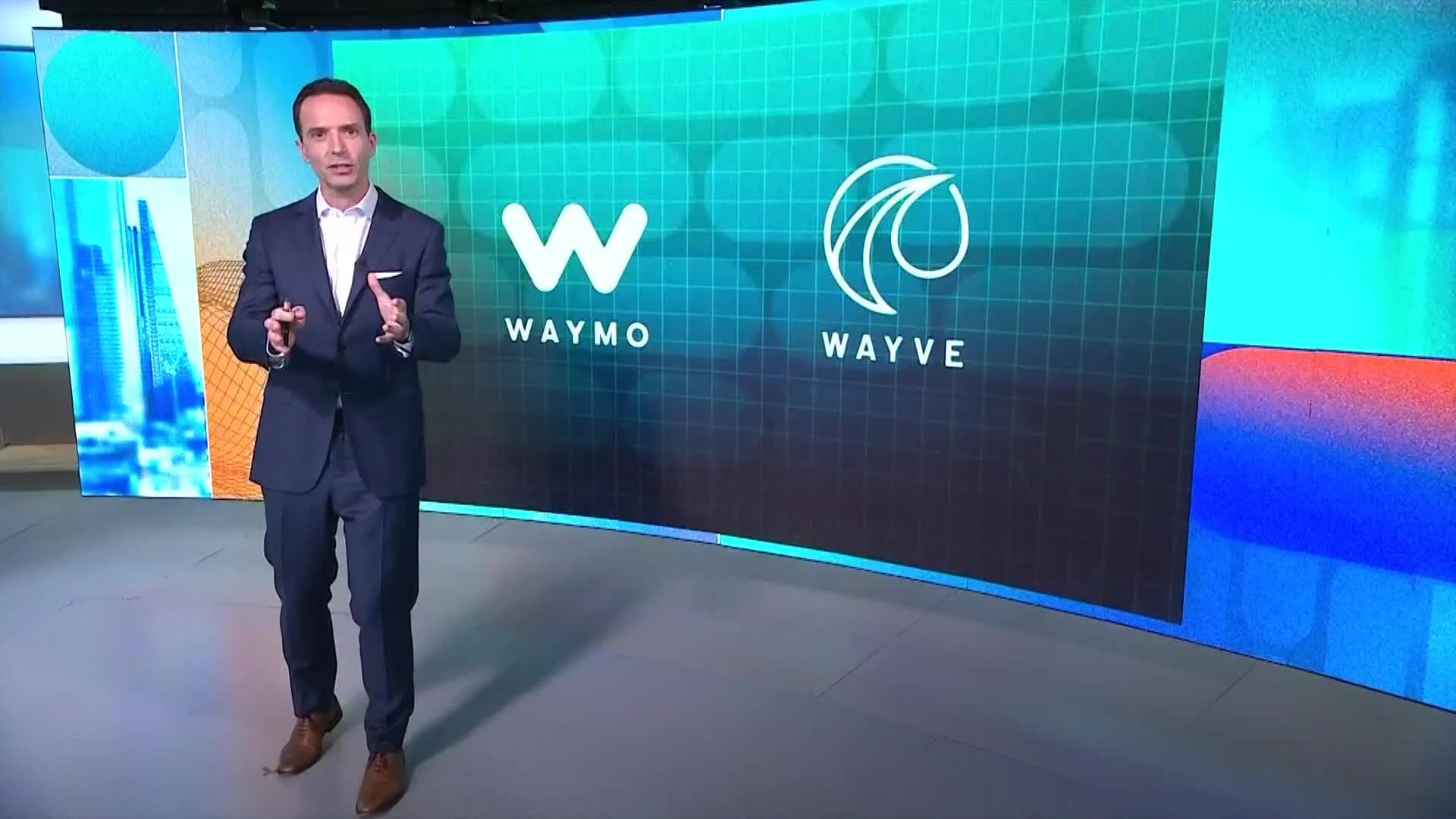
Wayve's pure AI AV challenges Waymo's sensors—key for scalable embodied AI strategies
30-Second TL;DR
What Changed
Waymo's approach emphasizes sensors and high-definition maps for precision navigation
Why It Matters
This London launch could accelerate AV adoption in Europe, pressuring incumbents like Uber. Wayve's AI-first model may inspire scalable embodied AI beyond cars, influencing robotics investment.
What To Do Next
Prototype a mapless end-to-end model using Wayve-inspired video-to-control architectures in your robotics sim.
Key Points
- •Waymo's approach emphasizes sensors and high-definition maps for precision navigation
- •Wayve bets on mapless, end-to-end AI trained at scale for generalization
- •Both launching autonomous ride-hailing in London, setting up direct competition
- •Showdown highlights sensor fusion vs pure learning debate in AV
Deep Insight
AI-generated analysis for this event — not the original article.
Enhanced Key Takeaways
- •Wayve's 'AV2.0' approach utilizes multimodal foundation models that process raw sensor data directly into driving commands, contrasting with Waymo's modular software stack that separates perception, prediction, and planning.
- •London's complex, narrow, and non-standardized road infrastructure presents a significantly higher 'edge case' density compared to Waymo's primary operating environments in the United States, testing the limits of generalization for both architectures.
- •Regulatory frameworks in the UK, specifically the Automated Vehicles Act 2024, provide a distinct legal pathway for liability transfer to manufacturers, which is a critical differentiator for Waymo's deployment strategy compared to its US-based operations.
Competitor Analysis
- Waymo (Modular/HD Maps)
- Sensor Fusion (LiDAR/Radar/Cam)
- Wayve (End-to-End AI)
- Multimodal Foundation Model
- Tesla (Vision-Only/FSD)
- Vision-Only (Cameras)
- Waymo (Modular/HD Maps)
- HD Maps Required
- Wayve (End-to-End AI)
- Mapless (Generalization)
- Tesla (Vision-Only/FSD)
- Mapless (Fleet Learning)
- Waymo (Modular/HD Maps)
- Geofenced/High-Precision
- Wayve (End-to-End AI)
- Scalable/Urban-Adaptive
- Tesla (Vision-Only/FSD)
- Consumer/Mass Market
- Waymo (Modular/HD Maps)
- Rule-based/Probabilistic
- Wayve (End-to-End AI)
- Learned/Neural-based
- Tesla (Vision-Only/FSD)
- Learned/Neural-based
| Feature | Waymo (Modular/HD Maps) | Wayve (End-to-End AI) | Tesla (Vision-Only/FSD) |
|---|---|---|---|
| Primary Input | Sensor Fusion (LiDAR/Radar/Cam) | Multimodal Foundation Model | Vision-Only (Cameras) |
| Mapping | HD Maps Required | Mapless (Generalization) | Mapless (Fleet Learning) |
| Deployment | Geofenced/High-Precision | Scalable/Urban-Adaptive | Consumer/Mass Market |
| Safety Logic | Rule-based/Probabilistic | Learned/Neural-based | Learned/Neural-based |
Technical Deep Dive
- Wayve Architecture: Utilizes 'LINGO-1', a vision-language-action model that links driving behavior to natural language explanations, improving interpretability of end-to-end neural networks.
- Waymo Sensor Suite: Employs 5th/6th generation LiDAR systems with custom-built long-range and peripheral sensors, integrated with a proprietary HD mapping pipeline that updates in near real-time.
- Compute Requirements: Waymo relies on high-performance onboard compute for real-time sensor fusion; Wayve focuses on massive offline training compute to distill complex driving policies into efficient onboard inference models.
Future ImplicationsAI analysis grounded in cited sources
Timeline
- 2017-05Wayve founded in Cambridge, UK, to pursue end-to-end deep learning for autonomous driving.
- 2022-05Wayve completes first public autonomous driving trials on central London streets.
- 2024-05Wayve secures $1.05 billion in Series C funding led by SoftBank, with participation from NVIDIA and Microsoft.
- 2025-09Waymo officially announces expansion plans for UK-based testing and operations.
Weekly AI Recap
Read this week's curated digest of top AI events →
AI-curated news aggregator. All content rights belong to original publishers.
Original source: Bloomberg Technology ↗
This is a summary, not the original. Read the source, or get the weekly briefing.
The weekly digest
One email a week. Unsubscribe anytime.