Waymo robotaxi handles toy gun drive-by incident autonomously
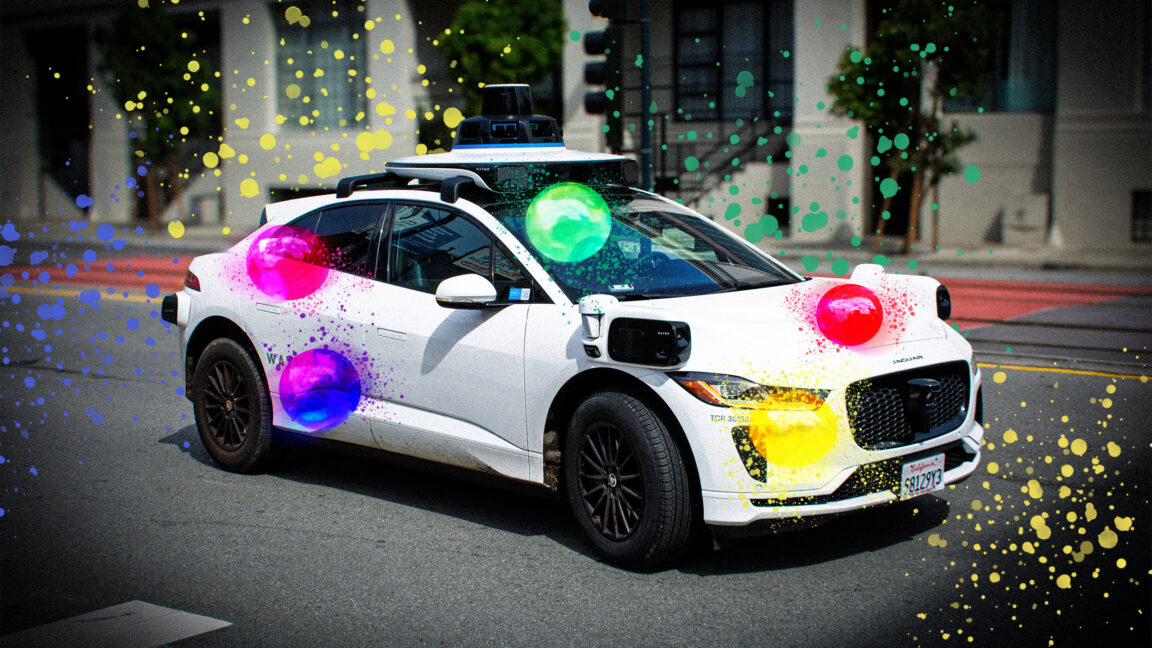
💡See how Waymo's autonomous safety stack handles real-world adversarial edge cases and emergency reporting.
⚡ 30-Second TL;DR
What Changed
Waymo vehicle detected abnormal behavior during a toy gun incident
Why It Matters
This incident demonstrates the robustness of autonomous vehicle safety protocols in real-world adversarial scenarios. It highlights the importance of edge-case handling in AV software stacks.
What To Do Next
Review your autonomous system's emergency response logic to ensure it can handle non-standard human interactions safely.
Key Points
- •Waymo vehicle detected abnormal behavior during a toy gun incident
- •Autonomous safety protocols triggered an immediate stop and emergency call
- •San Mateo Police were dispatched to handle the situation
🧠 Deep Insight
AI-generated analysis for this event — not the original article.
🔑 Enhanced Key Takeaways
- •The incident occurred in Daly City, California, where the Waymo vehicle was operating as part of its expanded San Francisco Peninsula service area.
- •Video footage of the incident was captured by the vehicle's onboard sensor suite, which provided high-resolution evidence used by law enforcement to identify the suspects.
- •Waymo's safety protocols include a dedicated 'rider support' team that can intervene remotely, though the vehicle's automated response to the threat was prioritized in this instance.
- •Local law enforcement officials noted that while the weapons were toys, the incident was treated as a serious public safety concern due to the potential for escalation and public alarm.
- •This event marks one of the first publicly documented cases where an autonomous vehicle's behavioral prediction system successfully classified a non-standard human interaction (a drive-by simulation) as a safety-critical event.
📊 Competitor Analysis▸ Show
| Feature | Waymo | Zoox | Cruise |
|---|---|---|---|
| Safety Response | Automated 911/Remote Assist | Remote Human Intervention | Remote Human Intervention |
| Sensor Suite | Lidar/Radar/Camera Fusion | Camera-heavy/Lidar | Lidar/Radar/Camera Fusion |
| Operational Status | Fully Driverless (Public) | Fully Driverless (Limited) | Testing/Phased Relaunch |
🛠️ Technical Deep Dive
- The Waymo Driver utilizes a multi-modal sensor fusion architecture that processes data from Lidar, radar, and cameras to classify objects and predict intent.
- The system employs a 'behavior prediction' module that assigns probability scores to the actions of surrounding actors, allowing the vehicle to distinguish between benign movement and aggressive or threatening behavior.
- Upon detecting a high-risk event, the vehicle's 'Safety Critical System' (SCS) triggers a transition to a minimal risk condition (MRC), which includes pulling over and initiating a secure communication link with the Waymo Fleet Response Center.
- The vehicle's onboard compute platform runs deep neural networks trained on millions of miles of simulated and real-world edge cases to recognize non-standard human gestures and weapon-like objects.
🔮 Future ImplicationsAI analysis grounded in cited sources
⏳ Timeline
Weekly AI Recap
Read this week's curated digest of top AI events →
👉Related Updates


AI-curated news aggregator. All content rights belong to original publishers.
Original source: Ars Technica ↗
This is a summary, not the original. Read the source, or get the weekly briefing.
Weekly AI briefing
One email a week. Unsubscribe anytime.