Waymo Imports Chinese-Built Ojai Robotaxis
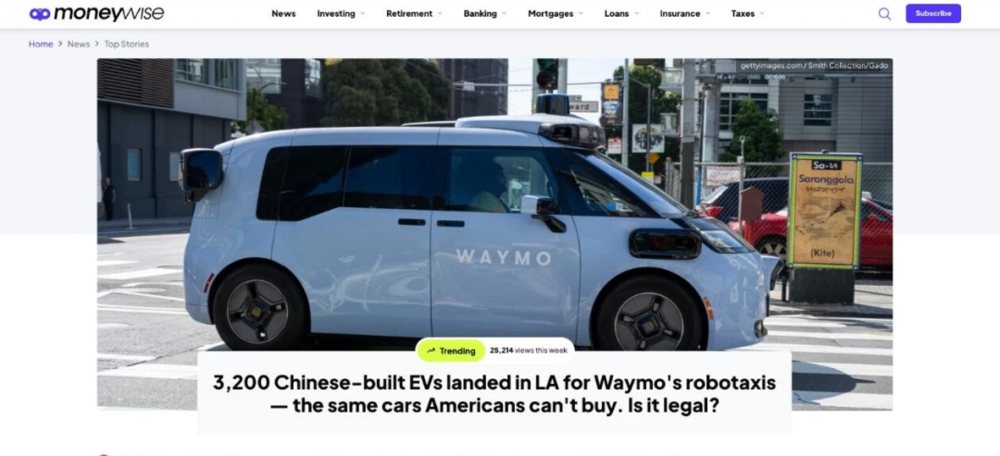
💡Waymo’s fleet shows how vehicle supply, sensor integration, and trade policy shape autonomous AI deployment.
⚡ 30-Second TL;DR
What Changed
More than 3,200 vehicles have reportedly arrived through the Port of Los Angeles since 2024, including over 2,600 in 2026.
Why It Matters
The story highlights how autonomous-vehicle operators can access vehicle platforms that ordinary consumers cannot buy because of tariffs and national-security rules. For AI developers, it underscores that autonomy performance depends not only on models and sensors but also on vehicle integration, supply chains, and regulatory classifications.
What To Do Next
Benchmark your autonomous-driving stack separately on the base vehicle and after sensor/computing integration to quantify how platform changes affect latency, calibration, and safety performance.
Key Points
- •More than 3,200 vehicles have reportedly arrived through the Port of Los Angeles since 2024, including over 2,600 in 2026.
- •Ojai is derived from Zeekr’s China-built Mix, featuring pillarless styling, sliding doors, and a spacious four-corner wheel layout.
- •Waymo’s vehicles are reportedly imported as base vehicles and later fitted with autonomous-driving sensors and systems.
- •A pre-existing contract signed in 2021 may allow the imports to continue despite high tariffs and newer connected-vehicle restrictions.
Weekly AI Recap
Read this week's curated digest of top AI events →
👉Related Updates


AI-curated news aggregator. All content rights belong to original publishers.
Original source: 虎嗅 ↗
This is a summary, not the original. Read the source, or get the weekly briefing.
Weekly AI briefing
One email a week. Unsubscribe anytime.