Waymo expands fully autonomous operations to four new cities
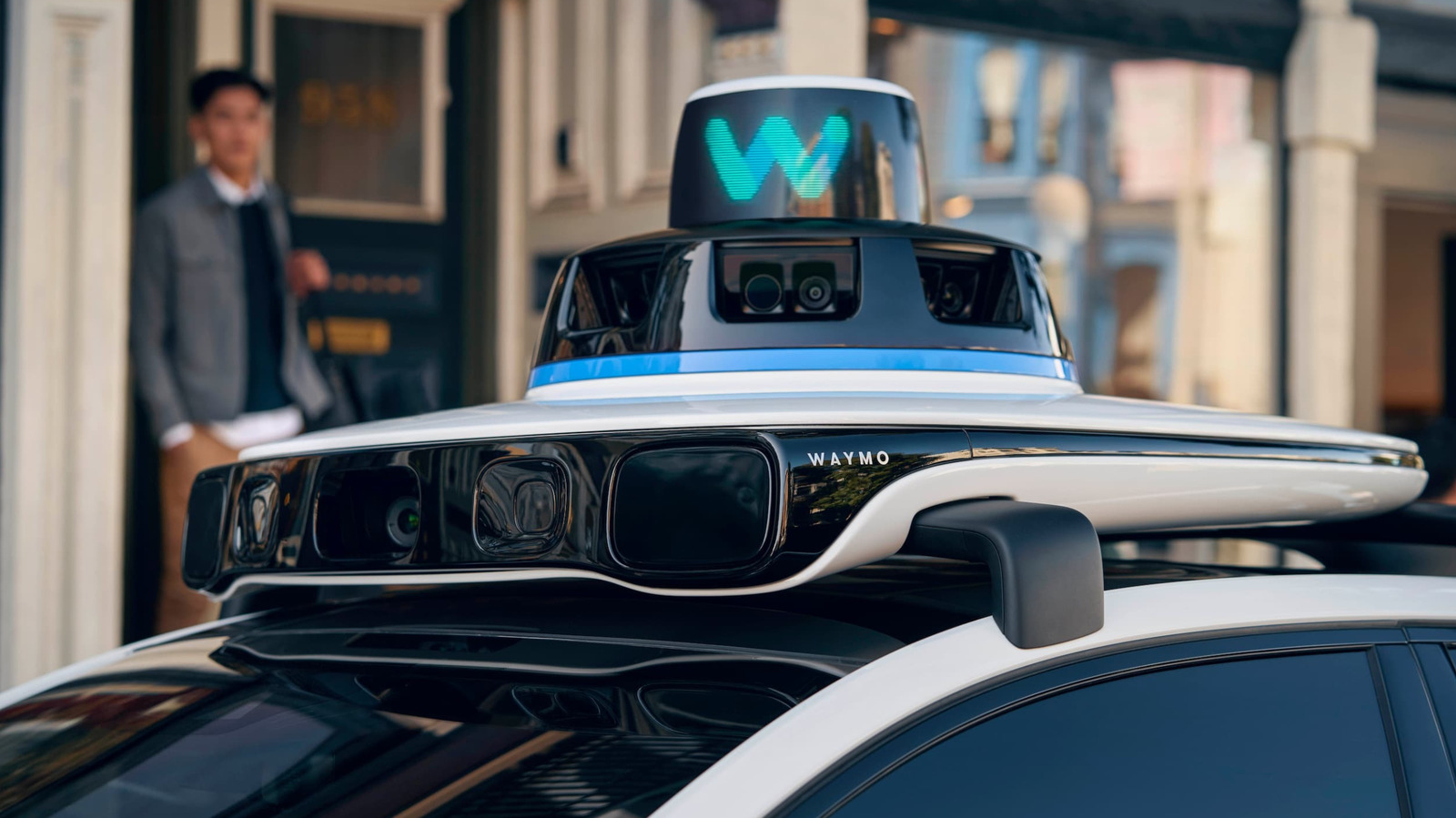
💡Waymo's rapid scaling provides critical real-world data on L4 autonomous safety and operational reliability.
⚡ 30-Second TL;DR
What Changed
Waymo removing human safety drivers in four major cities
Why It Matters
This expansion accelerates the commercial viability of robotaxis, putting pressure on competitors to prove similar safety metrics in diverse urban environments.
What To Do Next
Monitor Waymo's safety report data for these new regions to benchmark your own autonomous navigation performance metrics.
Key Points
- •Waymo removing human safety drivers in four major cities
- •Expansion includes San Diego, Las Vegas, Tampa, and Denver
- •Signals increased confidence in L4 autonomous driving reliability
🧠 Deep Insight
AI-generated analysis for this event — not the original article.
🔑 Enhanced Key Takeaways
- •Waymo's expansion utilizes the 6th-generation Waymo Driver hardware suite, which features increased sensor density and improved thermal management for diverse climates like Tampa and Denver.
- •The deployment in Tampa represents Waymo's first major expansion into the Florida market, requiring specific adaptations for high-frequency heavy rainfall and unique coastal traffic patterns.
- •Regulatory approval for these four cities was fast-tracked following the successful implementation of Waymo's 'Safety Performance Data' transparency initiative, which shares real-time collision avoidance metrics with local transit authorities.
- •Waymo has integrated a new 'Dynamic Routing' AI model that allows vehicles to better navigate the complex, non-grid street layouts often found in older sections of San Diego and Denver.
- •The expansion is supported by a new network of regional 'Waymo Operations Centers' (WOCs) designed to provide remote assistance and fleet maintenance, reducing the need for localized human safety drivers.
📊 Competitor Analysis▸ Show
| Feature | Waymo (6th Gen) | Zoox (Amazon) | Cruise (GM) |
|---|---|---|---|
| Vehicle Design | Retrofitted Jaguar I-PACE | Purpose-built carriage | Retrofitted Chevy Bolt/Origin |
| Operational Status | Fully Driverless (Multi-City) | Limited/Testing | Phased Re-entry |
| Sensor Suite | LiDAR, Radar, Cameras | LiDAR, Radar, Cameras | LiDAR, Radar, Cameras |
| Primary Market | Public Robotaxi | Campus/Dense Urban | Public Robotaxi |
🛠️ Technical Deep Dive
- Hardware Suite: Utilizes the 6th-generation Waymo Driver platform which integrates 13 cameras, 6 radar units, and 4 LiDAR sensors for 360-degree coverage.
- Compute Architecture: Employs custom-designed, high-performance compute units capable of processing multi-modal sensor data at the edge with sub-millisecond latency.
- Perception System: Uses a transformer-based neural network architecture that improves object detection and prediction accuracy in adverse weather conditions like heavy rain or snow.
- Mapping: Relies on high-definition (HD) maps combined with real-time localization to maintain centimeter-level positioning accuracy without relying solely on GPS.
🔮 Future ImplicationsAI analysis grounded in cited sources
⏳ Timeline
Weekly AI Recap
Read this week's curated digest of top AI events →
👉Related Updates

AI-curated news aggregator. All content rights belong to original publishers.
Original source: Engadget ↗
This is a summary, not the original. Read the source, or get the weekly briefing.
The weekly digest
One email a week. Unsubscribe anytime.