Wall Street outlook for AI and semiconductors in H2
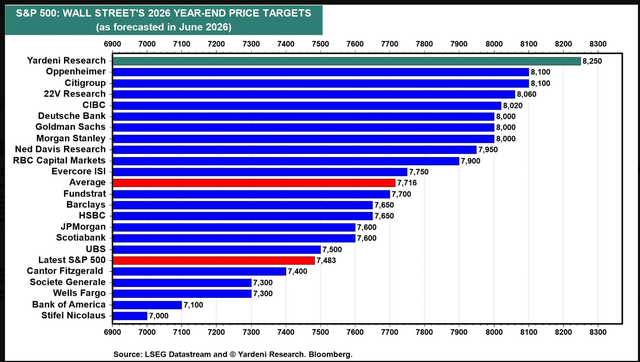
💡Get the latest Wall Street perspective on the sustainability of the AI and semiconductor market rally.
⚡ 30-Second TL;DR
What Changed
Analysts forecast continued growth for the S&P 500, driven by earnings and liquidity, potentially lasting until 2027.
Why It Matters
This provides a financial perspective on the sustainability of the current AI infrastructure boom, influencing investment strategies for AI-focused firms.
What To Do Next
If you are an AI founder, focus on demonstrating clear ROI and monetization paths for your infrastructure usage to satisfy increasingly skeptical investors.
Key Points
- •Analysts forecast continued growth for the S&P 500, driven by earnings and liquidity, potentially lasting until 2027.
- •There is growing skepticism regarding whether massive capital expenditure in AI data centers will yield sufficient returns.
- •Experts suggest diversifying away from 'Magnificent Seven' stocks into industrial, healthcare, and material sectors that are just beginning to adopt AI.
- •Caution is advised for semiconductor stocks following their record-breaking quarterly performance.
🧠 Deep Insight
AI-generated analysis for this event — not the original article.
🔑 Enhanced Key Takeaways
- •Wall Street analysts are closely monitoring the 'AI ROI gap,' where the lag between massive GPU procurement and tangible enterprise revenue generation is creating pressure on hyperscaler margins.
- •Recent data indicates a shift in semiconductor demand, with a cooling in general-purpose server chips contrasted by sustained, albeit moderating, demand for high-bandwidth memory (HBM) and custom ASICs.
- •Regulatory scrutiny regarding AI energy consumption is forcing data center operators to prioritize power-efficient hardware and liquid cooling solutions, impacting capital expenditure allocations.
- •The 'Magnificent Seven' concentration risk has reached historical highs, prompting institutional investors to increase hedging activity via put options on semiconductor-heavy ETFs.
- •Emerging market semiconductor manufacturers are increasingly competing for legacy node capacity, challenging the dominance of traditional market leaders in the automotive and IoT sectors.
🔮 Future ImplicationsAI analysis grounded in cited sources
⏳ Timeline
Weekly AI Recap
Read this week's curated digest of top AI events →
👉Related Updates

AI-curated news aggregator. All content rights belong to original publishers.
Original source: 虎嗅 ↗
This is a summary, not the original. Read the source, or get the weekly briefing.
Weekly AI briefing
One email a week. Unsubscribe anytime.