WAIC 2026: Embodied AI and Token Economy Take Center Stage
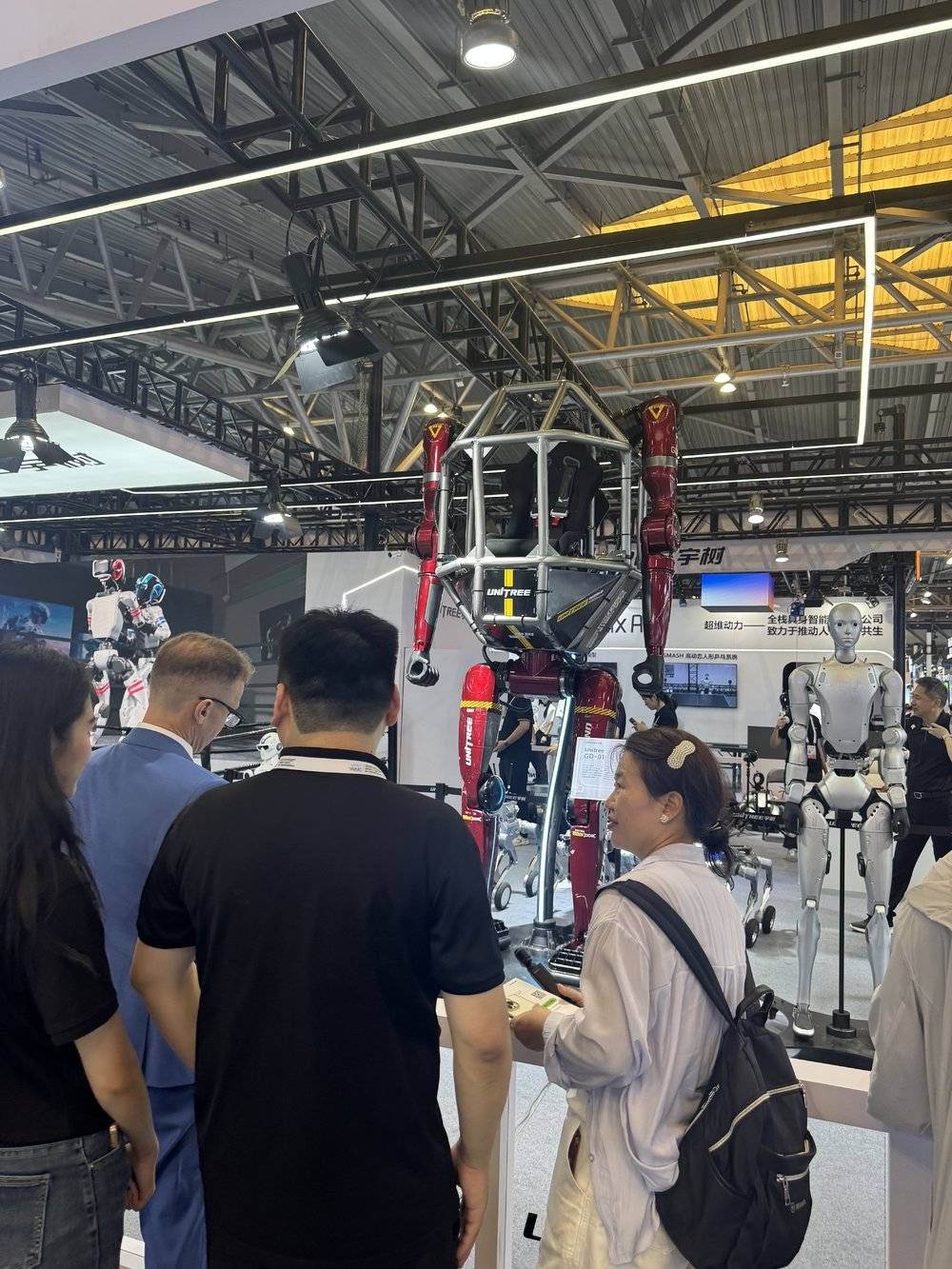
💡Understand the shift from AI hype to real-world ROI and how the 'Token' economy is reshaping AI business models.
⚡ 30-Second TL;DR
What Changed
Embodied AI is shifting from 'performance' robots to industrial-grade automation in factories and retail.
Why It Matters
The shift toward ROI-focused AI deployment suggests that startups must prove tangible value in real-world workflows to secure funding. The concentration of data in top-tier robotics firms creates a high barrier to entry for new players.
What To Do Next
Evaluate your current AI project's ROI metrics; if you cannot quantify the value per Token or per task, pivot your focus toward specific, high-frequency industrial use cases.
Key Points
- •Embodied AI is shifting from 'performance' robots to industrial-grade automation in factories and retail.
- •A clear 'wealth gap' exists in the robotics sector, with resources and data concentrating in a few头部 (head) companies.
- •The 'Token' has evolved from a technical unit into the primary commercial language for AI infrastructure and model providers.
- •Industry patience for 'AI idealism' is waning, with a strong push toward quantifying value through ROI-driven deployments.
🧠 Deep Insight
AI-generated analysis for this event.
🔑 Enhanced Key Takeaways
- •The 2026 WAIC introduced the 'Embodied AI Standardization Protocol,' a cross-industry framework aimed at unifying hardware-software interfaces to reduce integration costs for factory operators.
- •Data from the conference indicates that 'Token-based' billing models have replaced traditional SaaS subscriptions for 65% of enterprise AI infrastructure providers, shifting costs to compute-per-task metrics.
- •A significant portion of the 'wealth gap' in robotics is attributed to the emergence of 'Data Moats,' where top-tier firms are exclusively licensing proprietary synthetic training data generated from digital twins.
- •New regulatory discussions at WAIC 2026 focused on 'Embodied Liability,' establishing legal frameworks for autonomous robots operating in public retail spaces.
- •The conference showcased a shift toward 'Small Language Models' (SLMs) optimized for edge deployment on robotic hardware, reducing latency by 40% compared to cloud-dependent architectures.
🛠️ Technical Deep Dive
- Embodied AI Architecture: Transition from end-to-end transformer models to hierarchical control systems that separate high-level reasoning (LLM-based) from low-level motor control (RL-based).
- Token Economy Implementation: Utilization of decentralized compute marketplaces where idle GPU clusters are tokenized to provide scalable inference power for industrial robots.
- Edge Optimization: Deployment of quantized 7B-parameter models on NVIDIA Jetson-class hardware to enable real-time obstacle avoidance without network dependency.
- Synthetic Data Pipelines: Use of NVIDIA Omniverse and similar platforms to generate high-fidelity, physics-compliant training data for robotic manipulation tasks.
🔮 Future ImplicationsAI analysis grounded in cited sources
⏳ Timeline
Weekly AI Recap
Read this week's curated digest of top AI events →
👉Related Updates



AI-curated news aggregator. All content rights belong to original publishers.
Original source: 虎嗅 ↗